The Long Road: Challenges during Our Journey in the Native Art Business
- Posted on
- 0
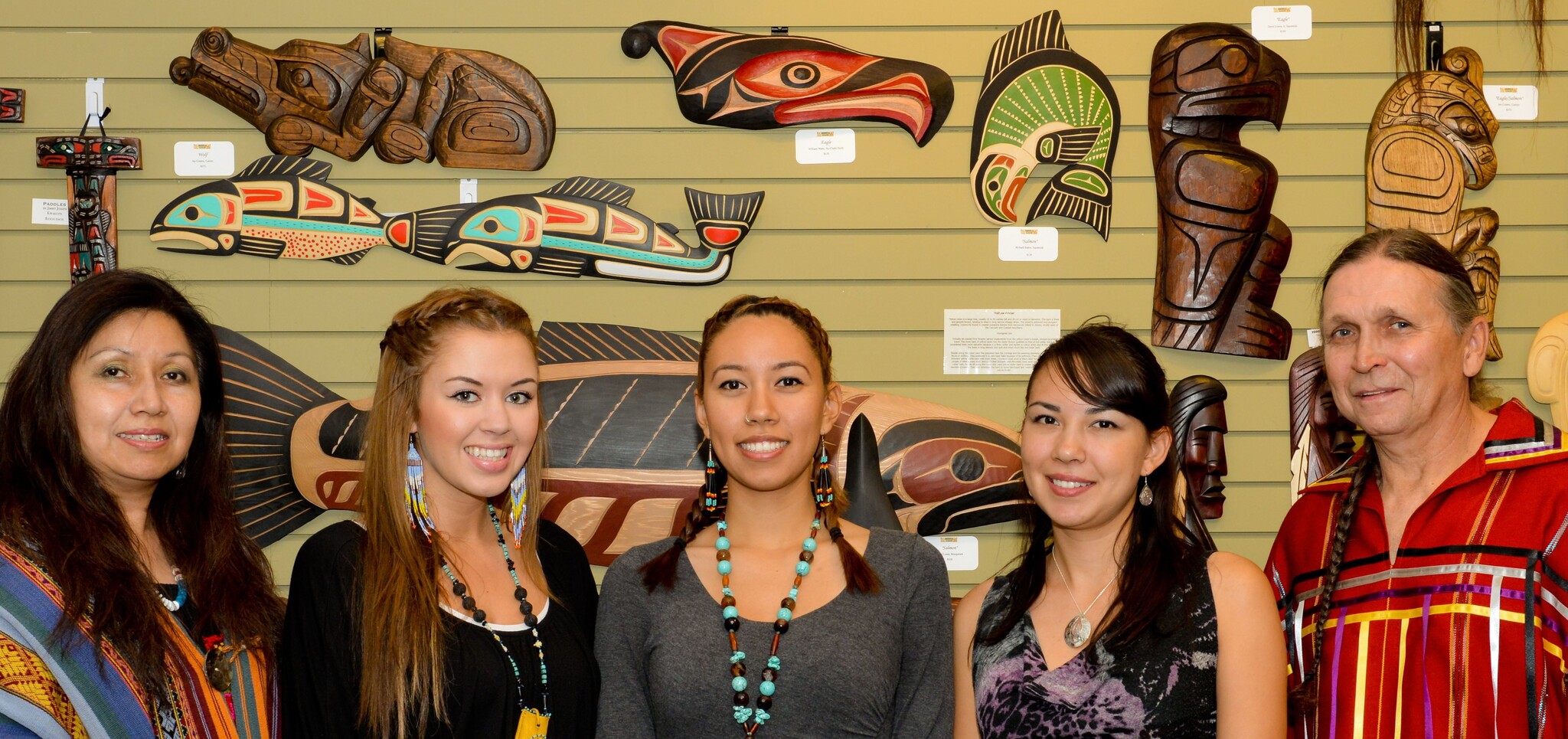
A photo of the core members of our team 15 years ago.
When we opened our first storefront in White Rock in 2011, we were fuelled by passion and the belief that perseverance would eventually lead to success. We spent seven-and-a-half years operating a full-time location in the Semiahmoo Shopping Centre, often working without pay and personally investing in the business to keep it afloat. After closing that location, we spent another five years running seasonal pop-up shops there to capture the holiday market.
Looking back, it was our deep love for Native culture and art that kept us going; any other business venture would have folded after just a few months. Yet, those years were far from wasted. They were our training ground. While cutting our teeth in the Indigenous art business we built a website with an online store and a Facebook page with over 15,000 followers. We became known and our online sales are still steadily climbing. We continue to connect with our community by vending at Indigenous conferences and cultural events. After fifteen years of hard work, we are finally beginning to make a sustainable living—a long, difficult battle, but one that has been worth it for the freedom of self-employment and the ability to work daily within our culture.
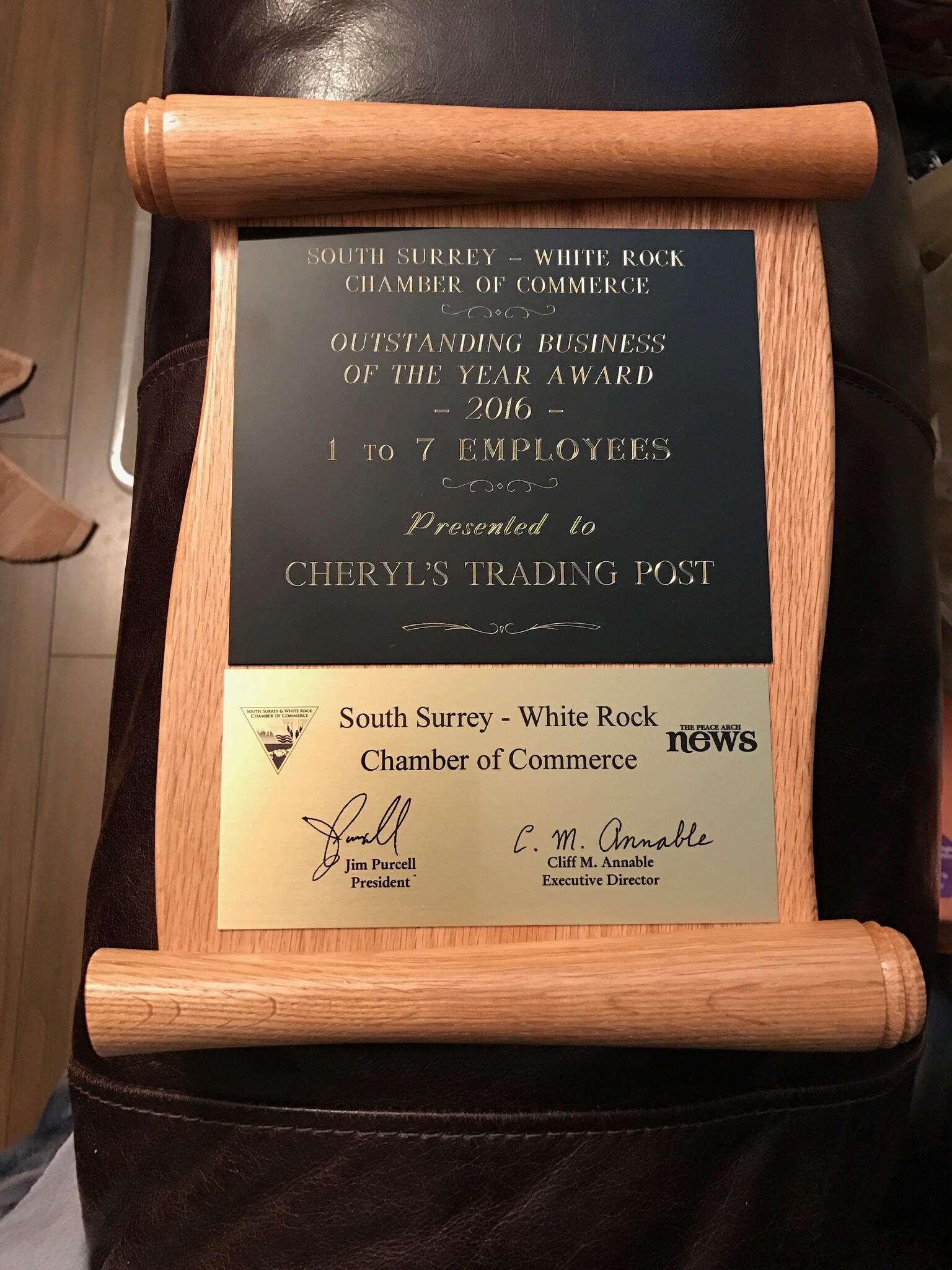
Supporting Our Community
Throughout these years, we have employed family and community members, always prioritizing hiring Indigenous staff. Unfortunately, the financial strain of the early years forced us to let our team go. As we continue to grow, our goal is to reach a point where we can hire again—not only to support our community but to ease the workload as we get older.
Challenging the "Maker" Narrative
This journey has brought a specific issue to the forefront that we believe deserves a conversation among Indigenous artists, vendors, and business owners: the growing pressure for Indigenous retailers to personally hand-make every item they sell.
In some circles, "Makers Markets" are now explicitly excluding Indigenous-owned businesses that don't fit a narrow definition of a "maker." We believe this is a harmful narrative that echoes the historical oppression of the Indian Act. Under those past policies, our people were often barred from competing with non-Native businesses and forced to sell their crafts on the side of the road or sell them cheaply to non-Native resellers.
Today, Cheryl’s Trading Post competes directly with well-established non-Native galleries that have grown wealthy from selling West Coast Native art for decades. When we act as a gallery and retailer, we are working in partnership with artists. We handle the business, marketing, and logistics, and the time-consuming work of conducting sales. This frees up the artists so they can focus on what they do best: carving and creating. Our Indigenous customers understand this partnership, and they know that by supporting us, they are supporting a network of Indigenous creators.
We believe it is time to stop excluding Indigenous businesses because we choose a retail model. Instead, we should celebrate the fact that we are successfully reclaiming our space in the economy and competing on our own terms.
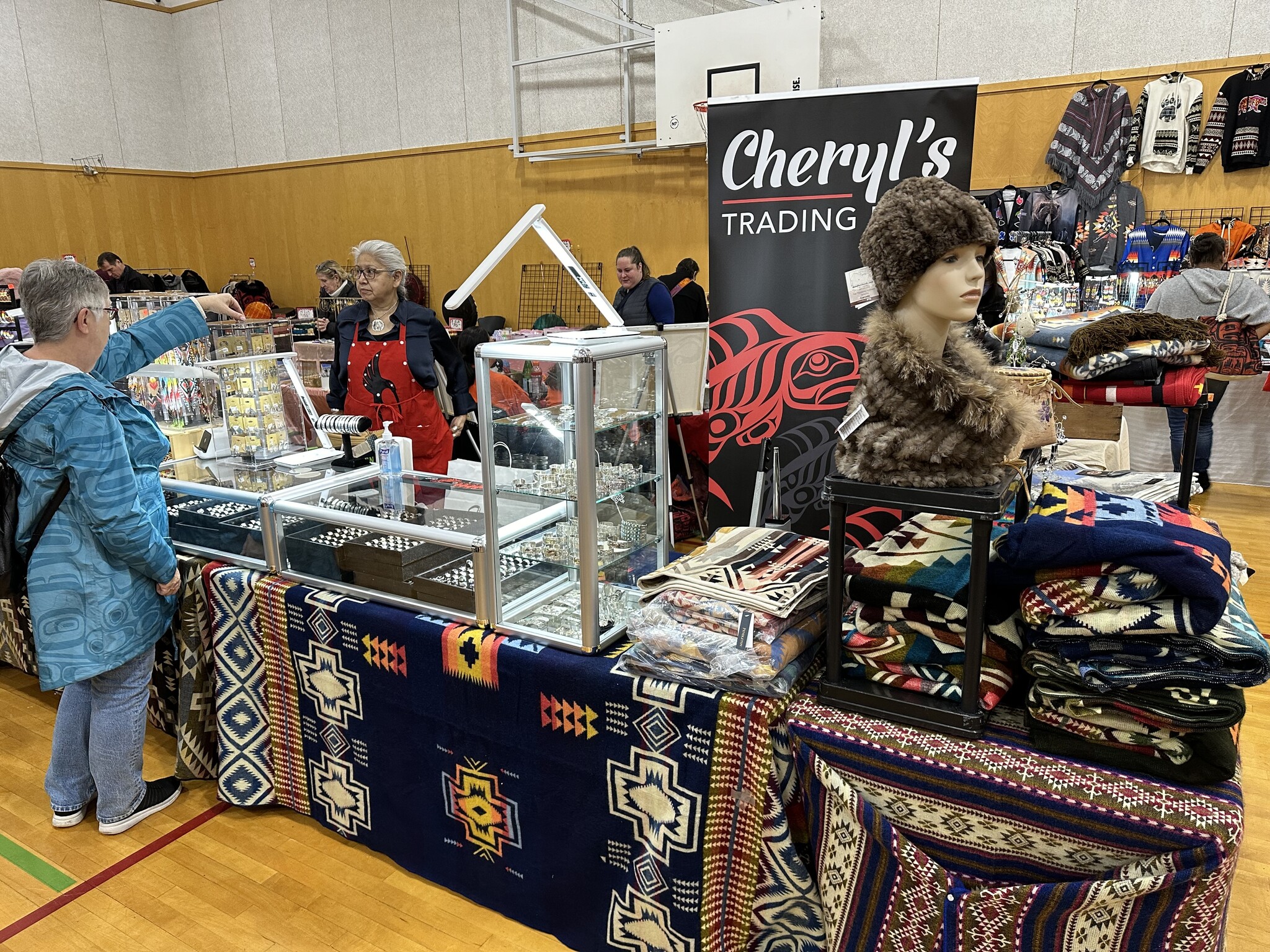
Cheryl vending at the Christmas craft fair on reserve
Comments
Share this on:


hello Lori. i just noticed your question. sorry about the delay in answering. that photo is about 15 years old. i posted it to show that our business has been in operation for a long time. you can view panels and plaques available at this time at eh following link. https://www.cherylstradingpost.com/indigenous-art/northwest-indigenous-carvings/wall-panels-and-plaques/
we do. email us at [email protected]. with what you're interested in and the price range. Cheryl and Jim
Hi - do you carry work similar to the carvings on the wall in this picture? I don't see any on your site. Thanks.