A Collector’s Guide to Northwest Coast Indigenous Carvings in Canada
- Posted on
- 0
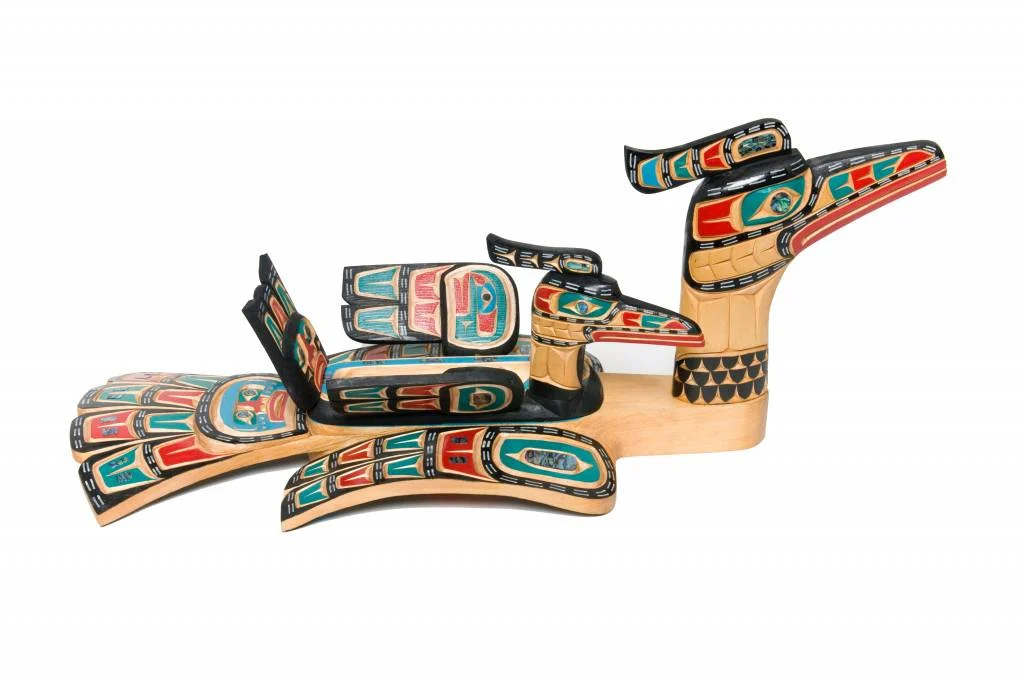
Northwest Coast Indigenous carving is among the most recognizable and sophisticated art traditions in the world, defined by powerful formline design, deep cultural meaning, and exceptional technical skill. For new and experienced Indigenous art collectors alike, the key to collecting Indigenous art well is learning to see beyond “style” and into nation-specific approaches, materials, artist lineages, and ethical sourcing.
This guide introduces the main carving traditions you’ll encounter in Indigenous wood carvings Canada is known for, including Haida carvings and Coast Salish art, while offering practical steps for evaluating authenticity, documentation, and long-term care. It’s written for an informational purpose: to help you collect knowledge, respect, and confidence.
What makes Northwest Coast Indigenous carvings distinct?
Northwest Indigenous art is often associated with bold, graphic imagery, but the carving traditions of the Northwest Coast are not a single “look.” They include many nations with distinct histories, aesthetics, and protocols. What unites many Northwest Coast carving practices is the integration of art with living culture: crests, stories, and rights to depict certain beings or family histories can matter as much as the workmanship.
Many First Nations carvings from the coast are connected to teachings about land and sea, inherited identities (often described as crests), and community histories. Depending on the piece, a carving may be ceremonial, commemorative, functional, or made specifically for collectors. To collect meaningfully, one must know who made the work, what materials were used, and what the imagery represents.
Common visual elements (with important nuance)
• Formline design (often called “Northwest Coast style”): a system of ovoids, U-forms, and flowing lines used to build figures. Haida, Tlingit, Tsimshian, Kwakwaka’wakw, and related northern traditions commonly employ this style, albeit with nation-specific differences.
• Three-dimensional transformation: figures that shift between human and animal/spirit forms, a theme that each nation handles differently across the coast.
• Purposeful negative space: carved voids and contours that sharpen the presence of the figure rather than simply decorating a surface.
• Integration of function and art: bowls, rattles, bentwood boxes, and paddles can be highly sculptural while remaining functional objects.
As a collector, it helps to treat “Northwest Coast” as a region with many artistic languages rather than a single category. When a seller can identify the nation, the artist, and the materials clearly, you’re usually on stronger ground.

Key carving traditions collectors encounter in Canada
Collectors often begin with the most recognizable names, Haida carvings, Coast Salish art, and other Northwest Coast nations whose work appears in galleries and collections. Below is a practical overview of what you may see, without collapsing distinct cultures into a single summary.
Haida carvings
Haida carving and design from Haida Gwaii is widely celebrated for precision, balance, and masterful formline structure. Collectors may encounter Haida woodcarvings, jewellery, prints, and the distinctive black stone carving tradition of argillite.
• Materials: red and yellow cedar for wood carvings; argillite (a dense, black shale) for stone carvings; occasionally other media depending on the artist.
• Common forms: miniature carvings, totem poles, panels, masks, and sculptural figures; argillite model poles, pipes, plates, and narrative scenes.
• What to learn: the artist’s community connections and how they describe their imagery. Many beings (for example, Raven, Eagle, Bear, and Killer Whale) also appear broadly in Coast Salish art, but the story and arrangement can be specific to the artist’s teachings and experiences, reflecting their cultural heritage and personal narratives.
If you’re new to argillite, a useful starting point is Argillite Carvings: The Sacred Black Stone of Haida Gwaii, which explains why this material is so closely associated with Haida artists and what makes it unique to collect.
Coast Salish art and carving
Coast Salish art is often discussed in relation to weaving and spindle whorls, but carving is also central, particularly in house posts, paddles, and contemporary sculptures. Coast Salish aesthetics can differ significantly from formline traditions, with emphasis on deep 3D carving, surface patterning, and distinctive facial features depending on the community and artist. As northern style employs ovoids and U-shapes, the building blocks of Coast Salish art are the circle, crescent, and trigon.
• Materials: Cedar is common; some artists also work in stone or mixed media.
• Common forms: wall panels and plaques, paddles, masks, rattles, and commemorative pieces.
• What to learn: how the artist situates their work within Coast Salish teachings. Coast Salish pieces may be less “graphic” than formline works, but they can be equally complex in symbolism and technique, often incorporating elements that reflect the cultural narratives and spiritual beliefs of the Coast Salish people, such as the use of specific colours, shapes, and motifs that hold particular meanings within their traditions.
• Salmon is essential and is often depicted. Coast Salish culture lacks a clan system, so designs are not crests.
Other Northwest Coast nations (as seen in collections)
Many collectors will also encounter carvings by Kwakwaka’wakw, Nuu-chah-nulth, Tsimshian, Gitxsan, Nisga’a, Tlingit, and other nations of the Northwest Coast. Each has its carving history, protocols, and artistic signatures. When you’re assessing a piece, focus on the artist and nation first, rather than trying to “match” it to a generalized regional style.
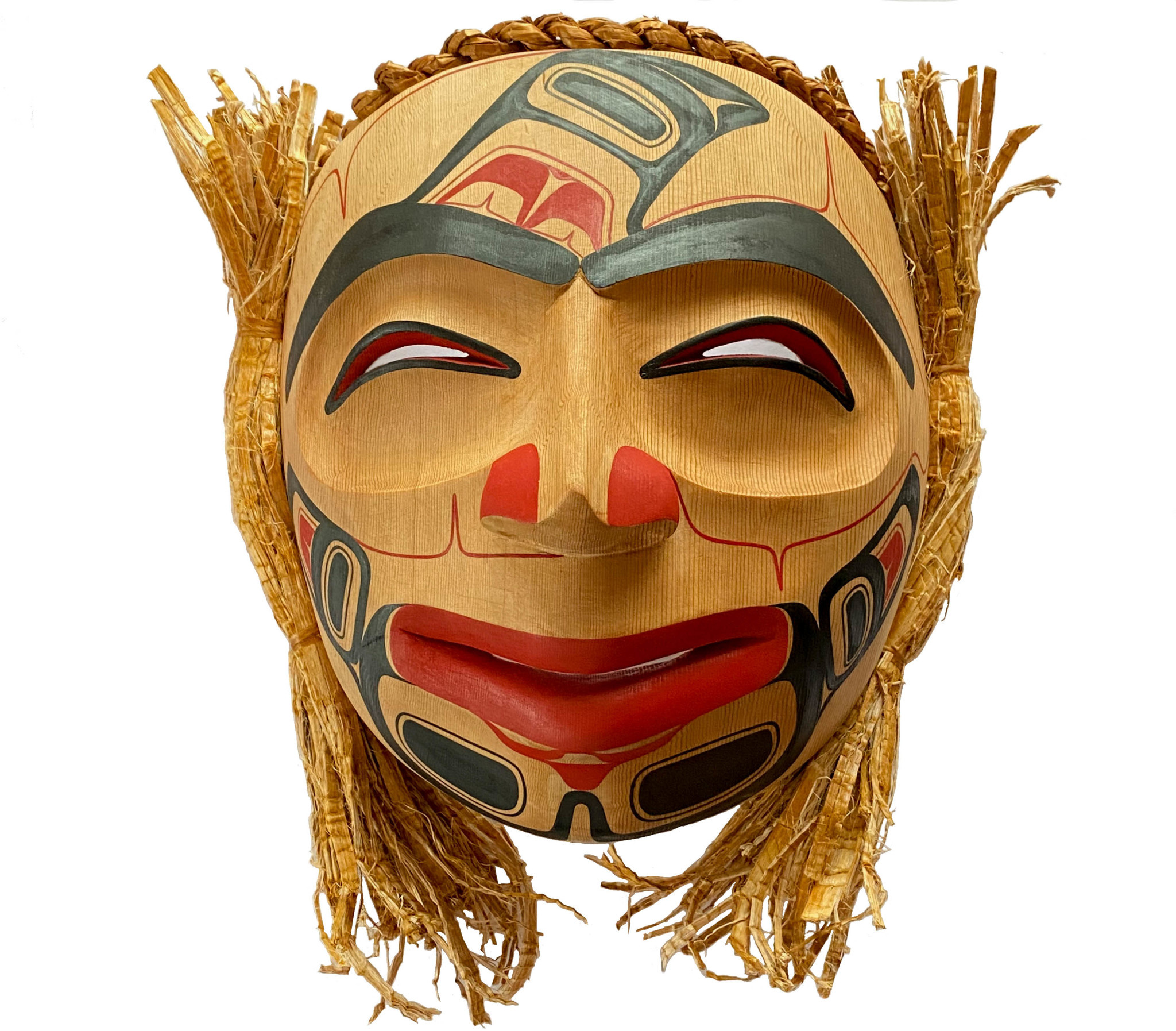
Common types of carvings and what to look for
When collecting indigenous wood carvings, it helps to understand the object category because form, scale, and intended use shape how a piece is made and how it should be cared for. Below are common categories found in Northwest Coast Indigenous carvings in Canada.
Masks and headdresses
Masks range from small presentation pieces to large ceremonial works. Some are created specifically for dance contexts, while others are made for the collector market, with the latter often being designed to appeal to non-Indigenous audiences rather than for traditional use. Either can be authentic indigenous carvings if made by an Indigenous artist and represented honestly.
• Construction: Look for thoughtful shaping, deep carving, balanced thickness, and clean transitions in contours.
• Finish: paint should sit intentionally on the surface, and the piece may be given an “aged look” for aesthetic purposes.
• Documentation: Masks benefit from strong provenance because they are frequently copied.
For examples across styles and sizes, see the Masks and Headdresses collection.
Totem poles (including miniature poles)
Full-size poles are major works tied to community, family histories, and significant events; miniature poles are often made for collectors and can be excellent entry points. Regardless of scale, good carving shows intentional figure stacking, clear silhouettes, and confident detailing.
• Design clarity: figures should read clearly from a distance and hold up under close viewing.
• Structural integrity: avoid poles with unstable bases or cracks that threaten long-term stability.
• Rights and representation: The artist’s description is the best source for cultural meaning and protocols if indicated.
You can explore representative formats in the Totem Poles collection.
Wall panels and plaques
Wall carvings are popular with indigenous art collectors because they display well, ship more easily than large sculptures, and often showcase complex design. Collectors can evaluate both drawing/design strength and carving depth.
• Relief depth: intentional layering adds shadow and presence.
• Edge finishing: careful work on borders and backs suggests pride in craftsmanship.
• Hanging hardware: should be secure and appropriate for weight and wood movement.
See the Wall Panels and Plaques collection for examples.
Boxes and chests (including bentwood boxes)
Boxes hold a special place in Northwest Coast material culture, including the famous bentwood box tradition. In collector contexts, boxes can range from small lidded containers to larger chests.
• Joinery and fit describe how the parts of the box are assembled; lids should sit cleanly, corners should align, and any wobble or poor fit can indicate rushed work.
• Surface design integration: painted and carved elements should feel composed, not added as an afterthought.
• Functionality: if a box is meant to open and close, it should do so smoothly without forcing.
Browse formats in Boxes and Chests.
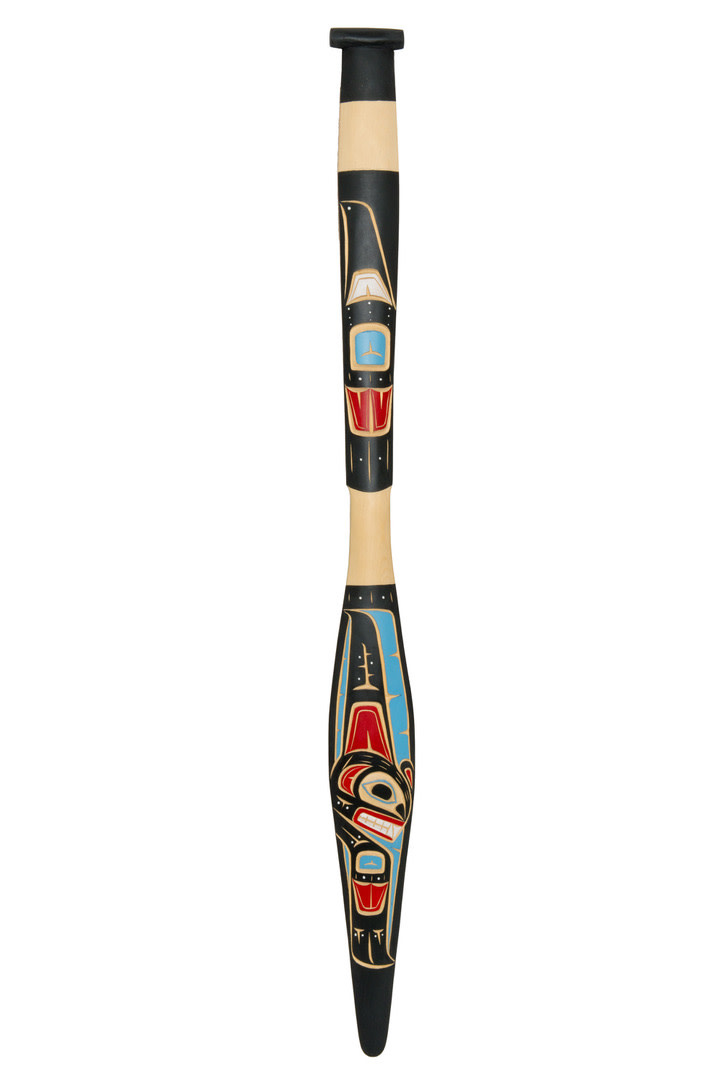
Paddles
Carved paddles are both functional and symbolic. Some are made as presentation pieces, with crests and imagery that honour relationships, journeys, or places.
• Balance and symmetry: decorative paddles benefit from a sense of proportion.
• Grip and blade shaping: Clean shaping indicates discipline and experience with the form.
• Display considerations: ask about wall-mounting and protection from sunlight.
Explore Paddles to see how artists adapt the format.
Bowls
Bowls can be utilitarian, ceremonial, or made for collectors. Some are carved with animal and spirit forms, which may be integrated into the rim or handle elements, while others emphasize smooth, continuous interiors.
• Interior finish: a consistent surface indicates careful hollowing and finishing.
• Crack risk: wood movement is natural; look for stable grain and good sealing practices.
• Use vs. display: Clarify whether the bowl is intended for food use; many collector bowls are best treated as art objects.
See examples in Bowls.
Hand-carved rattles
Rattles are culturally significant across the coast and appear in many forms. Some are created for dance, while others are collector-oriented, often featuring intricate designs and unique sound qualities that reflect their intended use. In both cases, form and sound (when applicable) are part of the work.
• Carving detail: look for crisp transitions and purposeful texturing.
• Rattle function: if it is a functioning rattle, it should sound intentional and feel secure.
• Respectful representation: ask how the artist frames the imagery and intended context.
Browse the Hand Carved Rattles collection.
Miniature carvings
Miniatures can be an accessible entry point into collecting indigenous art. They also reveal an artist’s control: small scale magnifies every decision, showcasing the artist's skill in precision and attention to detail in their craft. Well-made miniatures are not “lesser” works; they are often highly refined.
• Tool control: clean lines and well-resolved small forms.
• Design integrity: a miniature should still feel composed, not crowded.
• Documentation: because miniatures are widely sold, clear artist attribution is especially important to ensure that consumers can appreciate the craftsmanship and recognize the individual artists behind each piece.
Explore Miniature Carvings.
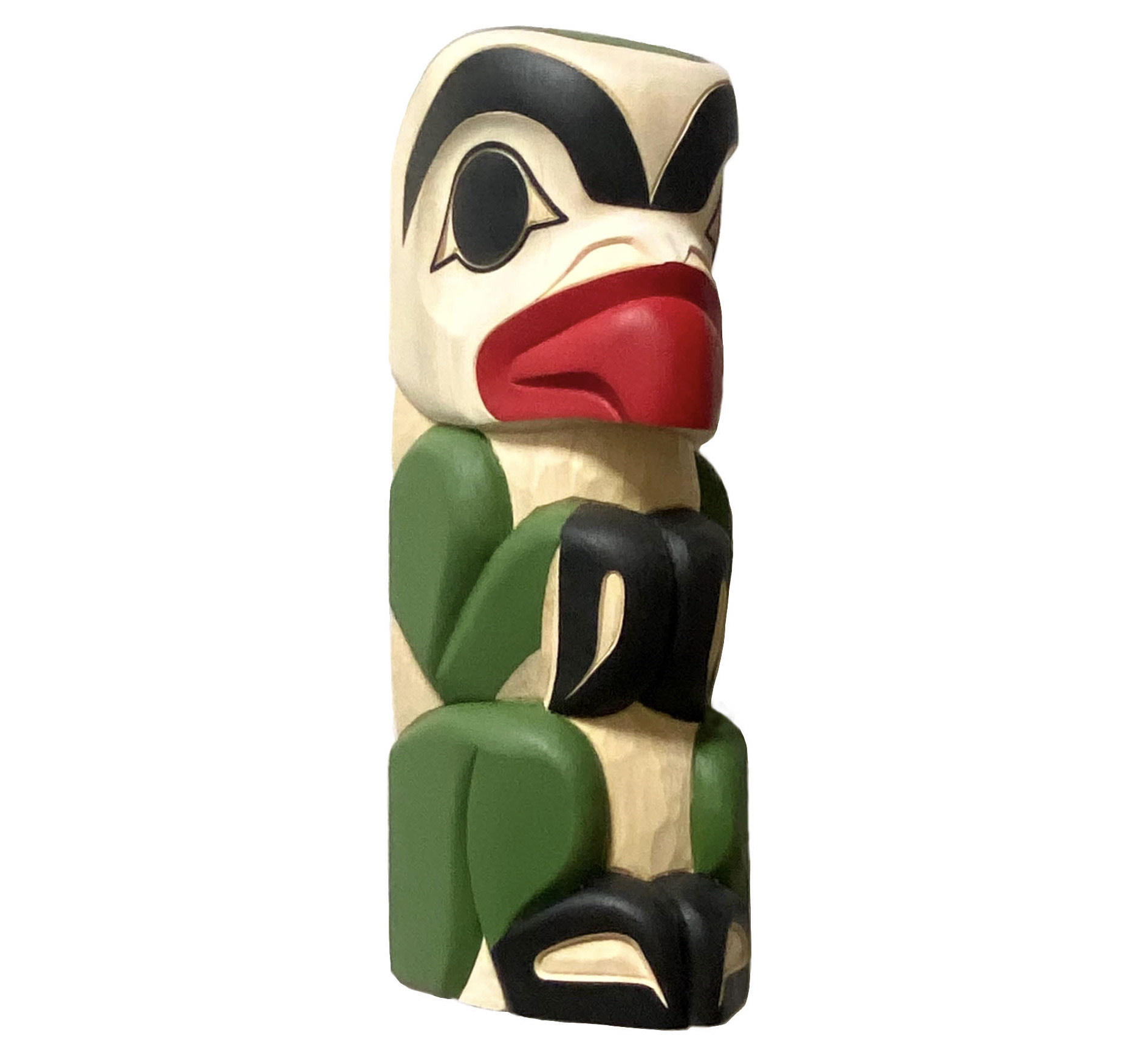
Materials in Indigenous wood carvings Canada collectors see most
Materials are not just technical; they’re cultural and environmental, reflecting the traditions and practices of Indigenous peoples in Canada. Knowing the material helps you assess authenticity, understand pricing, and care for the work properly.
Cedar (especially red cedar and yellow cedar)
Cedar is deeply important across the Northwest Coast for its working qualities and cultural significance. It carves well, can be durable, and holds paint and finish beautifully. Cedar grain and density vary; experienced carvers design with the wood’s strengths in mind.
• What collectors notice: aroma, weight relative to size, grain pattern, and how the finish sits.
• Common issues: hairline checking over time (often manageable), finish dulling from sunlight, and dryness if stored near heat sources.
Argillite (Haida carving stone)
Argillite is strongly associated with Haida artists and has a distinctive deep black appearance. It can hold intricate detail, but it is also brittle and requires knowledgeable handling and display.
• Collector tip: prioritize secure packing and stable shelving; avoid any situation where the piece could tip.
• Surface: fine detail should be crisp, not waxy or overly polished in a way that rounds edges (though finishing approaches vary by artist).
Other materials you may encounter
• Stone: various stones are used by different artists; hardness and finish can vary widely.
• Paint and inlay: colours, abalone shell inlay, or other accents may appear; ask what’s used so you can care for it properly.
How to tell authentic Indigenous carvings from imitations
“Authentic” is sometimes used loosely in the marketplace. For collectors, authentic indigenous carvings should mean the work is made by an Indigenous artist (or artists), represented truthfully, and sold with transparent information about origin, materials, and authorship.
A more profound discussion is available in What Sets Authentic Northwest Indigenous Carvings Apart. Below is a practical checklist you can use anywhere.
Authenticity checklist for collectors
• Named artist attribution: the artist’s full name is provided (not just “Native-made” or “Indigenous style”).
• Nation/community identification: the work is attributed to a specific nation or community when the artist chooses to share it.
• Materials are clearly stated, especially for higher-value works (cedar type, stone type, paint/inlay).
• Signature or hallmark: many artists sign, initial, or hallmark; absence of a signature is not automatically inauthentic, but it raises the need for stronger documentation.
• Documentation: a certificate of authenticity, a receipt with an artist's name, or gallery documentation that connects the work to the artist.
• Transparent sourcing: reputable sellers can explain where and how the work was obtained (direct from artist, estate, consignment, etc.).
• Design integrity: the piece looks internally consistent—proportions, carving logic, and finish match the artist’s intent.
Common red flags
• Vague labels, like "Northwest style," often lack an artist's name or nation.
• Mass-produced repetition: identical pieces appearing in bulk, especially at very low prices, often indicates factory production.
• Invented stories: sellers who attach dramatic narratives without attribution or who claim the work is “ancient” without provenance.
• Misuse of cultural terms: incorrect nation names, generic “totem meanings,” or stereotypes used as sales language.
• Native-inspired: is a term used to describe art made by non-Native people.
Ethics and cultural respect when collecting Indigenous art
Collecting Indigenous art can support artists and communities, but it also carries responsibility. The Northwest Coast has a long history of cultural suppression and removal of cultural belongings, which highlights the importance of ethical considerations in collecting Indigenous art Today, we prioritize fair compensation for artists and their communities, as well as accurate representation of their cultural narratives. Today, ethical collecting focuses on transparency, consent, and respect, especially when encountering older works.
Buy living artists’ work when possible
Supporting contemporary artists is one of the most direct ways to collect ethically. It ensures compensation reaches the creator and keeps traditions evolving rather than frozen in time.
Be careful with “antique” claims
Older First Nations carvings can be legitimate in the market, but they require extra diligence. Provenance matters: where did it come from, when, and under what circumstances? If documentation is missing, treat dramatic age claims skeptically and consider whether the item could be a cultural belonging that should not be privately traded.
Respect cultural protocols and sensitive imagery
Some imagery, names, or uses may be specific to families, societies, or ceremonial contexts. A respectful seller won’t overclaim meaning, and a respectful collector will accept when an artist or community keeps details private.
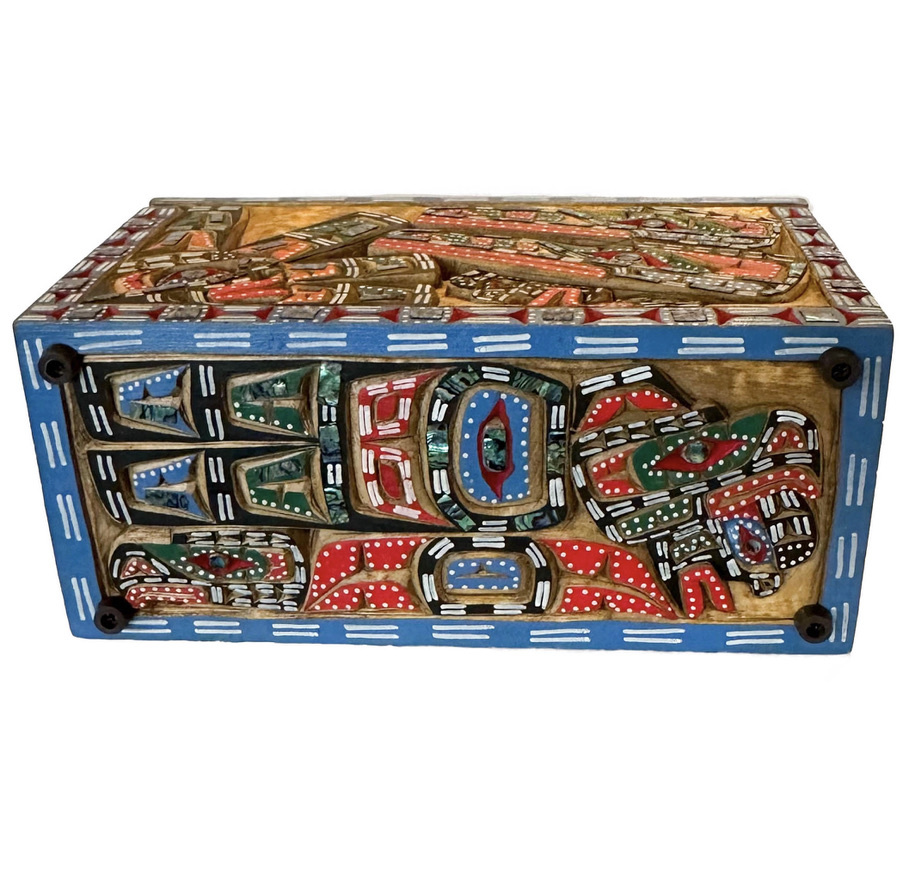
Building your eye: how to evaluate quality in an Indigenous wood carving
Quality isn’t only about “realism” or smoothness. Northwest Coast carving traditions often balance stylization with deep anatomical knowledge and design discipline. When assessing indigenous wood carvings Canada offers, seek evidence of intentional choices.
1) Design strength
• Clear composition and focal point
• Balanced positive and negative space
• Consistent visual language across the piece (line weight, proportions, motif relationships)
2) Carving confidence
• Decisive cuts and clean transitions
• Symmetry when intended (especially in masks and panels)
• Controlled depth: relief carving that uses shadow to articulate form
3) Finish appropriate to the piece
• Paint or stain supports the design rather than covering weak carving
• The surface feels stable and professionally sealed (without looking like plastic)
• Inlays are well-fitted and secure
4) Artist identity and trajectory
Collectors often find more meaning and long-term satisfaction when they follow an artist’s work over time. Ask about training, influences, and how the artist describes their approach. This process isn’t about gatekeeping; it’s about understanding the work as part of a living practice.
Provenance and documentation: what to ask for
Provenance is the ownership and documentation trail that accompanies a work. Strong provenance protects collectors, supports artists, and reduces the chance of misattribution.
For new works
• Artist name (spelled correctly)
• Nation/community (if shared by the artist)
• Title or subject (as the artist describes it)
• Materials and finish
• Dimensions
• Date of creation (if known)
• Documentation such as a certificate of authenticity or gallery invoice with details
For older works
• Prior ownership history (names, dates, locations where possible)
• Exhibition history or publication references
• Appraisals from qualified professionals (with methodology)
• Condition reports noting repairs, cracks, repainting, or replacements
Pricing and value: what influences the market
Collectors often ask why two carvings of similar size can have entirely unique prices. Generally, a combination of artistry, documentation, and demand, not just dimensions, influences the value of Northwest Coast Indigenous carvings.
• Artist reputation and career stage: Established artists with a strong exhibition history often command higher prices.
• Complexity and labour: fine details, difficult joinery, or demanding materials increase time and skill requirements.
• Materials: premium cedar, intricate inlay, or technically challenging stone can affect price.
• Provenance: Strong documentation reduces uncertainty and supports long-term value.
• Condition: Cracks, repairs, and finish degradation affect both value and care needs.
If you’re collecting primarily for connection and meaning, consider focusing first on the artist’s voice, the quality of the work, and the story you can verify, then let market considerations become secondary.
Care and display: how to protect your carving long-term
Proper care protects both beauty and structural stability. Wood and stone respond to light, temperature changes, and handling, often slowly, but inevitably.
For detailed, practical guidance, see How to Preserve Your Northwest Indigenous Carvings. Here are core principles collectors can apply immediately.
Display basics for wood carvings
• Avoid direct sunlight: UV can fade paint and dry out wood.
• Stabilize humidity: extreme dryness can cause checking; high humidity can encourage warping or mildew.
• Keep away from heat sources: vents, radiators, and fireplaces accelerate drying and stress.
• Support weight properly: use appropriate wall anchors and mounting methods for panels, paddles, and masks.
Handling guidance
• Clean hands or gloves: skin oils can dull finishes over time.
• Lift from stable points: avoid delicate protrusions like beaks, fins, or thin edges.
• Prevent tipping: especially for argillite and tall mini poles, secure shelving is crucial.
Cleaning
In most cases, gentle dusting with a soft, dry cloth is safest. Avoid household cleaners unless a conservator or the artist specifically recommends a method for that material and finish.
Starting (or refining) a collection with intention
When guided by curiosity and respect, collecting indigenous art becomes the most rewarding experience. Rather than chasing “the perfect piece,” consider building a collection around what you genuinely want to learn.
Three collector approaches that work well
1. By nation or region: focus on learning one tradition deeply (for example, Haida carvings or Coast Salish art), then expand thoughtfully.
2. By form: collect a theme, such as bowls, paddles, or boxes—and compare how different artists interpret the same object type.
3. By artist: Follow a few artists over time; you’ll gain insight into their development and make more informed choices.
Questions to ask before you buy
• Who is the artist, and how is the work attributed?
• What is the material, and what care does it require?
• Is the description based on the artist’s own explanation (or reliable documentation)?
• What documentation comes with the piece?
• How should it be displayed to prevent damage?
Where to explore responsibly
If you’re comparing carving types to understand what resonates with you, browsing well-documented collections can be educational. A focused place to see a range of formats, miniatures, masks, panels, poles, boxes, paddles, bowls, and rattles is the Northwest Indigenous Carvings collection, where you can observe how materials, scale, and design choices change from piece to piece.
For collectors specifically interested in Haida traditions, exploring both Haida Art and Haida Argillite can help you see how different media carry different kinds of detail, weight, and presence.
Closing perspective: collecting as relationship
The best indigenous art collectors tend to share one habit: they keep learning. They ask who made the work, how it should be understood, and how to care for it. They seek authentic Indigenous Northwest Coast carvings with clear attribution and ethical sourcing, and they understand that Northwest Coast Indigenous carvings are not simply decorative; they’re expressions of living, evolving nations and artists.
Whether your first piece is a miniature carving or a major wall panel, approaching collecting indigenous art as a relationship to the artist, the material, and the cultural context will lead to a collection you can stand behind for decades.


Comments
Be the first to comment...