How a Genuine Cowichan Sweater Is Made: From Raw Wool to Woven Story
- Posted on
- 0
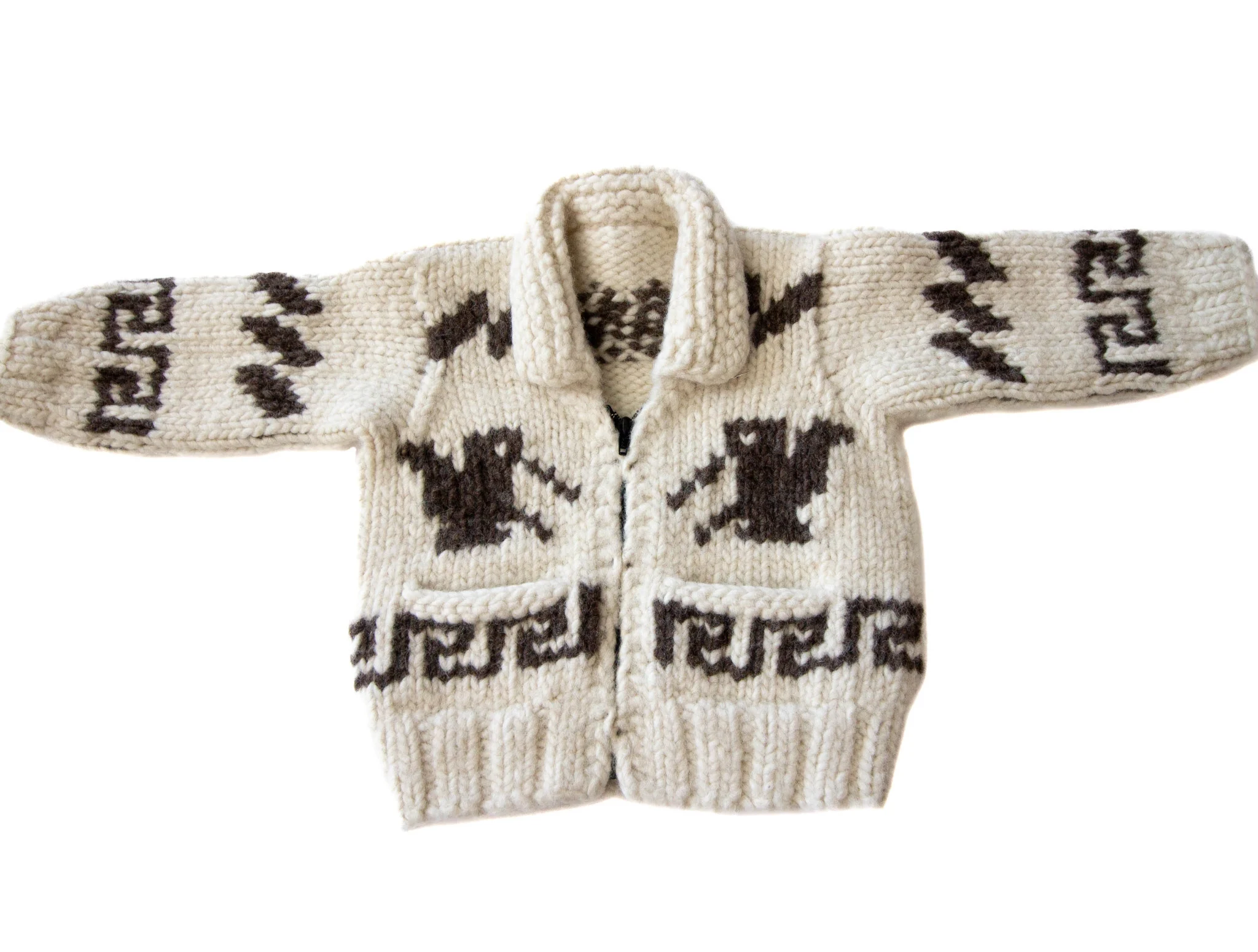
A genuine Cowichan sweater is hand-knit from locally sourced or specially selected wool, spun and prepared for thick, single-strand knitting, then shaped into a dense, warm sweater featuring bold, symbolic patterns. The process combines material knowledge, time-honoured techniques, and cultural meaning, resulting in a durable garment that carries community history and family identity.
A brief history, and why the process matters
Cowichan sweaters originated in the Cowichan Valley and neighbouring Coast Salish communities on Vancouver Island; they draw on Indigenous techniques adapted over the 19th and 20th centuries from traditional blanket weaving. These garments became a practical response to cold coastal climates and a visible sign of cultural identity. The making process matters because each step preserves skills and embeds meaning; the sweater becomes a wearable story.
Step 1. Wool selection and preparation
Quality starts with wool. Makers may use locally sourced sheep wool. The wool is cleaned and carded to reach consistent texture and strength.
The fibres are then spun into sturdy yarns. Cowichan knits are known for their heavy feel, which comes from the single, bulky strand of yarn that is used. Depending on the maker, spinning can be done by hand or on a wheel.
Step 2. Knitting technique and patterning
For warmth and a smooth finish, Cowichan sweaters are knitted in the round with big needles and bulky yarn to make a thick fabric. Patterns are often big and geometric, and they are often based on family crests, natural themes, or stories from the area.
A genuine piece takes hours of focused work, with each motif planned in advance or charted during knitting. Quality shows in even stitches, clean transitions, and balanced proportions.
Once you understand how a Cowichan sweater is made from raw wool to finished garment, the next step is learning what each pattern represents. You can read a full breakdown in our guide on Cowichan sweater symbols and their meanings.

Step 3. Finishing and care
After knitting, the sweater is blocked and finished, seams are tidied, and edges are reinforced. Some knitters add special touches, such as a signature mark inside the garment.
To preserve a Cowichan sweater, use gentle hand washing, air dry flat, and store in breathable bags. Avoid moth damage with cedar blocks or lavender pouches.
Cultural meaning and stewardship
Cowichan sweaters are often communal and intergenerational; they may identify a family, tell a story, or honour a relationship or place. Ethical buying means asking about sourcing to ensure authenticity.
When you buy with respect, you support artists and help keep these techniques alive.

FAQs
How can I tell if a Cowichan sweater is authentic?
Look for bulky single-strand yarn, hand-knitting irregularities that show human work, clear form and proportion in motifs, and provenance.
Are Cowichan sweaters machine washable?
No, hand washing in cool water and drying flat is best; machines and hot water will felt and distort the knit.
Do patterns have specific meanings?
Some patterns relate to family crests or local stories; others are stylistic. Always ask the seller for context if a motif seems significant.
Final thought
A genuine Cowichan sweater carries material craft and cultural memory. From raw wool to finished garments, the process honours places and people. When you choose one thoughtfully, you wear a story that keeps a tradition warm and living.


Comments
Be the first to comment...