The Evolution of Haida Art
- Posted on
- 0
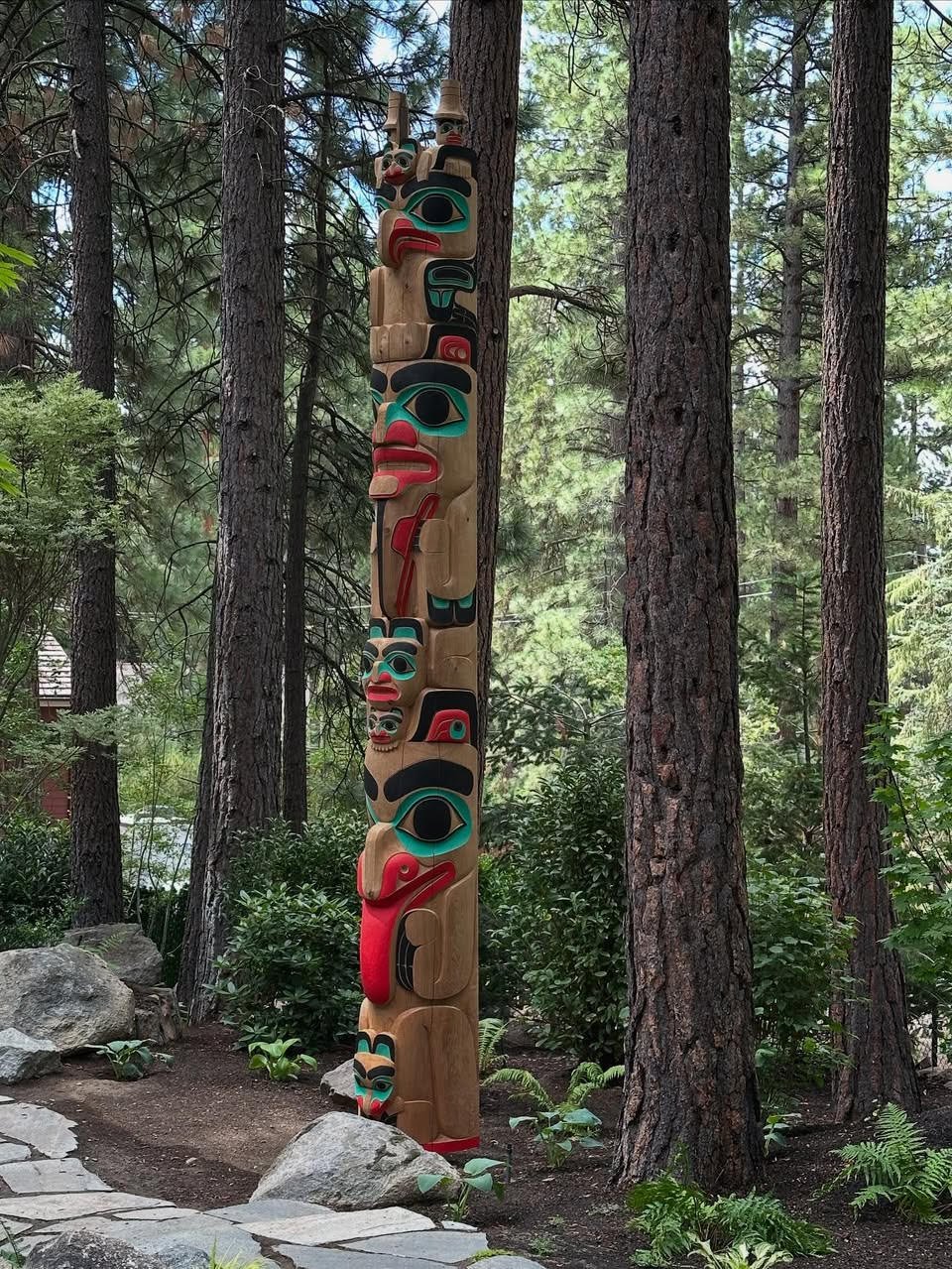
Haida totem pole carved by Corey Bulpitt.
Haida Art is one of the most distinctive and meaningful art forms. Known for its flowing lines, powerful symbols, and deep cultural roots, it has evolved from monumental cedar carvings to silver and gold jewellery, cast bronze sculptures, and glass panels. Yet at every stage, the heart of Haida Art remains the same; it tells stories of identity, ancestry, and connection to the land and sea.
Portable Masterpieces
For thousands of years, Haida artists have developed their unique design style through wood carving, particularly using red and yellow cedar, trees considered sacred living beings. These carvings were formed into totem poles, house posts, ceremonial masks, bentwood boxes, and canoes, each carrying rich symbolic meaning.
Totem poles recorded family lineages, historical events, spiritual stories and beliefs, as well as relationships with the natural world. Each carved figure, including Raven, Eagle, Killer Whale, and Bear, represents a specific story or ancestral connection.
In the 1800s, as contact with European settlers increased, Haida artists began experimenting with new tools and materials. The introduction of metal engraving tools elevated the quality of argillite carving to a new level of perfection. These argillite pieces carried the same precision and storytelling as large wood carvings, but they could be easily sold to eager visitors.
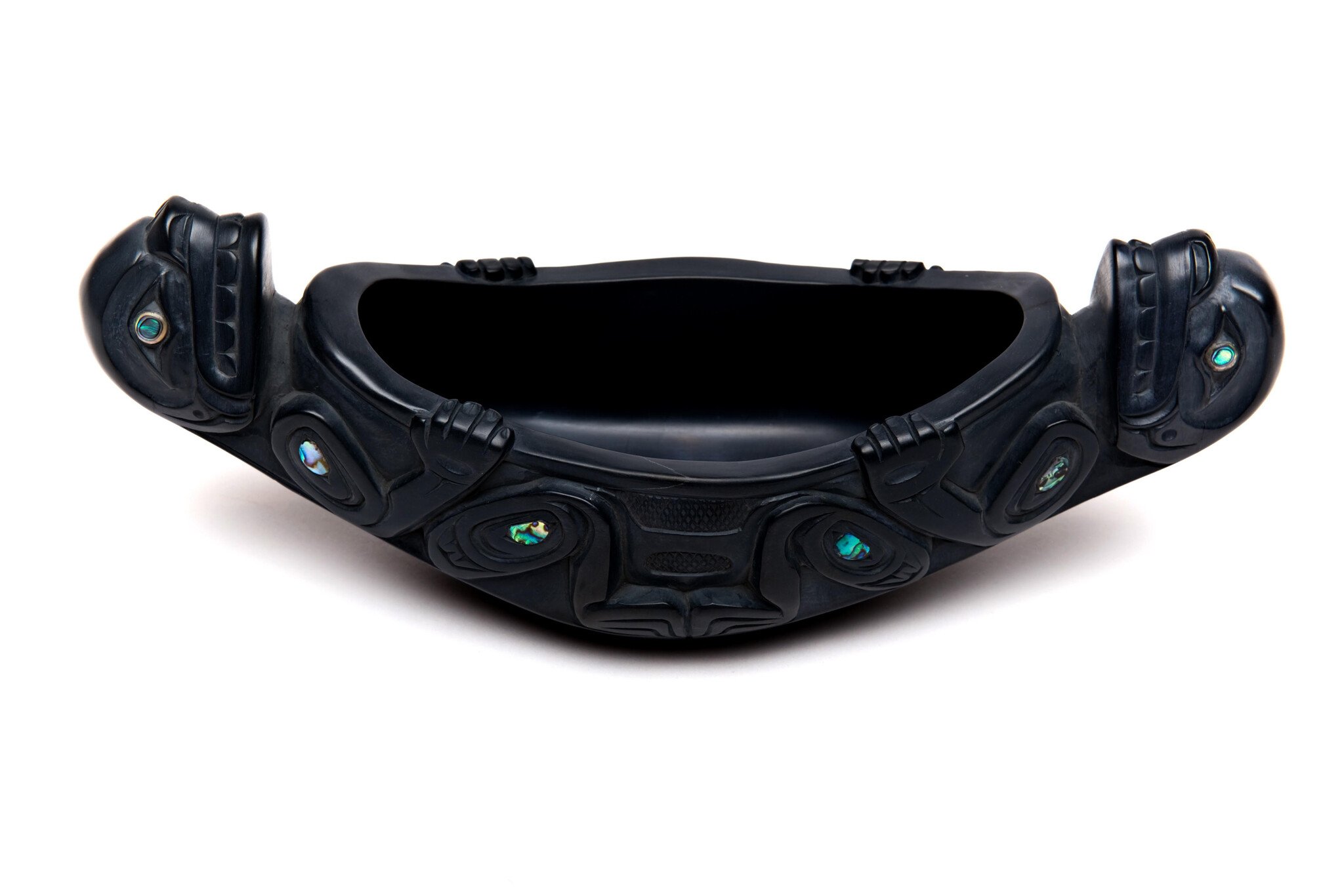
Haida argillite otter bowl carved by the late Lionel Samuels.
Silver and Gold
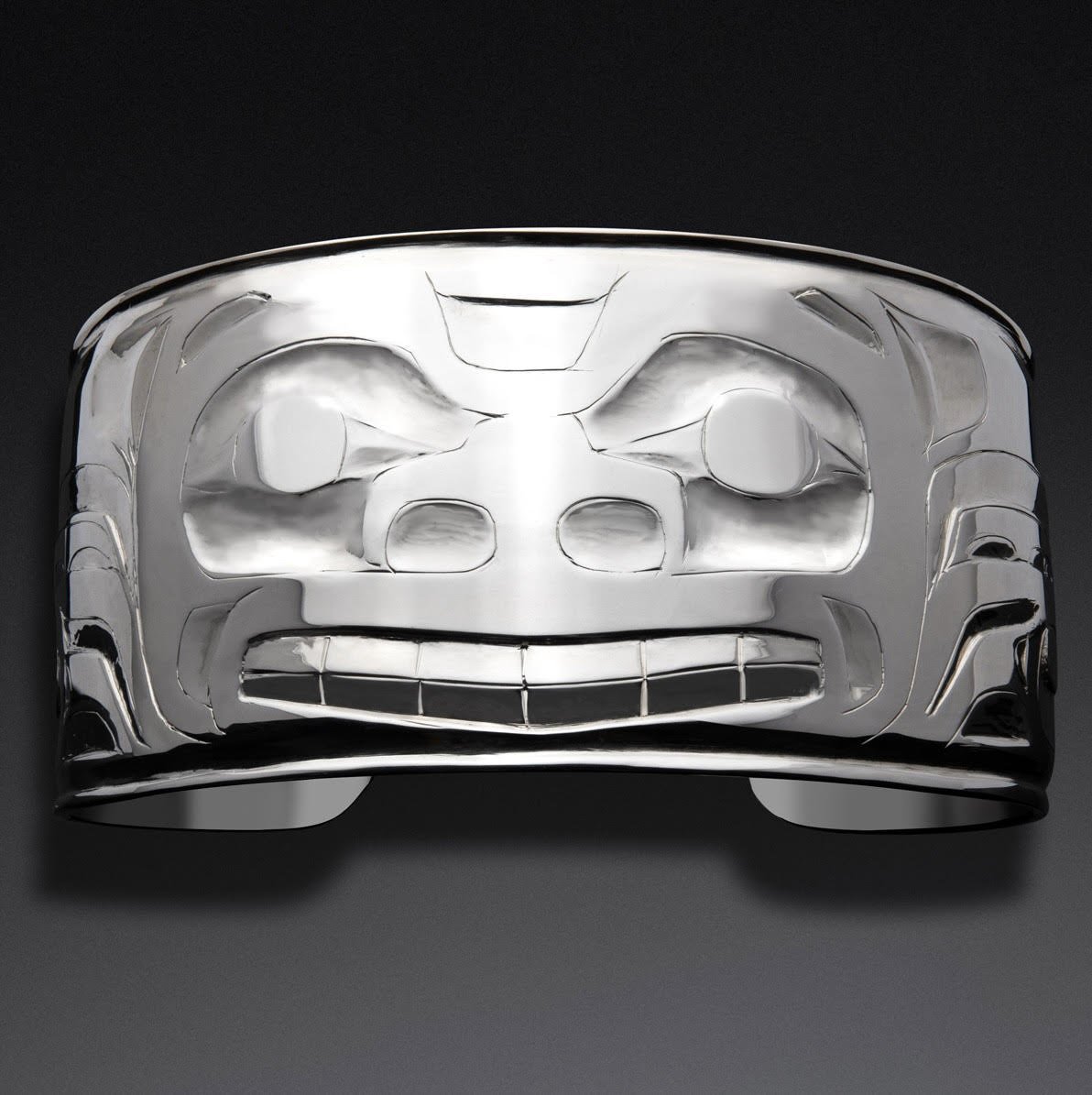
The Haida have always made jewellery from copper, stone, bone, and ivory, along with shells such as abalone and dentalium. They traded widely for materials they didn’t have locally. They also had access to minimal amounts of precious metals from Asian sources. During the 1800s, with expanded cultural exchange and trade, Haida artists reformed silver and gold coins and, using steel tools created bracelets and other jewellery pieces engraved with traditional Haida formline design. Metal engraving soon became a hallmark of Northwest Coast artistry.
In silver and gold, Haida artists discovered a new method to honour tradition while embracing innovation as they established a new economy. These wearable pieces became a form of cultural expression and pride, replacing traditional tattoos. A silver bracelet, for example, may identify lineage and depict a spiritual experience.
Haida formline design is a system of flowing shapes and symmetrical lines. The new materials allowed cultural stories to move beyond community boundaries, reaching people worldwide. During the 20th century, Bill Reid and other Haida artists added repousse and chasing, inlay, and lost wax casting to their jewelers’ repertoires. They also created monumental sculptures cast in bronze.
The Language of Haida Art
To truly appreciate Haida Art, it helps to recognize its unique design language, known as formline.
Formline consists of three main elements:
• Ovoids are rounded shapes that often form eyes or joints.
• U-forms, curved shapes that create flow and balance.
• Split U-forms are used to fill spaces and connect elements harmoniously.
These and other shapes are organized together using unwritten rules to create the rhythm and symmetry that define Haida two-dimensional design. Each artwork, no matter the medium, reflects balance and continuity—core values in Haida worldview.
Crest figures are elements of the clan system. Every person has a primary crest and may have a number of secondary crests. Some important crests are listed below with some attributes:
• Raven played a large part in making the world we live in. He brought light to the world. He placed the sun, and the moon and stars in the sky. He freed the first men and women and placed them on earth. He helped establish their first villages. Raven provided for them with fire, salmon, oolichans, and cedar, and he taught them how to survive and live in the world he created.
• Butterfly is a companion and guide to the Raven in Haida Raven Tales. He was with Raven from the beginning and was there when Raven discovered the first humans and placed them on earth. He often leads Raven to food sources and or to hiding places of creatures concealed from him. He also acts as a spokesperson for Raven. Butterfly is a messenger, a bridge to the spirit world.
• Killer Whale, Skaana in Haida means Spirit Being. Haida stories tell of a parallel dimension, a world under the sea inhabited by supernatural beings. Chief of these is the killer whale spirit that lives in an underwater village with longhouses and totem poles. When killer whales return home they take off their whale skins and they look like us. They care for an undersea realm filled with life. They are able to travel between that world and this one. A central theme is that killer whales and humans can transform back and forth.
• Bear Mother is a story of a princess that offended some bears so was taken captive to their village. Aided by advice from mouse woman, the young woman gained acceptance into the bear community. She married the bear chief’s son and had twin sons of her own who were part bear and part human. After a period of time, the woman’s brothers came to take her back to their own village. This story recounts the origin of the Haida Bear Clan.
Understanding these motifs allows collectors and admirers to see beyond aesthetics and into the cultural meaning woven into each piece.
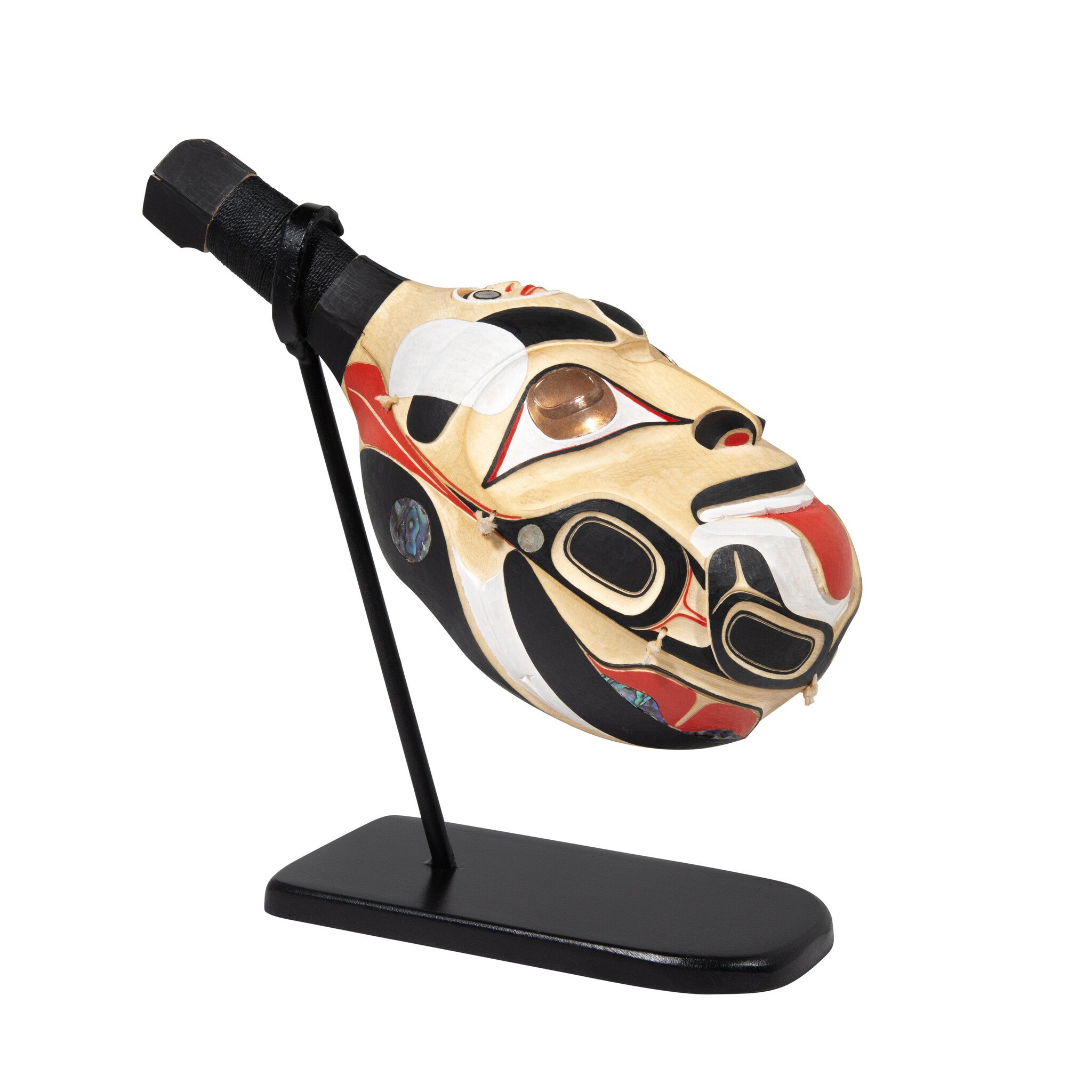 Haida killer whale rattle created by Jay Simeon
Tradition Meets Contemporary Expression
Modern Haida artists continue to evolve this legacy. Many are trained in both traditional wood carving and jewellery-making techniques. Some artists blend ancestral motifs with contemporary materials such as bronze, Forton, glass, and digital media.
Artists such as Jay Simeon, Corey Bulpitt, and other contemporary carvers connect the past with the present. Their work demonstrates that Haida Art is not static—it grows, adapts, and continues to reflect the living culture it springs from.
This ongoing evolution ensures that Haida traditions remain vibrant by passing knowledge and creativity from one generation to the next.
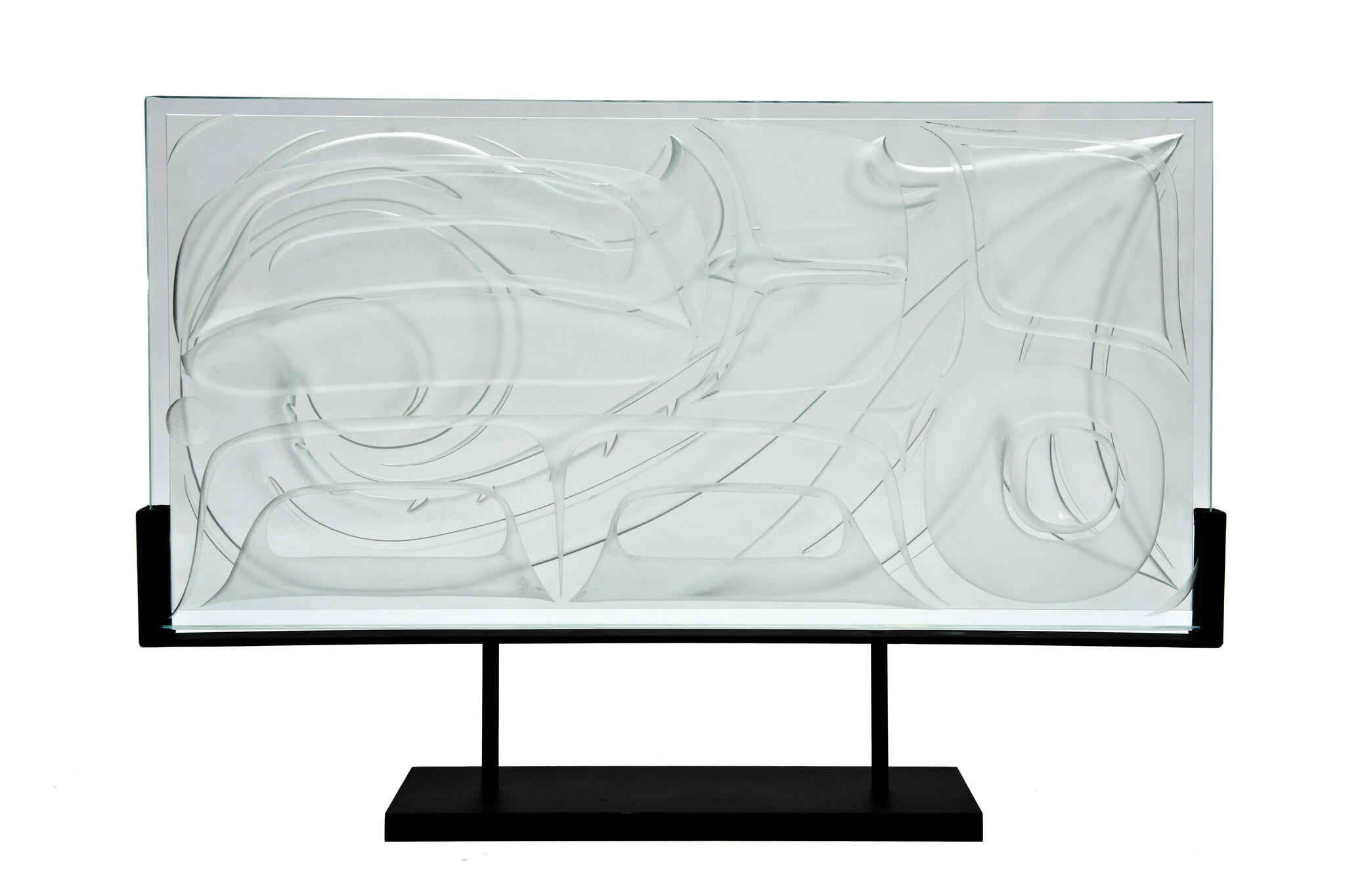 Haida glass butterfly panel designed by Corey Bulpitt
Collecting and Caring for Haida Art
For those who wish to collect Haida Art, authenticity and respect are key. Always look for:
• Artist attribution or signature.
• Quality craftsmanship with clean, flowing formline.
• Authentic materials and hand-carving.
When caring for silver or gold pieces, it is important to use a soft cloth and avoid harsh chemicals. Over-polishing can reduce the fine details of engraving. For wood or argillite carvings, it is recommended to use gentle dusting and maintain stable humidity levels.
Each piece, whether displayed or worn, deserves mindful care. It’s valuable art, and it’s living heritage.
Why Haida Art Endures
The continued appeal of Haida Art lies in its timeless combination of story, skill, and spirit. From towering cedar poles to finely engraved bracelets, each piece of art bridges generations by connecting the ancient with the contemporary.
It’s a language of resilience, one that carries forward Haida identity and worldview.
Haida Art invites you to see, feel, and understand a story that continues to unfold today.
Final Thought
Haida Art's journey from cedar to silver is not about change—it’s about continuity. The materials may differ, but the purpose remains: to share stories, honour ancestors, and celebrate the enduring beauty of Indigenous culture.
Comments
- Understanding "Old Pawn" Navajo Jewelry: What It Means and Why Collectors Seek It
- Navajo Jewellery Symbols Explained: Squash Blossoms, Naja Pendants, and Sandcast Rings
- Cowichan Sweater Gift Guide: Choosing the Right Design and Size for Someone Else
- Custom vs Ready-to-Buy Indigenous Masks: What Collectors Should Know
- Types of Indigenous Masks: Transformation, Portrait and Ceremonial
- The Roles of Singing and Music in Traditional West Coast Indigenous Cultures
- How to Choose an Authentic Totem Pole Carving: A Buyer's Guide
- Totem Poles Explained: Meanings, Types and Cultural Significance
- How to Authenticate Northwest Coast Wood Carvings: Tool Marks, Materials, and Artist Signatures
- The Role of Formline Design in Northwest Coast Carving: Understanding the Visual Language
Share this on:


thanks Anne
Especially important during indigenous month but always important to know