The Role of Cowichan Knitting in Coastal First Nations Culture
- Posted on
- 0
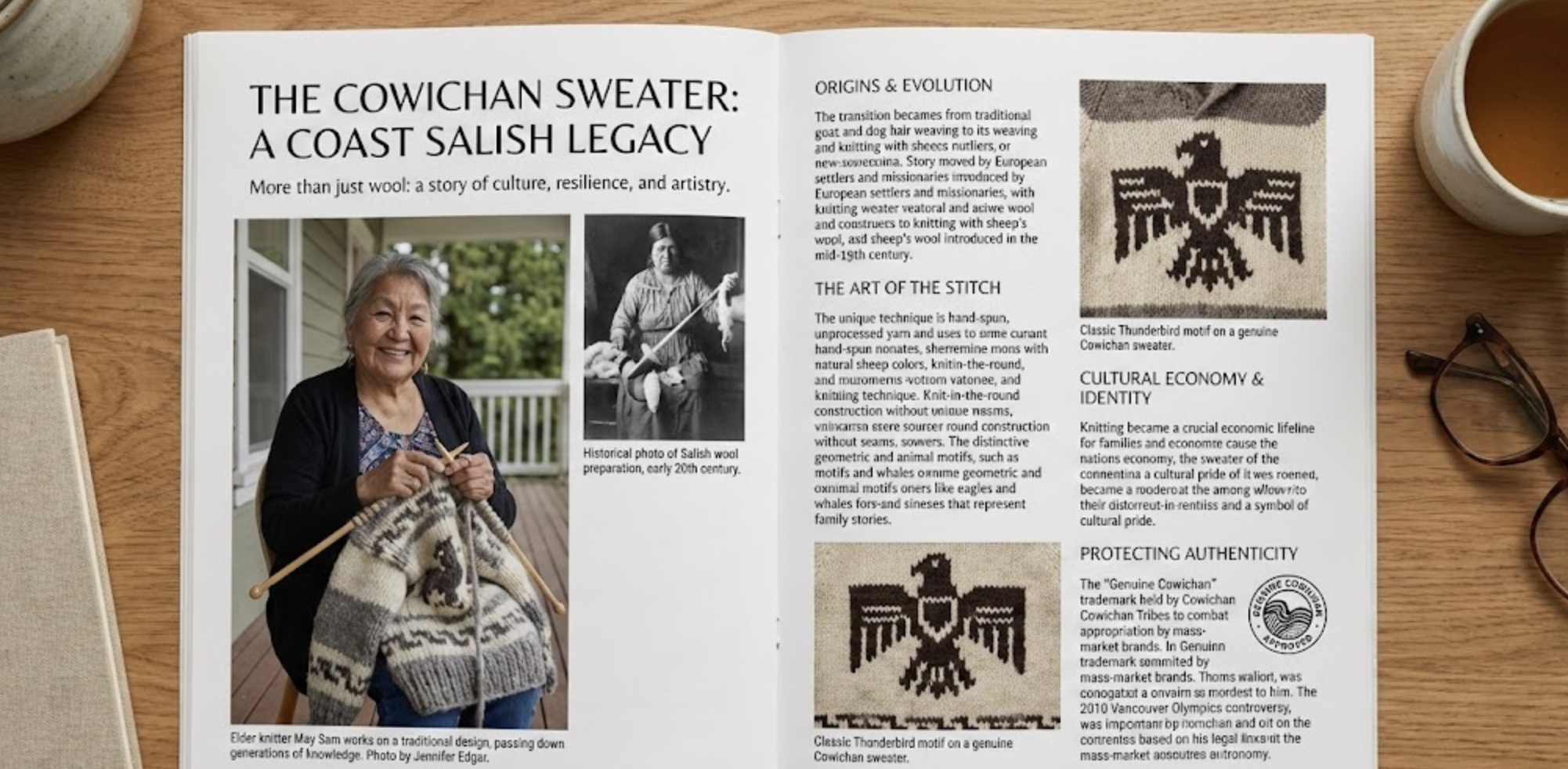
Cowichan knitting is a living cultural practice rooted in family, land, and identity among Coast Salish peoples. Generations have passed down ancestral skills, community knowledge, and lessons which are evident in every sweater. The wool, the patterns, and the process reflect a cultural story that continues today through Indigenous makers who uphold tradition with care and respect.
Coastal First Nations communities have protected and practiced Cowichan knitting for more than a century. The work is known worldwide for its warmth and beauty. Its deeper value comes from the cultural roles it plays within families and villages. Cowichan knitting connects people through shared knowledge, traditional wool preparation, and the stories carried by each motif.

A Skill Learned Within Families
Cowichan knitting is taught through observation, repetition, and hands-on experience. Many knitters learned from their mothers, grandmothers, or aunties, who passed down specific techniques unique to their family line.
Teaching happens in living rooms, kitchens, and community spaces. Skills are shared in steps. Preparing the wool. Spinning yarn. Knitting small accessories. The process involves creating tension with the fingers. Reading and shaping the patterns by eye. Each step reinforces values like patience, respect, and responsibility.
Knitting also builds connection. Elders guide younger makers, tell stories, and explain the meanings behind traditional motifs. This intergenerational exchange keeps the knowledge alive.

The Cultural Meaning of Natural Wool
Cowichan knitters use thick, natural wool washed and prepared by hand. Wool carries cultural and environmental significance. During traditional times, the Coast Salish bred wooldogs and mixed their wool with mountain goat hair and plant fibres. Wool reflects the profound relationship between Coast Salish communities and the land they live on.
Wool is valued for its strength, warmth, and durability. Traditional preparation methods preserve lanolin in the fibre. This creates a water resistant garment suited to life on the Pacific coast.
Working with natural wool encourages sustainable practices. It supports local sheep herders and respects a long tradition of making clothing directly from the land. This sustainable approach strengthens community identity and maintains cultural independence.
Patterns as Markers of Identity
Cowichan motifs are not random designs. They reflect cultural beliefs and family stories. Many symbols represent animals or forces found in Coast Salish teachings.
Common motifs include:
• Thunderbird, representing protection and power
• Eagle, representing leadership and vision
• Orca, representing strong family dynamics
• Deer, representing gentleness and respect
• Geometric bands expressing balance and movement
These motifs serve as visual language. They communicate identity and values without words. When someone wears a Cowichan sweater, they carry those teachings with them.
You may want to visit the Haida art page to compare how symbols are used across different cultural traditions.
Explore more Indigenous carving symbolism
Community, Commerce, and Cultural Protection
Cowichan knitting supported families through economic hardship. Many knitters relied on sweater sales to provide steady income. The work carried cultural pride but also practical value.
As the sweaters grew in popularity, non-Indigenous companies copied the style. This led to cultural appropriation that harmed local makers and misrepresented the tradition.
Cowichan communities responded by educating consumers, copyrighting the name “Cowichan,” and strengthening support for authentic artists. Buying from genuine Indigenous artists and businesses respects the work and protects cultural knowledge.
Shop authentic Cowichan sweaters and accessories created by Indigenous makers
The Sweater as a Cultural Gift
Cowichan sweaters hold sentimental meaning. They are often given for milestones, such as weddings, graduations, or the birth of a child. A hand-knit sweater represents care, time, and connection.
For the maker, each stitch carries intention. For the receiver, the sweater becomes a personal symbol of love and cultural belonging.
This gifting tradition strengthens community bonds. It reinforces the idea that Cowichan knitting is not mass production. It is a cultural practice built around relationships.

The Future of Cowichan Knitting
Younger knitters continue to learn the craft with pride. Many combine traditional motifs with modern influences. Others experiment with new garment shapes while protecting core techniques.
Workshops, community programs, and family mentorship keep the skill alive. Social media supports the visibility of Indigenous production. The practice contributes to cultural revival and encourages respectful appreciation.
To support this revival and learn how to care for handmade pieces, learn proper care tips for Indigenous carvings and textiles.
Final Thought
Cowichan knitting continues to carry the spirit of Coastal First Nations culture. It brings together family knowledge, natural materials, and symbolic designs. Each sweater reflects community identity and the resilience of a living tradition. When made and worn with respect, it honours the people who keep this tradition strong for future generations.


Comments
Be the first to comment...