Orange Shirt Day
- Posted on
- 0
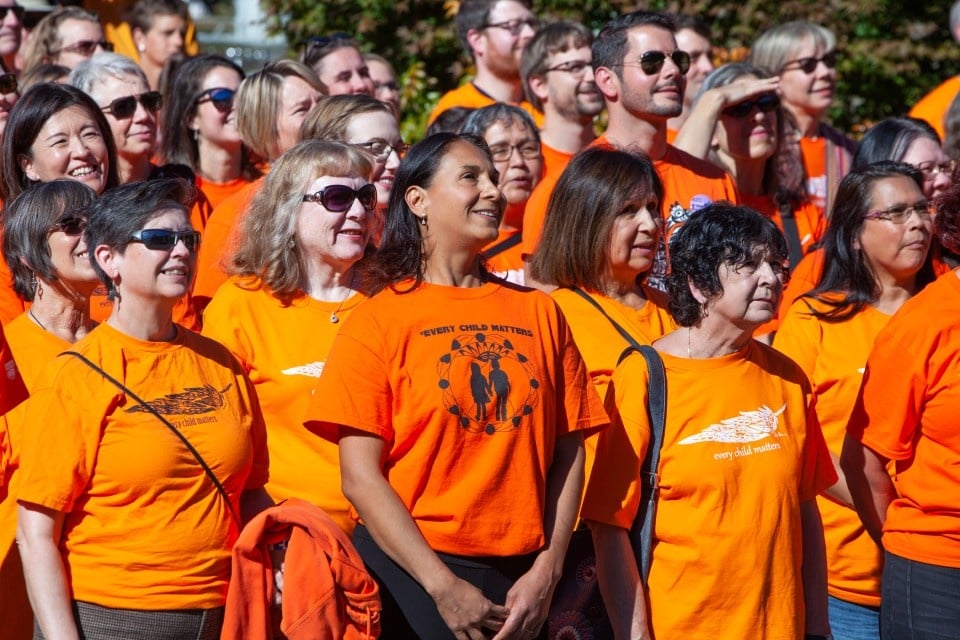
‘The National Day for Truth and Reconciliation’ is a stat holiday established in 2021, and falls on September 30th each year. It’s also known as ‘Orange Shirt Day.’ It’s a day to recognize and remember the atrocities and intergenerational effects of the Canadian Indian residential school system. And to remember those that didn’t make it home.
Orange shirt day was established by a group of Northern Secwepemc individuals in 2013 to commemorate the suffering of the children at St. Joseph’s Indian Residential School in the Williams Lake area. The date September 30 signifies the time of year when indigenous children were taken from their homes and put in school. The orange shirt movement was inspired by the story of Phyllis Webstad (nee Jack) who had her new orange shirt taken away the first day of residential school to have it replaced by a uniform. The phrase ‘EVERY CHILD MATTERS’ is often printed on orange t-shirts. The meaning of the phrase seems obvious, but to many people past and present it isn’t.
There have been thousands of unmarked graves discovered near former school sites, and up to 6,000 dead, maybe many more. The death rate at some schools may have been more than 60% Often families were not notified of deaths. Schools isn’t really the word to describe those places. The goal was to extinguish Indigenous cultures, languages, and identities by any means. During 1894, attendance at schools became compulsory. The RCMP seized children and took them to the ‘schools.’ Similarly the RCMP captured runaways. The government instituted the pass system forbidding Natives from leaving the reserve without a pass from the Indian agent. This prevented parents or community members from following or visiting children who had been taken. More than 150,000 Indigenous children were put through the system.
The ‘schools’ were underfunded. Medical care was very poor. Sanitation was very poor. Diseases were rampant. Extreme neglect took place. Abuse of every kind was commonplace. Children were severely punished for speaking their languages or practicing their cultures. Schooling was very low quality so that graduates were unable to be employed.
By the 1980’s, only a few schools remained open. The last ‘school’ closed in 1996.
Intergenerational effects
Children raised in a cold abusive environment never learned healthy family dynamics. Trauma, depression, anxiety, addictive behaviour. self destructive behavior, and suicidal behaviour has been passed down through generations. Many Indigenous languages were brought to the edge of extinction. Similarly with cultural knowledge including oral history, spiritual beliefs, ceremonial practices, and land based knowledge.
The poor quality of any learning at the schools resulted in unemployment and poverty being entrenched in communities, which were then further damaged by the ‘sixties scoop and child welfare systems.
Indigenous communities are now undergoing language revitalization, cultural revitalization and economic revitalization.
What Wearing Orange Means to Me
When I walked through the doors of RBC on Orange Shirt Day, a sea of orange greeted me. Every staff member was wearing an orange shirt, and the bright colour stood out against the ordinary surroundings like a powerful sign of solidarity. It was the only place I had seen where everyone was wearing orange, and for a moment, I felt that everything was okay. I felt like we had allies there.
Seeing the whole staff standing together was one strong link in the chain that helps keep Indigenous people safe.
When there is such a strong representation of support, people know they cannot simply make racist and ignorant remarks without being challenged. They know there are people present who will stand up for Indigenous people rather than remain silent.
The entire staff wearing orange shirts together meant something. It showed that they cared about Indigenous people and stood with us against racism, brutality and injustice.
For me, it was more than a shirt. It was a visible sign that we were not alone. It felt good to see, and it made that place feel safe.
—Cheryl Morgan
Share this on:


Comments
Be the first to comment...