Cowichan Sweater Symbols Explained. The Meaning Behind Each Motif
- Posted on
- 0
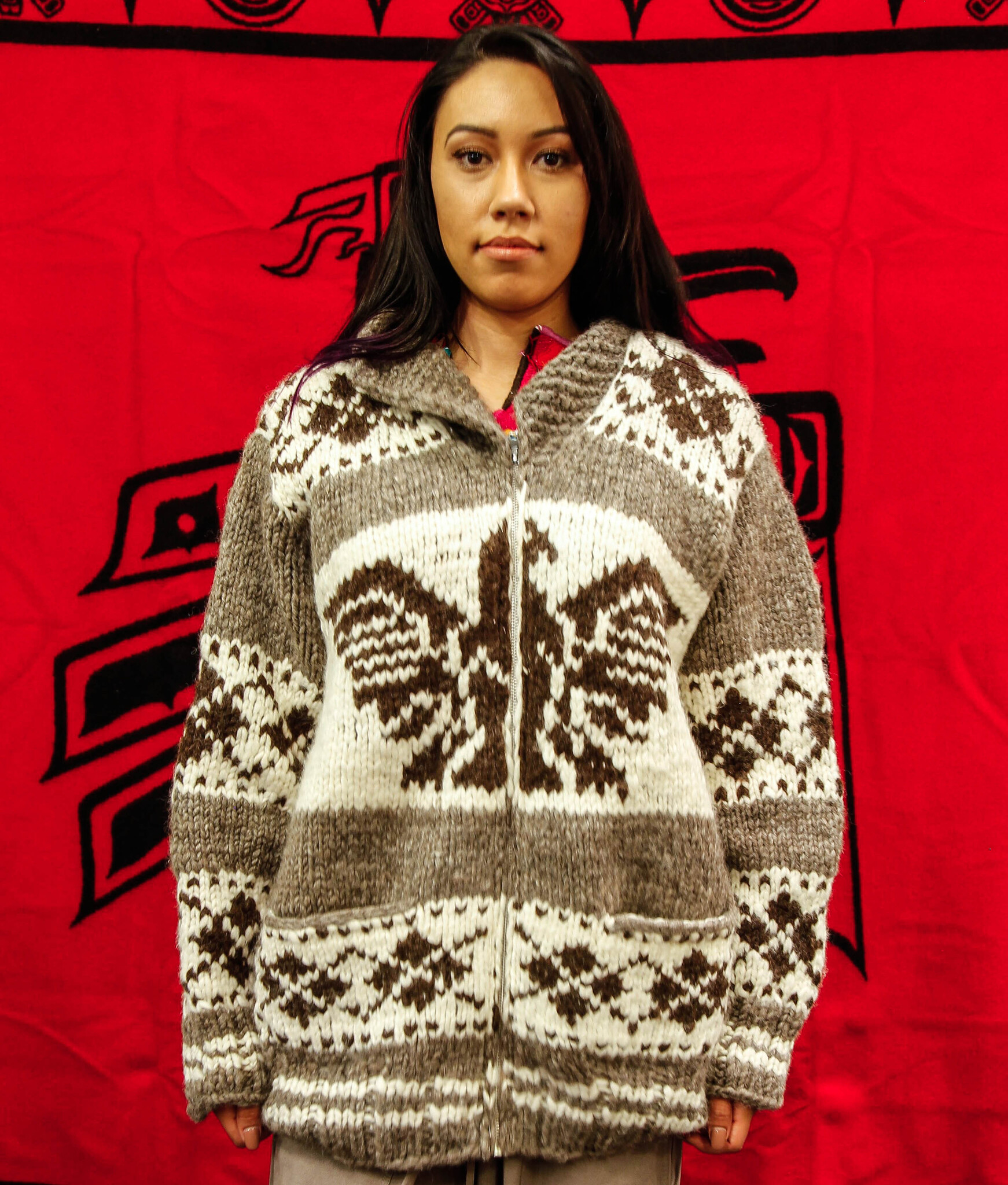
Traditional Cowichan motifs express identity, land, spirituality, and family history. Each pattern carries meaning shaped by Coast Salish teachings. When you understand these symbols, you read the sweater as a story, not just a garment.
Why motifs matter
Cowichan sweaters come from Coast Salish communities of Vancouver Island. Their patterns connect families and reflect community values. Motifs show the relationship between people, animals, and the natural world. They also help buyers choose respectfully and understand the cultural importance of each piece.
For readers who want more background on materials, see the guide on how a genuine Cowichan sweater is made in context with wool, technique, and construction.
Common Cowichan motifs
Thunderbird
The Thunderbird sits at the top of many sweaters. It is a powerful being that represents the stormy West Coast. Makers often use bold wings and sharp angles to convey this energy.
Sweaters with Thunderbird motifs often carry personal meaning for both the maker and the wearer.
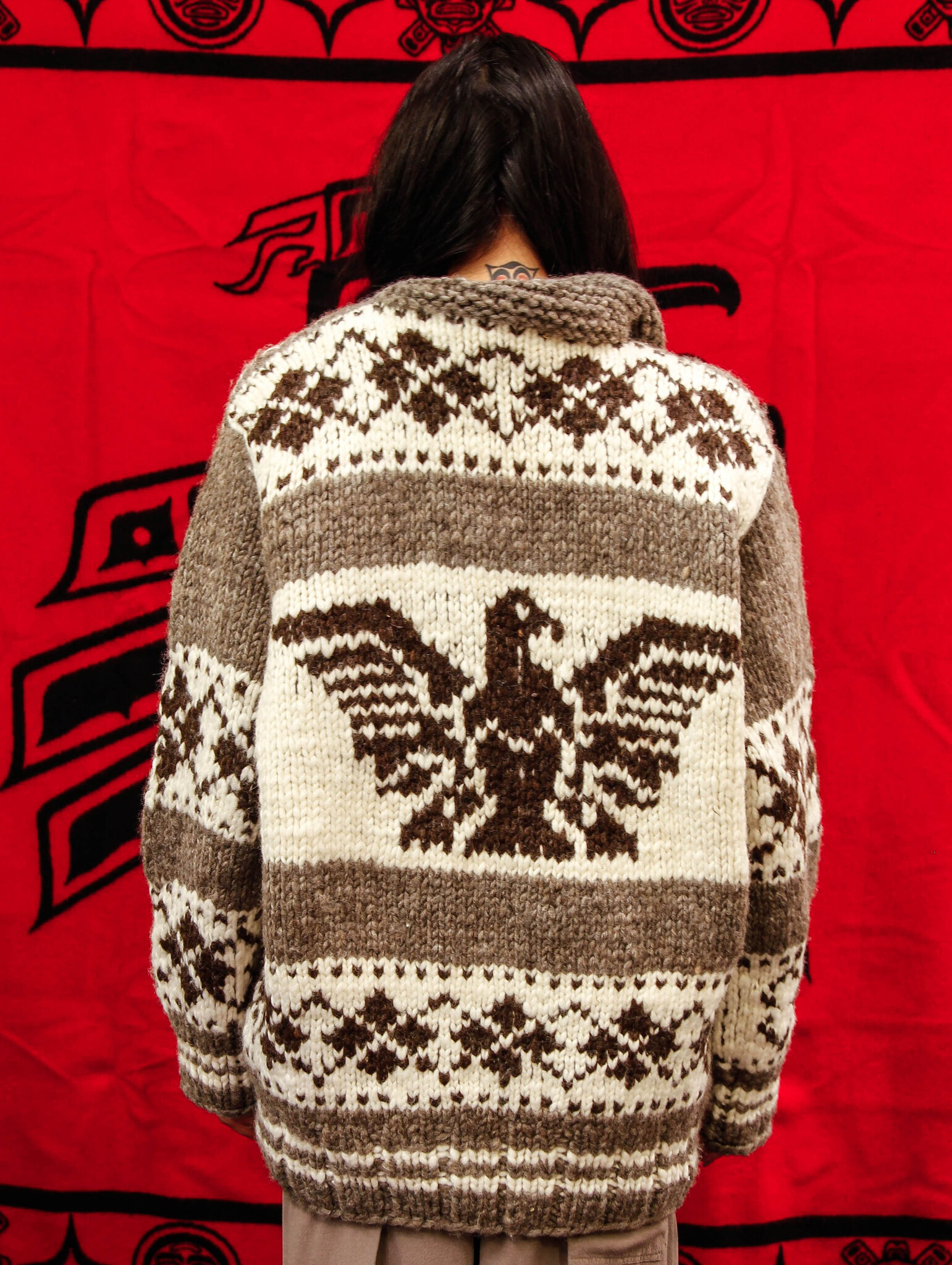
Frog
Frogs are great communicators. In Native cultures they are believed to travel between this world and the spirit world. they are helpers to shamans. Their songs have spiritual and magical qualities. In west coast Indigenous art they represent the transfer of spiritual knowledge.
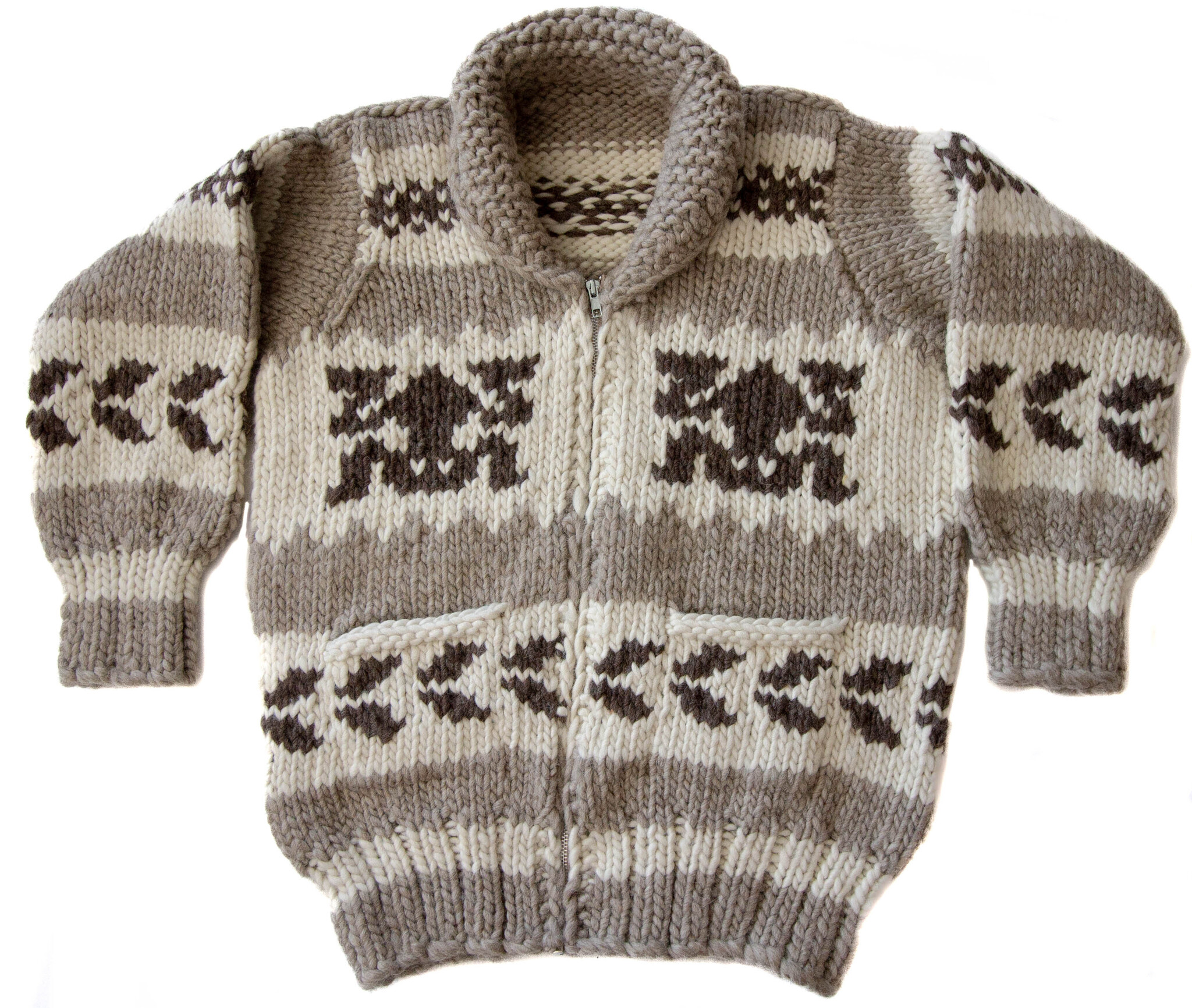
Raven
Raven is believed to have played a large part in making the world we live in. In Native origin stories Raven placed the sun, moon and stars in the sky, he placed the first humans on the earth, he provided them with fire, shelter and food.
If you explore carving collections, such as the Northwest Indigenous carvings section, you will see the Raven theme appear across different art forms.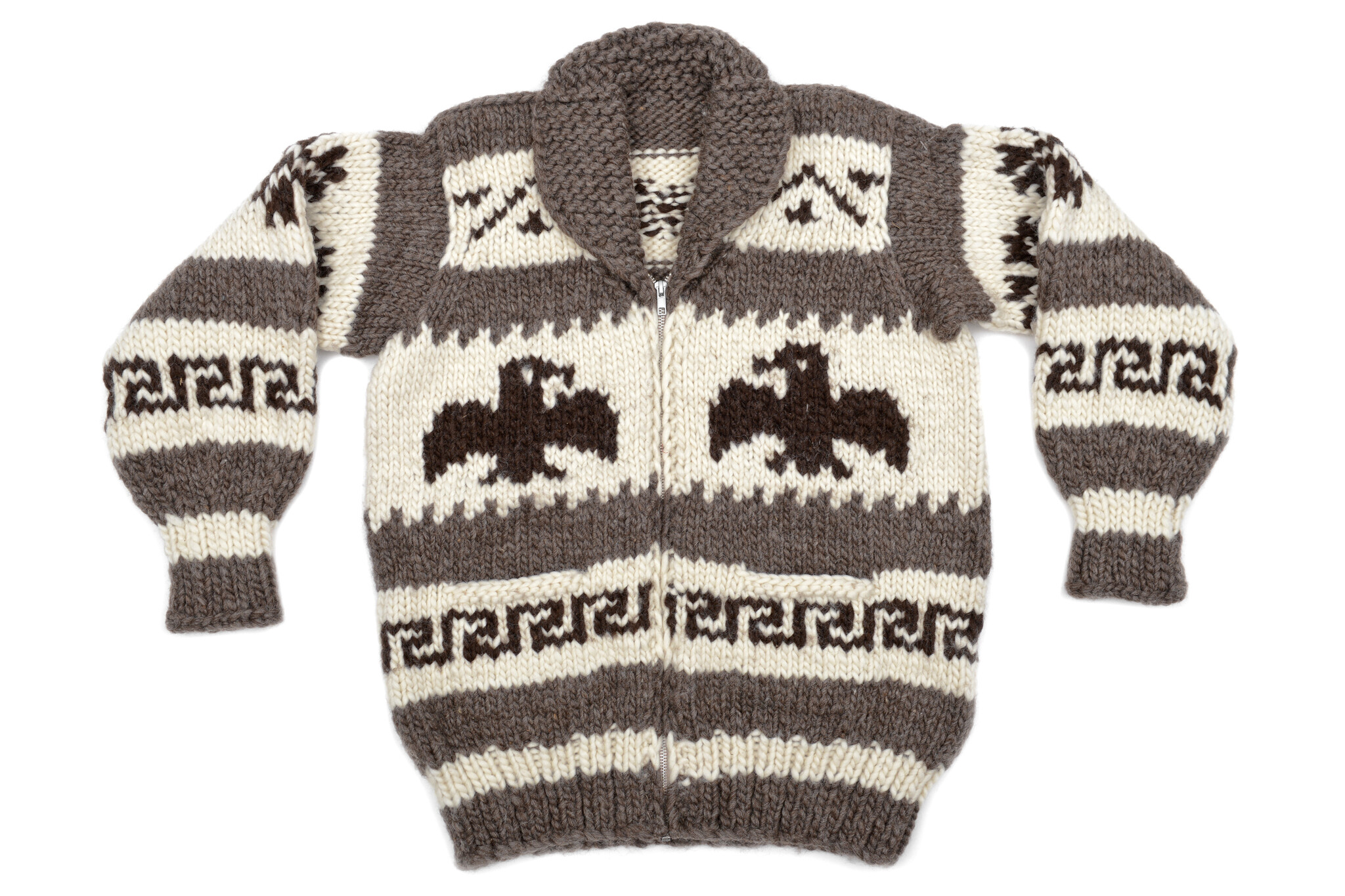
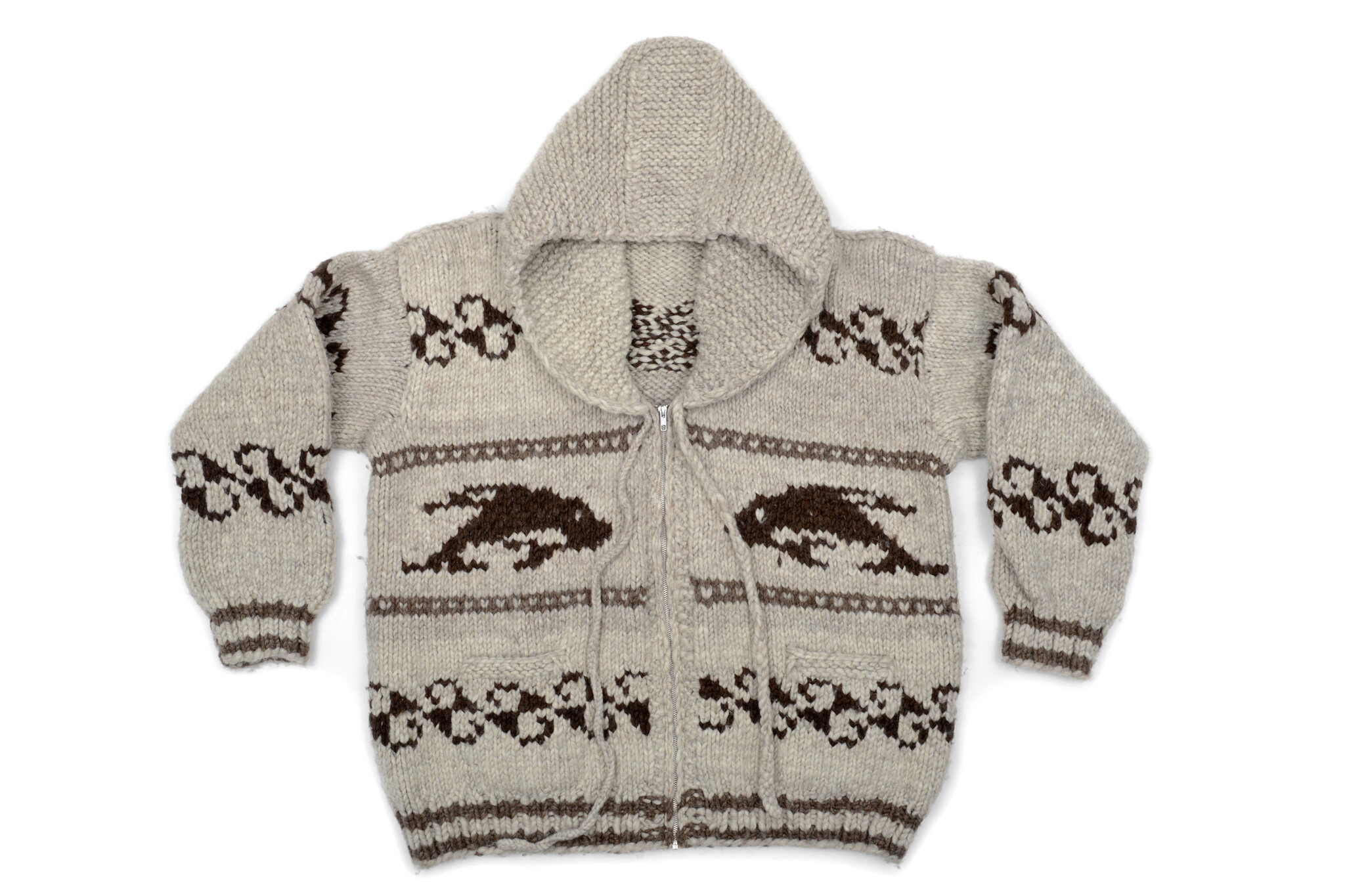
Whales
Orca motifs represent tradition and strong family ties. These patterns often sit across the chest and back, creating a sense of movement sometimes accompanied by wave symbols. The shape depends on the maker’s style or family teachings.
Geometric bands
Chevron bands, zigzags, and diamonds show flow, continuity, and protection. These shapes frame the larger motifs and stabilize the overall design.
These bands may have different meanings. Makers often adjust them based on personal style or community tradition.

How motifs are placed on the sweater
Motifs are placed with intent. The back usually carries the main story. Sleeves and hems support the message with repeating shapes. Artisans balance symmetry and movement, ensuring that the sweater remains comfortable to wear and easy to read.
Reading a Cowichan sweater today
A pattern may blend old symbols with modern adaptations. This helps keep the craft alive. You may notice thicker borders, mixed tones, or updated shapes. These changes respect tradition while allowing makers to express their creativity.
To explore related expressions of symbolism across different media, you can visit our page on Indigenous beadwork, where many patterns follow similar forms and teachings.
FAQs
Do motifs vary between families?
Yes. Some families keep specific designs. Others use shared patterns with small changes that reflect personal style.
Are modern Cowichan motifs still traditional?
Yes. Contemporary knitters honour their core teachings while adapting their designs to modern styles and tastes.
Should buyers ask about pattern meaning?
You may. Sellers will provide information, but meanings vary across families and communities.
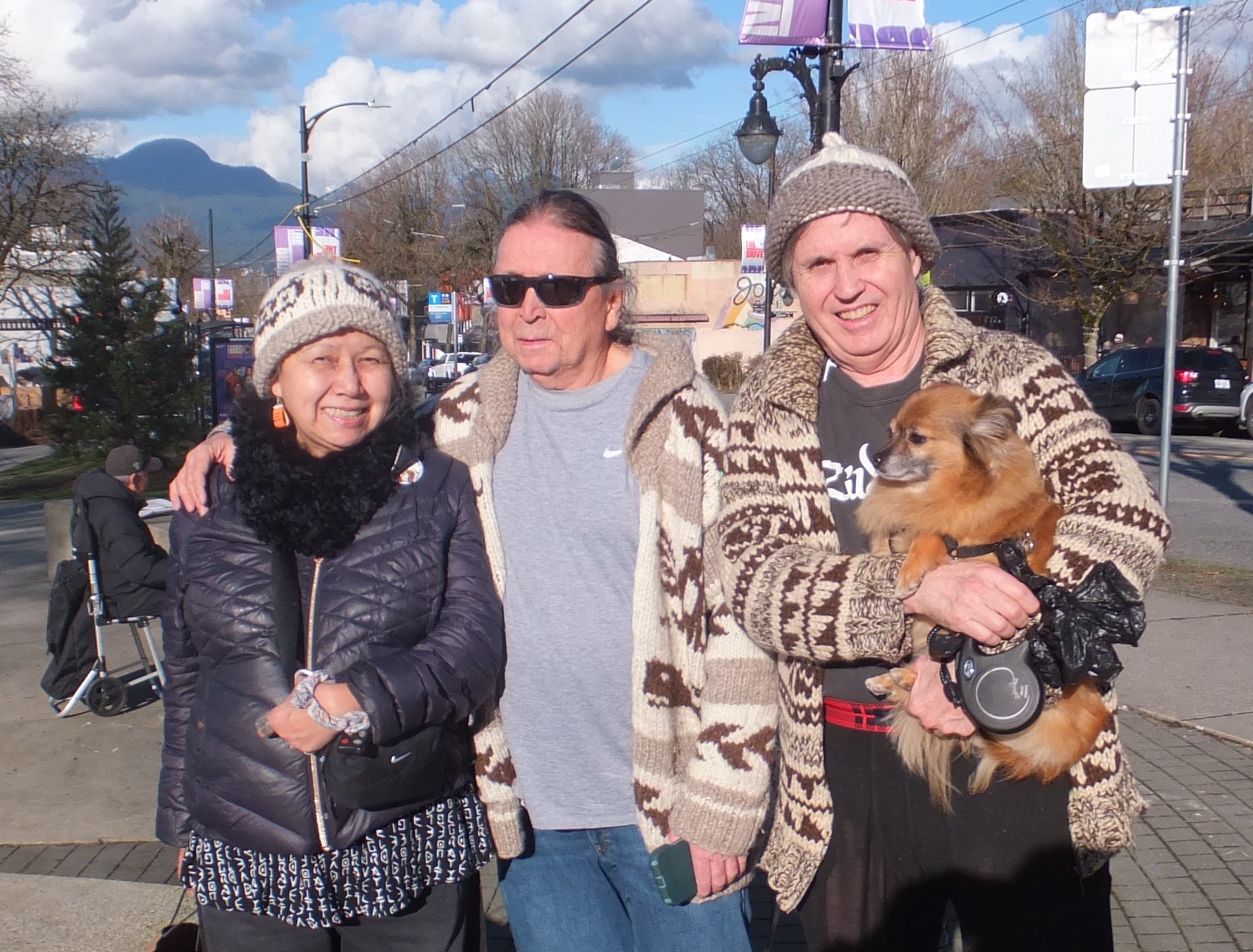
Cheryl & Jim with a happy customer.
Final thought
Cowichan motifs pass knowledge forward. They honour relationships. They protect stories. When you learn their meaning, you connect with the people who created them and with the land that shaped them.


Comments
Be the first to comment...