How to Authenticate Northwest Coast Wood Carvings: Tool Marks, Materials, and Artist Signatures
- Posted on
- By Cheryl's Trading Post
- 0
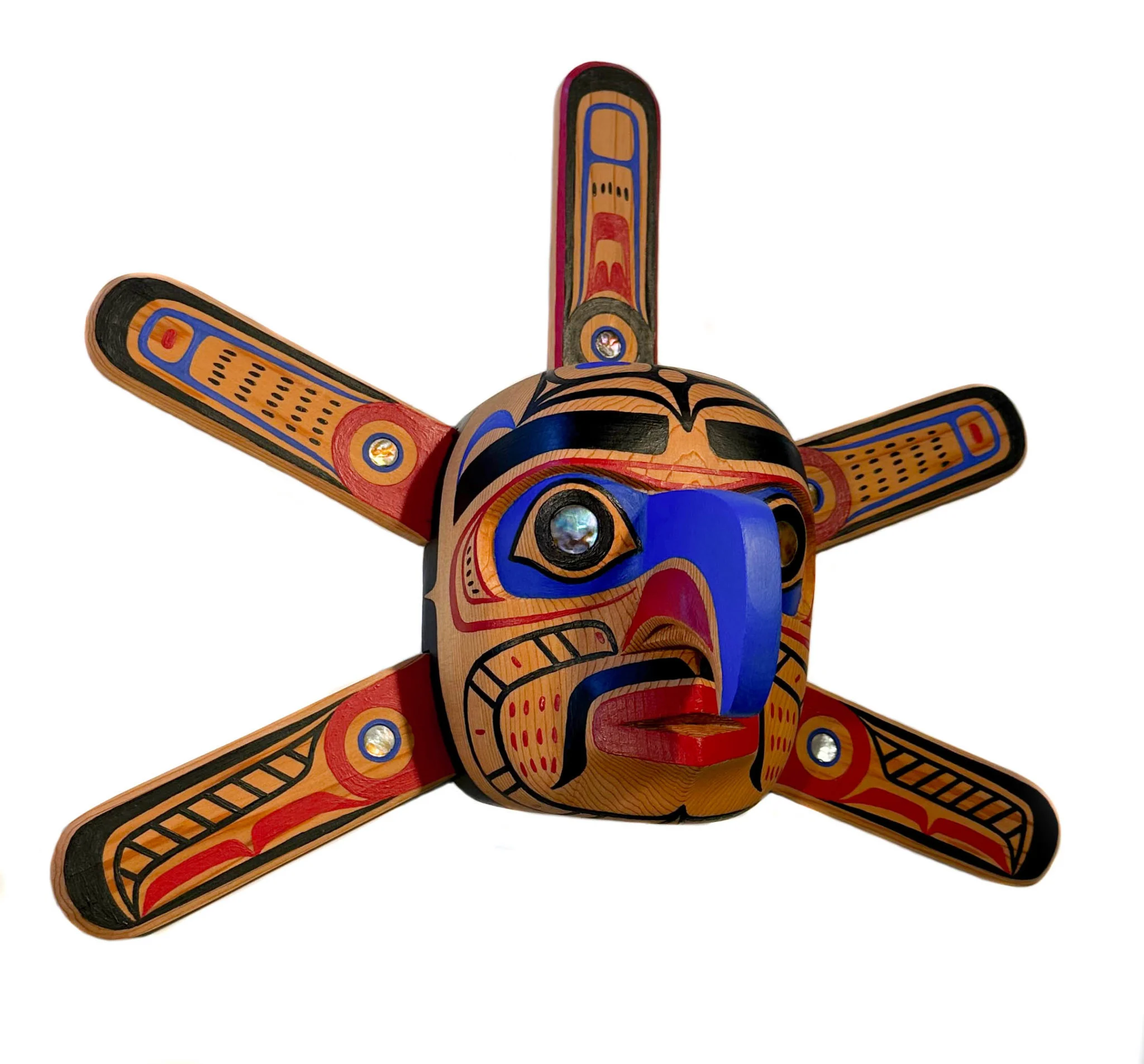
How to read tool marks, check materials, and verify artist signatures on Northwest Coast carvings. A buyer's authentication guide from an Indigenous-owned gallery.
The market for Northwest Coast Indigenous carvings has a counterfeiting problem. Every day, online sellers offer mass-produced replicas made from resin moulds, factory-routed wooden blanks, knock-offs carved in Asia, and pieces with no connection to any Northwest Coast nation, all of which are presented as authentic Indigenous art. The price tags look similar. The designs sometimes look close. And most buyers have no reliable framework for telling the difference.
This guide gives you that framework. We are Cheryl's Trading Post, an Indigenous-owned gallery with over 15 years of experience representing named Northwest Coast artists. The markers described here are the ones we use ourselves when assessing a piece and the ones we teach buyers who want to collect with confidence.
Why Northwest Coast Carving Authentication Is Different From Inuit Art
Inuit art has a well-known authentication system: the Igloo Tag Trademark, registered by the Canadian government, is affixed to authenticated contemporary Inuit work and includes the artist's name, community, title, and year. If you are buying an Inuit carving, look for that tag.
Northwest Coast carving does not have an equivalent government-backed trademark system. Authentication here depends on different evidence: the physical marks left by traditional tools, the quality of the formline design, the materials the piece is made from, the artist's signature, and the documentation the gallery or seller can provide. Each of these tells you something the others cannot, and a confident assessment uses all of them together.
Reading Tool Marks: The Physical Evidence of Handwork
The surface itself provides the most reliable physical evidence that a Northwest Coast carving was made by a human hand using traditional tools. Learning to read tool marks is the single most useful skill a collector can develop.
Adze facets. The adze is the defining tool of Northwest Coast carving. It is a hand-held blade mounted at a right angle to its handle, used to remove wood in controlled strokes. Authentic pieces carved with an adze show slightly irregular, overlapping faceted surfaces — particularly in the flatter background planes and on the backs of pieces. No two adze strokes are identical. The facets catch the light at slightly different angles, creating a subtle texture that is impossible to replicate with a machine router or a mould.
Knife and gouge cuts at detail boundaries. Along the edges of formline elements, where one shape meets another, authentic hand-carved pieces show knife cuts that are confident and slightly variable. The line is clean but not mechanically perfect. A machine-produced piece will have edges that are either too uniform (CNC routed) or too soft (resin cast from a mould). A hand-carved edge has a quality woodworkers call "life" — it is slightly different at every point along its length.
Intentional tool mark preservation. Many Northwest Coast carvers deliberately leave adze marks visible on finished pieces because those marks show energy and craftsmanship. A rough, faceted back on a plaque or a textured background plane is not evidence of poor finishing — it is often a deliberate artistic choice. Our post on how Northwest Coast Indigenous wood carvings are made covers the step-by-step process that produces these marks, which helps buyers understand what they are looking at.
What machine production looks like. Factory-routed pieces have formline channels that are too consistent — the same depth, the same width, and the same profile throughout. Resin cast pieces have no tool marks at all: the surface is either uniformly smooth or textured by a mould, and fine details are soft-edged rather than crisply carved. Look for mould seam lines along the sides or back; these are a definitive sign of cast reproduction.
Materials: Wood, Weight, and Finish
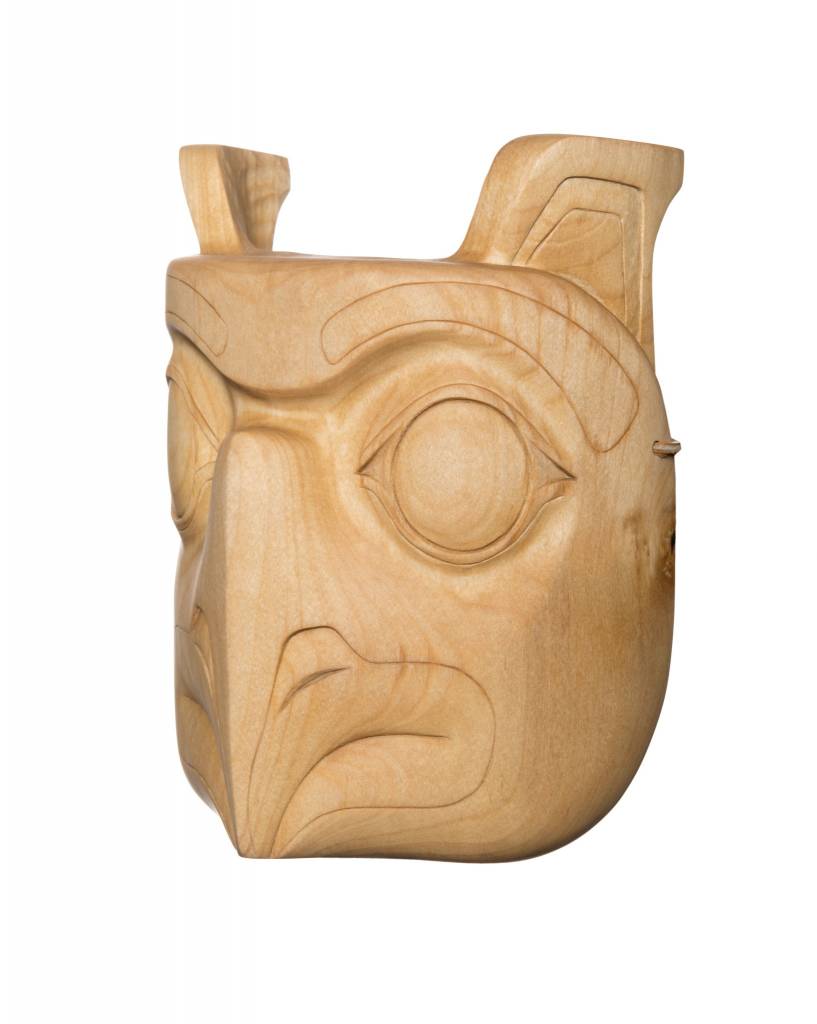
Authentic Northwest Coast carvings are made from wood. Reproductions are often made from resin, cold-cast composite, or low-grade factory wood shaped by machine. You can usually tell the difference without any special equipment.
Weight. Resin reproductions are often noticeably heavier than genuine cedar carvings of the same size, because resin is denser than wood. Hollow resin pieces can be lighter but feel dead in the hand; there is no flex, no variation in surface response. Cedar has a specific lightness relative to its visual mass, and you develop a sense of it quickly once you have held several authentic pieces.
Grain and natural variation. Genuine wood pieces show grain lines on any unfinished surface. Under paint, you will often see grain patterns in raking light. Cedar has a fine, straight grain with a warm reddish-brown tone that is distinct from the grey-brown of machine-cut pine or the yellow of commercially farmed fir. Look at the back or base of the piece for unpainted wood; the underside is where grain is easiest to read.
Natural checks and cracks. Small checks — surface cracks that form as wood moves with humidity changes — are a sign that a piece is made from real wood that has aged and responded to its environment. A resin piece will never check. An older cedar carving will often show small, stable surface cracks, particularly at exposed end grain. These are not damage; they are evidence of material authenticity.
Smell. Cedar has a distinctive, faintly aromatic scent, particularly on fresh or unfinished surfaces. This method is not a primary authentication tool, but it is a useful confirming detail on unfinished areas of a piece. Resin and synthetic materials smell different — often chemical or neutral.
For a full breakdown of the materials and tools traditional carvers use, see our guide on traditional Indigenous wood carving: materials, tools, and techniques.
Formline Quality as an Authentication Marker
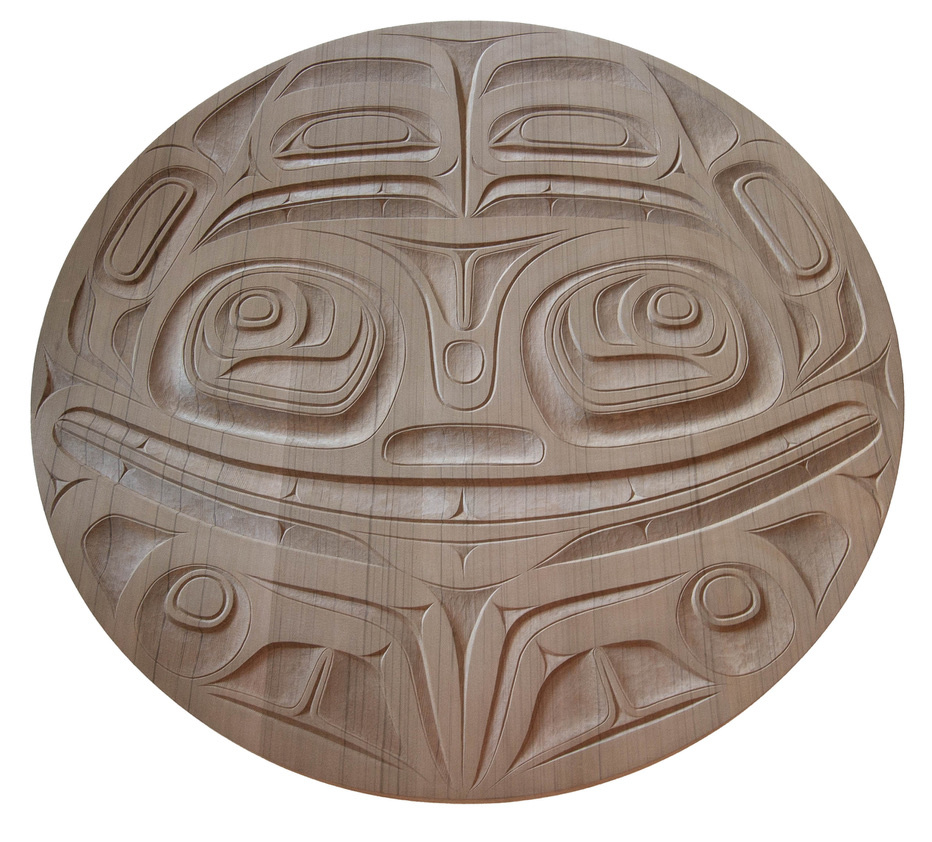
Formline is the defining visual language of Northwest Coast art: a system of ovoids, U-forms, and S-forms that flow continuously across a carved or painted surface. It is not a decorative pattern that can be imitated by copying the shapes. It is a design grammar with internal rules, and a carving made by someone trained in that tradition looks different from one made by someone simply reproducing the visual surface.
When examining formline on a carving, look for:
Proportional consistency. Ovoid shapes in authentic formline have a specific ratio between their long and short axes, and they swell in the corners in a way that is structurally intentional. An imitation ovoid tends to be either too perfectly oval (like a machine-drawn ellipse) or shapeless and unresolved.
Visual flow. In authentic formline design, the lines move continuously from one element to the next with a sense of momentum. Forms interlock and breathe. Imitations often show formline elements that feel isolated or disconnected — like decorative shapes that have been placed rather than designed.
Depth relationships. On a genuine carved piece, the relief depth changes intentionally: primary formline elements sit higher, secondary elements sit lower, and background planes recede further. On a machine-produced piece, depth changes may be uniform or absent, because the router cannot replicate the judgment calls a carver makes with each stroke.
Our post on the role of formline design in Northwest Coast carving covers the full visual vocabulary in detail and is the best starting resource for buyers who want to develop their eye.
Artist Signatures: Where to Look and What They Tell You
An artist's signature on a Northwest Coast carving is not always obvious. It is worth knowing where to look and what different signature types mean.
Location. Most signatures appear on the back of the piece, near the base or lower edge. On totem pole carvings, the signature is usually on the underside or back of the base. On wall panels, check the flat back surface. On masks, the interior back edge is where you should look. Some artists sign on a small affixed paper or card label rather than directly on the wood.
Form. Authentic signatures from working Northwest Coast artists are hand-applied: pencilled, painted with a fine brush, or occasionally stamped. The signature often includes the artist's name, their nation, and occasionally the date. Some artists use a personal mark or symbol alongside their name. The signature is typically modest in scale — it is an attribution, not a design element.
What a genuine signature does not look like. A printed sticker with no specific artist name, a generic label reading "handmade by a Native artist," or a stamp-applied mark are not authentic attributions. Any signature that cannot be connected to a specific named person from a specific nation is not a useful authentication marker regardless of how official it looks.
Verifying the signature. If you have a piece with a signature but no gallery documentation, the most reliable way to verify is to contact a gallery with long-standing artist relationships and ask whether they recognize the artist's name and can confirm their national affiliation. Artists who produce work consistently are known within the community, and a gallery that actually represents them can confirm the connection.
Certificates of Authenticity: What to Look For
A certificate of authenticity is a document that travels with a piece and records its attribution. A good certificate includes the artist's full name, their nation and band or community affiliation, the title or description of the work, the medium and dimensions, and the date of creation. It should also include the issuing gallery's name and contact information.
What a certificate cannot do on its own is guarantee authenticity. A certificate is only as reliable as the gallery that issued it. A certificate from a gallery with verified artist relationships, an Indigenous ownership structure, and a documented track record means something. A printed certificate from an anonymous online seller means very little.
Cheryl's Trading Post issues certificates for every piece we sell. Cheryl, a Gitxsan woman of the Killer Whale Clan, has built our gallery on direct artist relationships for over 15 years. Every piece in our Northwest Indigenous Carvings collection includes full artist attribution and documentation.
Red Flags: What Reproduction Looks Like
Mould seam lines. Run your finger along the sides and back edges of the piece. A faint raised line running down the side of the carving is a mould seam — the place where two halves of a casting mould met. This seam is a definitive sign of cast reproduction.
Uniform machine routing. A hand did not cut formline channels that are identical in width, depth, and profile from one end to the other. CNC machines produce this kind of consistency. Authentic hand-carved formline channels vary because the carver adjusts pressure and angle constantly.
Weight inconsistency with size. Hold the piece. Resin reproductions of small to medium carvings often feel unusually heavy for their size. Factory-cut wooden pieces may feel light in a way that seems right at first but lacks the density and variation of old-growth cedar.
"Inspired by" language on the listing. This is a legal hedge. It means the piece draws on the aesthetic of Northwest Coast art without being Indigenous-made.
No artist name. "Made by a Native artist," "Pacific Northwest style," or "authentic-looking Indigenous carving" are not attributions. If the seller cannot name the artist, the piece is not attributed regardless of what the listing says.
Generic design without nation specificity. Authentic pieces represent specific crests used by specific nations. A carving described only as "eagle" or "bear" without naming the nation or the artist's lineage connection to that crest is operating at the level of décor, not authentic art.
For a full breakdown of the differences between authentic work and commercial reproduction, see our post on what sets authentic Northwest Coast Indigenous carvings apart from mass-produced wood art.
Buying From an Authenticated Gallery vs. the Open Market
The most reliable route to an authenticated Northwest Coast carving is through a gallery that has direct artist relationships and can answer specific questions about every piece it sells. When you buy from an open marketplace, an auction site, or an undocumented seller, you are assessing the piece entirely on physical evidence. That is possible to do — this guide gives you the tools — but it requires confidence built through experience with authenticated pieces.
When buying from a gallery, the five questions from our buyer's guide to authentic totem pole carvings apply to any Northwest Coast carving: Who is the artist? What nation do they belong to? Is the artist carving within their nation's tradition? Does the piece come with documentation? Can the seller tell you about this specific piece? A gallery that can answer all five without hesitation is operating with integrity.
FAQ
How do I tell if a Northwest Coast carving is real wood or resin?
Check the weight relative to size — resin is typically denser than cedar. Look at unfinished areas for grain patterns. Run a finger along the side edges and base for mould seam lines, which are found only on cast reproductions. Cedar also has a faint aromatic scent on unfinished surfaces that synthetic materials do not.
Do all authentic Northwest Coast carvings have artist signatures?
Not always, particularly on older pieces. Many gallery-sold contemporary works are signed, but the absence of a signature does not automatically indicate inauthenticity. Verifiable attribution from a reputable gallery, along with physical evidence of handwork, is more significant than a signature alone.
Can formline designs be faked?
The surface appearance can be imitated, but not well. The proportional relationships, the visual flow, the depth decisions, and the hand quality of authentic formline carving are the result of years of training within the tradition. Imitations tend to fail on at least one of these dimensions when examined closely. Developing a reliable eye takes time spent with authenticated pieces.
What does an adze mark look like?
An adze mark is a slightly concave, faceted surface impression left by the curved blade of an adze. On raking light, authentic adze-worked surfaces show a pattern of overlapping, slightly irregular facets — all roughly parallel in direction but none identical. It looks like controlled, confident handiwork, which is precisely what it is.
Is it possible to authenticate a piece I already own?
Yes. Bring it to a gallery with direct Northwest Coast artist relationships and ask them to assess it. A reputable gallery can usually identify the nation of origin based on design vocabulary and stylistic markers, confirm whether the signature matches a known artist, and give an informed view on whether the physical characteristics are consistent with authentic hand carving.
To browse authenticated pieces with full artist attribution and documentation, visit our Northwest Indigenous Carvings collection. If you have questions about a specific piece — one you own, one you are considering, or one you have seen elsewhere — get in touch directly.
- Understanding "Old Pawn" Navajo Jewelry: What It Means and Why Collectors Seek It
- Navajo Jewellery Symbols Explained: Squash Blossoms, Naja Pendants, and Sandcast Rings
- Cowichan Sweater Gift Guide: Choosing the Right Design and Size for Someone Else
- Custom vs Ready-to-Buy Indigenous Masks: What Collectors Should Know
- Types of Indigenous Masks: Transformation, Portrait and Ceremonial
- The Roles of Singing and Music in Traditional West Coast Indigenous Cultures
- How to Choose an Authentic Totem Pole Carving: A Buyer's Guide
- Totem Poles Explained: Meanings, Types and Cultural Significance
- How to Authenticate Northwest Coast Wood Carvings: Tool Marks, Materials, and Artist Signatures
- The Role of Formline Design in Northwest Coast Carving: Understanding the Visual Language
Share this on:


Comments
Be the first to comment...