Totem Poles Explained: Meanings, Types and Cultural Significance
- Posted on
- By Cheryl's Trading Post
- 0
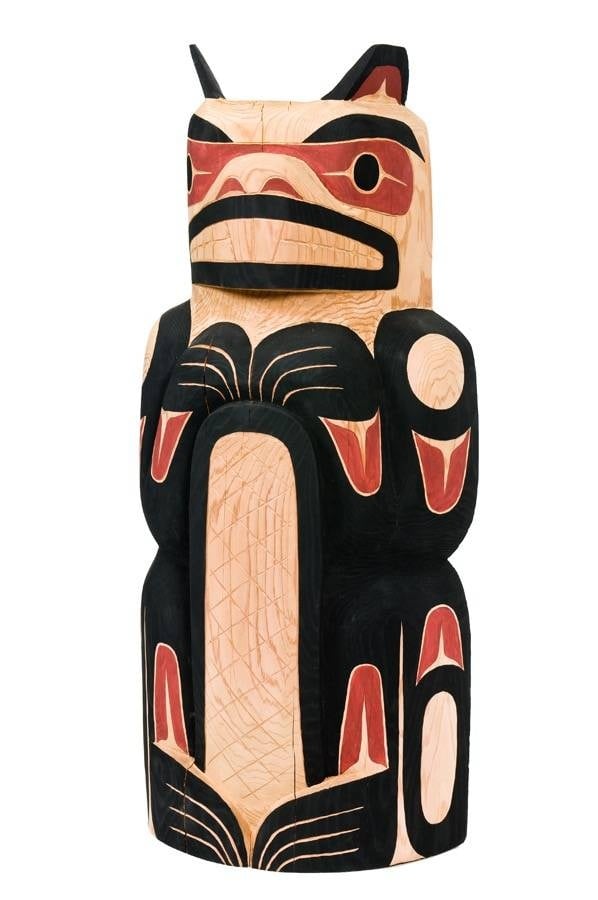
What do totem poles mean and why are they carved? An Indigenous-owned gallery explains the types, the crest animals, and the nations behind the tradition.
Totem poles are monumental cedar carvings created by First Nations of the Pacific Northwest, and they are among the most misunderstood objects in North American art. They are not idols. They are not objects of worship. They are records, carved in wood, of family history, clan identity, and rights that generations have held and passed down.
At Cheryl's Trading Post, this is not an academic subject. Cheryl is a Gitxsan woman, born on the Skeena River, of the Killer Whale Clan, and the carvers whose work we carry come from within the nations that built this tradition. This guide explains what totem poles actually are, the different types and what each is for, what the animals mean, and the nations whose hands have kept the art alive.
What Is a Totem Pole?
A totem pole is a large cedar monument carved with figures that tell a specific story: a family's ancestry, a significant event, the honouring of someone who has died, or a clan's rights and privileges. The word "totem" comes from the Ojibwe language and has been applied loosely ever since, but the tradition of carving monumental poles belongs specifically to the peoples of the Northwest Coast — the Haida, Tlingit, Tsimshian, Kwak'waka'wakw, Nuu-chah-nulth, Gitxsan, and Coast Salish nations, among them.
These nations are not one people. Each has its language, its crests, and its own visual vocabulary. A Haida pole and a Tsimshian pole carved in the same decade can look entirely different and carry entirely different genealogical meanings. Reading a pole correctly begins with knowing whose pole it is.
Most poles are carved from western red cedar, the dominant wood of the coastal rainforest. Cedar is durable, workable with hand tools, and holds pigment well. Before a tree is felled, many communities hold a ceremony of gratitude in its honour, and according to the UBC First Nations Studies Program, selecting the right tree requires both cultural knowledge and a close understanding of forest ecology. The work begins long before a blade touches wood.
Types of Totem Poles
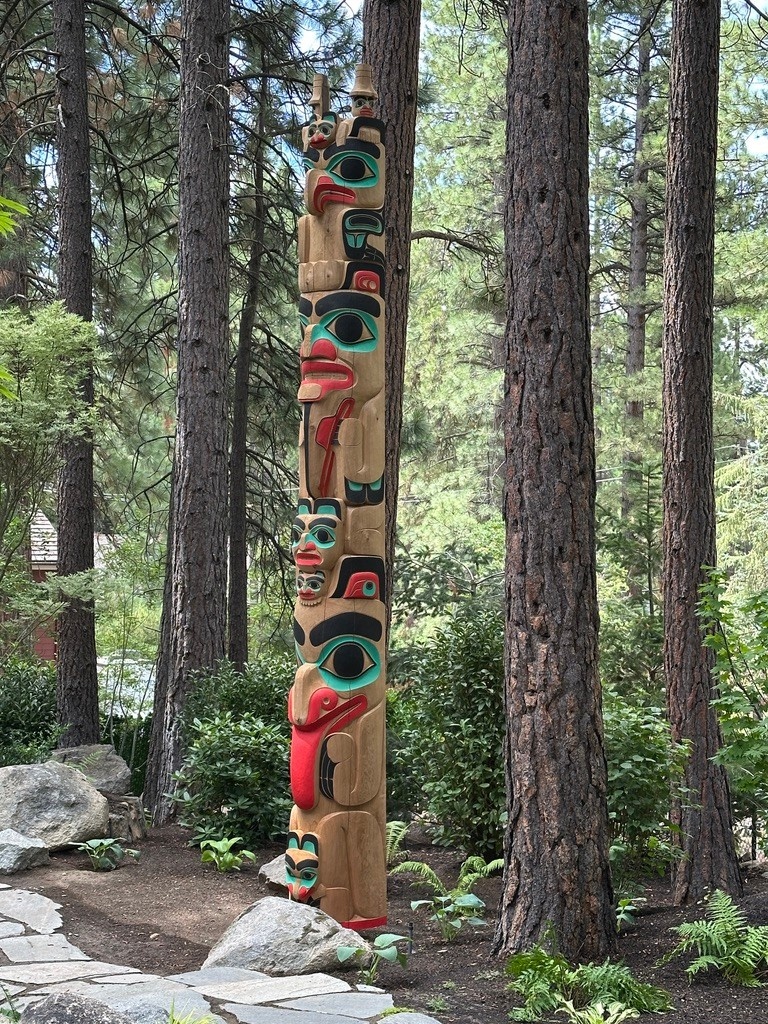
There is no single thing called "a totem pole." Different poles serve different purposes, and collapsing them into one category misses most of what makes them worth understanding.
Memorial poles honour the life of a person who has died. They are raised at a potlatch, the feast ceremony where the host family gives gifts to witnesses who validate the pole's claims. The figure at the top often carries the deceased person's clan crest.
House posts are structural. They stand inside or at the entrance of a clan house, supporting the roof while marking the family's lineage. The Coast Salish of the Lower Fraser Valley traditionally carved house posts rather than freestanding poles.
Welcoming poles face the water and greet arriving visitors. They mark territory and hospitality and typically feature figures associated with the hosting clan. This placement was deliberate: traditional travel on the Northwest Coast was by canoe, with villages located along rivers and coastlines. Travellers approaching by water could read the poles from their canoes. The figures told them whose territory they were entering, who lived there, and what family or clan held those rights. Poles served, in this sense, as address markers and directories for a world that moved by water.
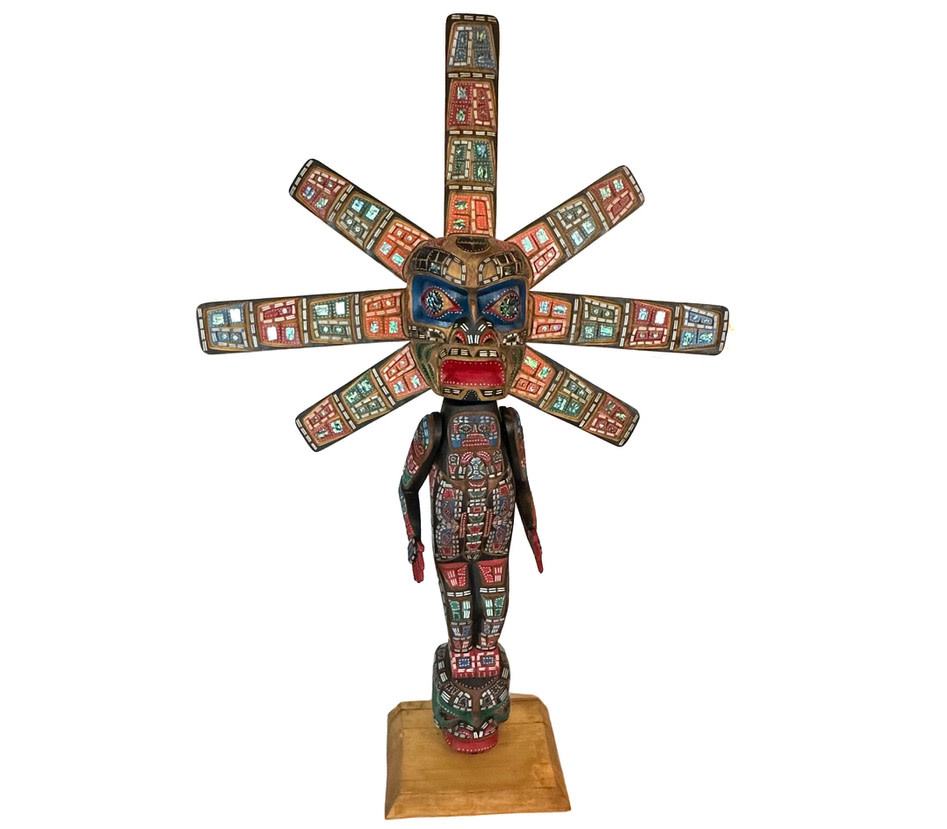
Mortuary poles are funerary monuments found mainly in Haida and Tlingit traditions. They once held the remains of high-ranking individuals in a box at the top of the pole.
Shame poles publicly record a person's or group's failure to meet a social obligation. The best-known modern example, raised in Cordova, Alaska, addresses ExxonMobil's unpaid damages after the Exxon Valdez spill.
Restoration poles are part of contemporary practice. Over the past century, many nations have raised new poles to restore works taken from communities or lost to weather. These represent a living ceremonial system continuing its work.
What Do the Animals on Totem Poles Mean?
The figures on a pole are crests: markers of clan ancestry, inherited rights, and history. They are not generic symbols anyone may use. A Raven on a Haida pole and a Raven on a Tsimshian pole carry related but distinct genealogical histories, and each crest belongs to a lineage that holds the right to display it. We cover the full visual vocabulary in our guide to the meanings of Northwest Coast crest designs, but these are the figures you will encounter most often.
Eagle represents vision, strength, and what many nations describe as the closest relationship with the Creator. In Tlingit and Haida tradition, Eagle is one of the two moieties — the social halves that organize entire communities and determine who can marry whom.
Raven is the transformer and the trickster. In Haida and Tlingit cosmology, Raven brought light to the world by stealing the sun. Raven is the counterpart moiety to Eagle and represents creation, knowledge, and the unpredictable nature of change.
Orca, the killer whale, is a protector of travellers and represents family, community, and longevity. It is Cheryl's own clan crest, appearing throughout the carvings and jewellery in our Northwest Indigenous Carvings collection.
Bear represents strength, healing, and the protection of family. Wolf carries loyalty, intelligence, and the strength of the group over the individual. Salmon is perseverance and renewal, the fish that returns home to complete its cycle.
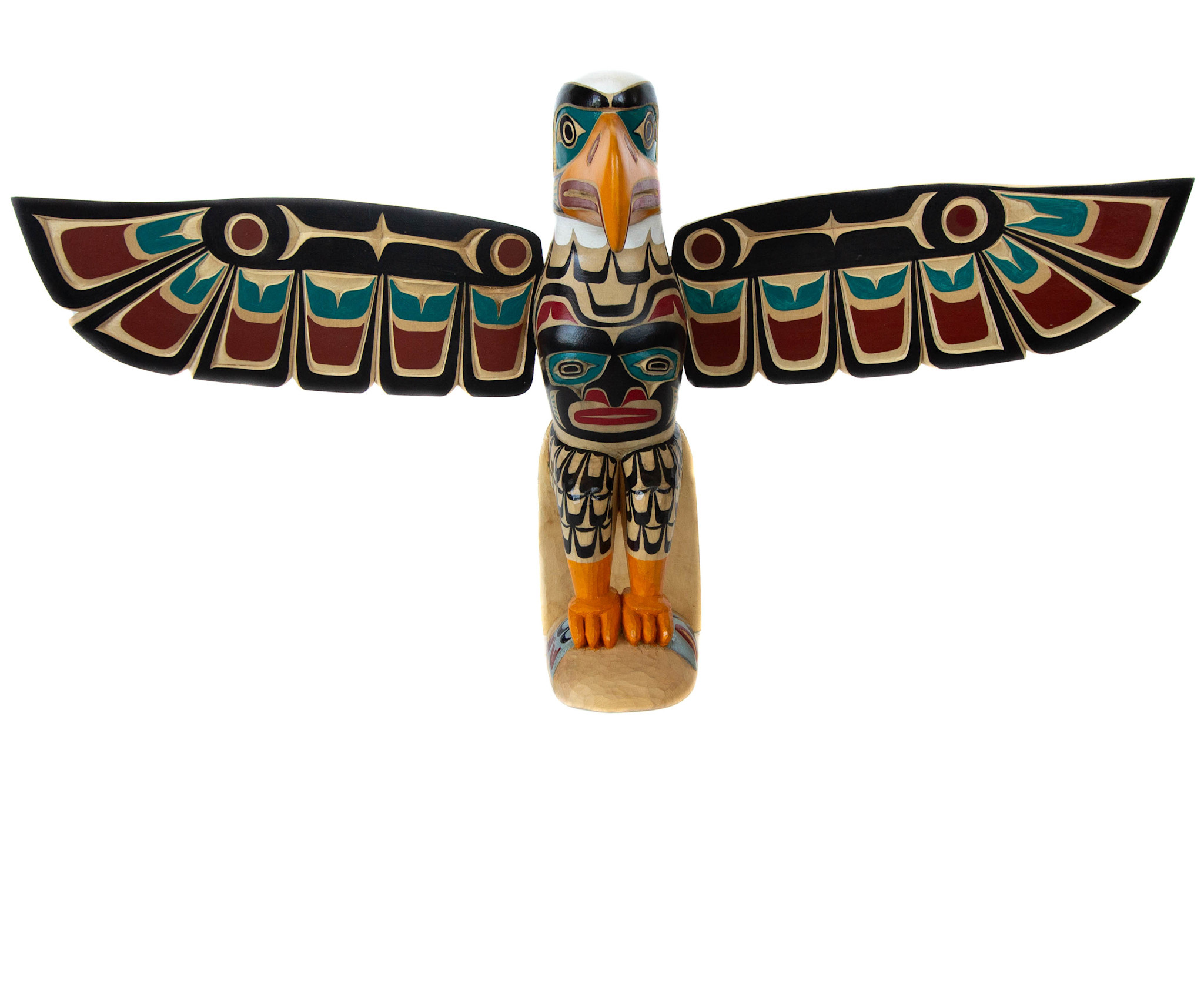
Thunderbird is a supernatural being whose wingbeats cause thunder, and it often crowns the poles of the highest-ranking families.
Meanings shift between nations. The same figure on a Kwak'waka'wakw pole and a Tsimshian pole may share a name but carry different clan-specific histories. For collectors, that specificity is exactly what separates authenticated, artist-attributed work from mass-produced reproduction.
The Nations Behind the Work
The Haida of Haida Gwaii are among the most recognized carvers in the world, known for the scale of their poles, the precision of their formline, and the use of black, red, and blue-green. Artists like Jay Simeon and Corey Bulpitt carry the tradition today.
The Tlingit of Southeast Alaska and northern BC record potlatch histories and clan rights in their poles with remarkable detail, organized around the Raven and Eagle moieties.
The Tsimshian are known for elaborately painted poles and a four-moiety system: Raven, Wolf, Eagle, and Killer Whale. Their poles document relationships between noble houses with the seriousness other cultures reserve for written legal records.
The Kwak'waka'wakw produce some of the boldest carvings on the coast, with expressive figures closely connected to the transformation mask tradition. The same carvers and the same design vocabulary appear in the masks and headdresses we carry.
The Gitxsan of the Skeena River — Cheryl's home territory — raise poles in front of clan houses at village sites along the river, recording the histories of named houses whose titles have passed down since time immemorial.
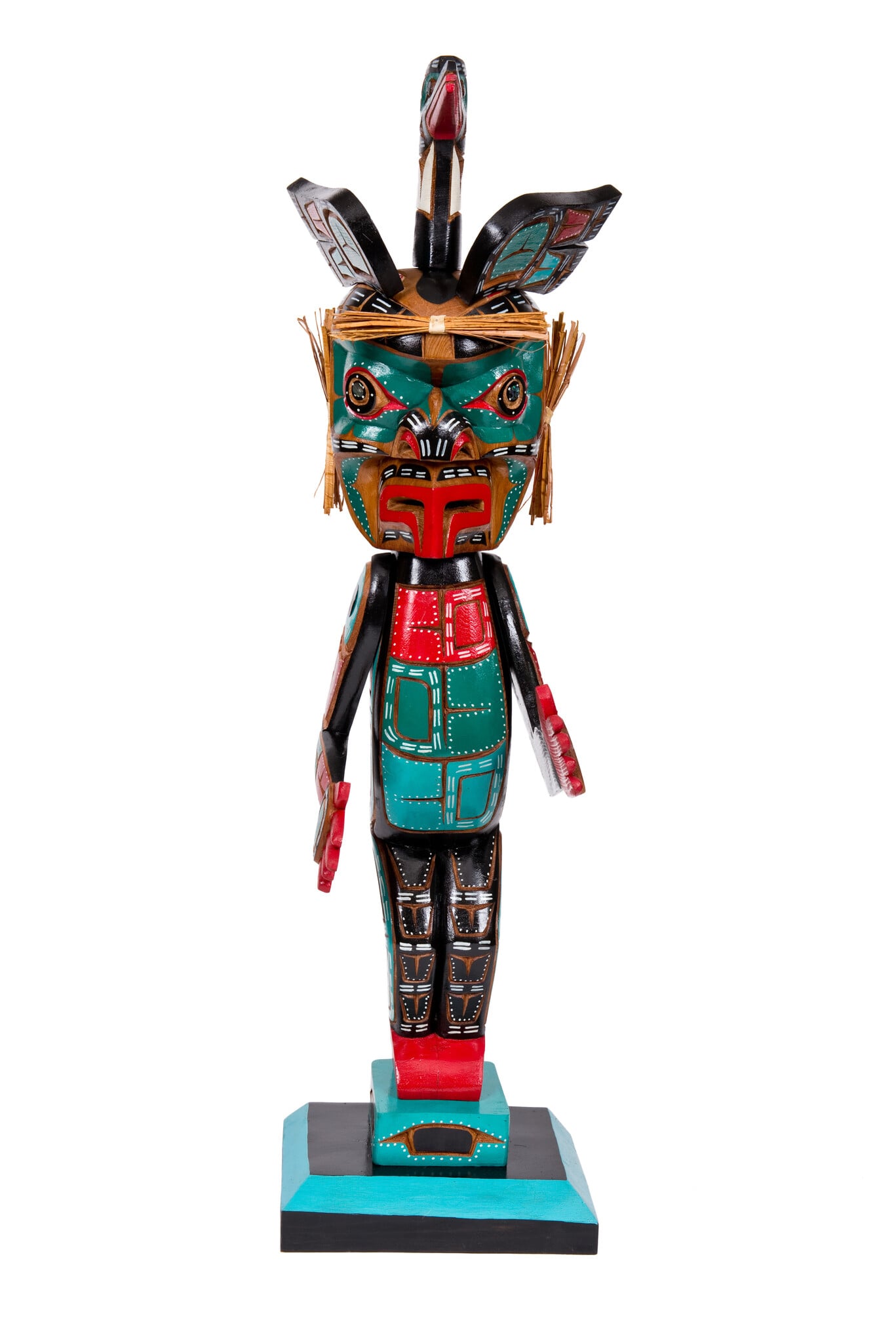
How a Totem Pole Is Made
Carving is a skilled practice passed from master to apprentice, often beginning in childhood. The tradition was historically male, though women have always shaped design and ceremony, and contemporary women carvers have raised poles of their own.
The carver works with adzes, knives, and chisels. Some carve the full circumference of the trunk; others work primarily from one face and hollow the back. A large pole can take one to two years. When carving is done, the figures are painted: black for outlines, red for life force and transition, and blue-green for sky and water. The colours carry their meanings.
The pole is raised at a potlatch, where the host family gives gifts to witnesses who validate the history the pole claims. Those witnesses are participants in a living legal system, and their presence is what makes the record official.
Common Myths About Totem Poles
They are religious idols. They are not. The association with worship came from 19th-century anthropologists who misread Indigenous social structures. Poles are genealogical and historical records.
"Low man on the totem pole" means being unimportant. The phrase reads the form backwards. Placement depends on the story being told, and some of the most significant figures sit at the base.
All First Nations carved totem poles. The tradition is specific to the Northwest Coast. Plains, Southwest, and Eastern nations have their own distinct art forms unrelated to monumental pole carving.
Old poles were meant to last forever. Cedar weathers over decades, and many nations let older poles return to the earth by design. The permanence lives in the knowledge and the ceremony, not in any one pole.
FAQ
What is the cultural significance of totem poles?
Totem poles record a clan or family's ancestry, rights, and history. At potlatches, people raise them and witnesses validate the claims, so they function as legal documents as much as works of art.
What are the main types of totem poles?
Memorial poles, house posts, welcoming poles, mortuary poles, and shame poles are the principal types, with restoration poles as an active contemporary category. Each serves a distinct purpose in ceremony and community life.
What do the animals on totem poles mean?
They are clan crests tied to specific genealogies. Eagle, Raven, Orca, Bear, Wolf, Frog, and Thunderbird are the most common, and their meanings vary by nation — the same animal carries different histories in Haida versus Tsimshian carving, for example.
Are totem poles still being made today?
Yes. Carving is a living practice across the Northwest Coast. Nations continue to raise new poles for potlatches and community sites, restore poles removed during the colonial period, and carve for collectors who value artist-attributed work.
Totem poles belong to living cultures, carved by named artists from specific nations. If you are looking for an authentic piece of this tradition, browse our Northwest Indigenous Carvings collection, where every work is artist-attributed and every purchase supports the communities behind the art.
Browse our totem poles and model totem poles for collector-scale pieces, all artist-attributed and supporting the communities behind the art.
- Understanding "Old Pawn" Navajo Jewelry: What It Means and Why Collectors Seek It
- Navajo Jewellery Symbols Explained: Squash Blossoms, Naja Pendants, and Sandcast Rings
- Cowichan Sweater Gift Guide: Choosing the Right Design and Size for Someone Else
- Custom vs Ready-to-Buy Indigenous Masks: What Collectors Should Know
- Types of Indigenous Masks: Transformation, Portrait and Ceremonial
- The Roles of Singing and Music in Traditional West Coast Indigenous Cultures
- How to Choose an Authentic Totem Pole Carving: A Buyer's Guide
- Totem Poles Explained: Meanings, Types and Cultural Significance
- How to Authenticate Northwest Coast Wood Carvings: Tool Marks, Materials, and Artist Signatures
- The Role of Formline Design in Northwest Coast Carving: Understanding the Visual Language
Share this on:


Comments
Be the first to comment...