How to Choose the Right Size Wall Panel for Your Space: A Room-by-Room Placement Guide
- Posted on
- 0
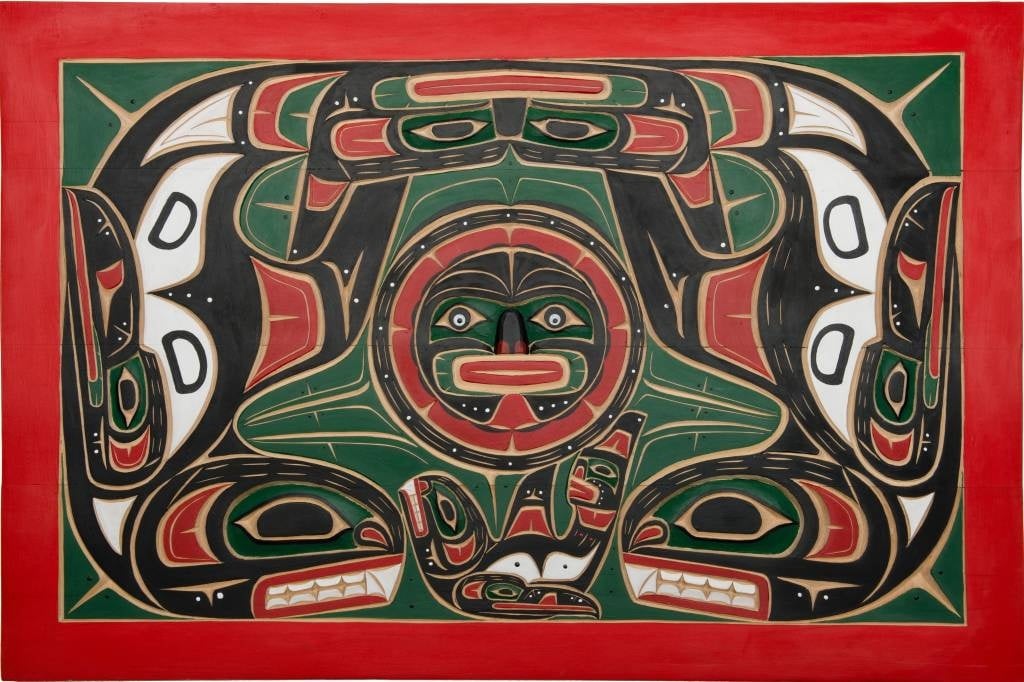
Match a carved wall panel to your furniture with the two-thirds rule, hang it at the right height, and mount a heavy cedar piece safely. A room-by-room guide with real panel sizes.
Choose a wall panel that is about two-thirds to three-quarters the width of the furniture beneath it, and hang it so the centre sits 57 to 60 inches (145 to 152 cm) from the floor. On an open wall, leave generous space around the panel so its carved depth has room to show.
That is the short answer. The rest of this guide shows you how to measure your wall, how a carved cedar panel behaves differently from framed art, and where to place it in each room, so you can browse our Northwest Coast wall panels and plaques with a size in mind.
How to measure your wall and furniture
You need a tape measure, a pencil and about five minutes.
- Measure the furniture or the open wall. If the panel will hang above a sofa, console or headboard, measure the width of that piece. For an open wall, measure the space between corners, doors or windows.
- Multiply by two-thirds and three-quarters. That gives you the width range that looks intentional. Designers call this the two-thirds rule, and Chairish's hanging guide describes it the same way.
- Mark the centre height. Make a light pencil mark 57 to 60 inches (145 to 152 cm) from the floor. That is where the centre of the panel goes, not the top edge.
- Check the clearance. Above furniture, leave roughly 4 to 10 inches (10 to 25 cm) between the furniture and the bottom of the panel. If the furniture rule and the centre-height rule disagree, follow the furniture.
Use the table below as a starting point.
| Furniture width | Panel width (inches) | Panel width (cm) |
| Queen headboard, 60 in (152 cm) | 40 to 45 in | 102 to 114 cm |
| Loveseat or console, 72 in (183 cm) | 48 to 54 in | 122 to 137 cm |
| Standard sofa, 84 in (213 cm) | 56 to 63 in | 142 to 160 cm |
| Large sofa, 96 in (244 cm) | 64 to 72 in | 163 to 183 cm |
If a single panel that wide is out of reach, hang two or three smaller pieces as one group. Treat the group as a single unit, centre it on the furniture, and keep the gaps between pieces even.
How a carved panel differs from framed art
Most sizing advice is written for flat prints behind glass. A hand-carved cedar panel is a different object. The figure is carved in relief, so the surface casts shadows that change through the day, and the piece reads from an angle as well as from the front. Carvers set the main lines forward and the secondary shapes back, which is why a panel stays readable from across a room.
That depth has two practical effects. First, a carved panel needs clear wall around it, because crowding it flattens the shadows that make it work. Second, it is heavier than a framed print of the same size, so the hanging method matters as much as the measurements. Both are covered below.
Room-by-room placement guide
Living room. Above the sofa is the classic spot. Use the two-thirds to three-quarters rule against the sofa width, keep the bottom edge 4 to 10 inches (10 to 25 cm) above the back cushions, and centre the panel on the sofa, not on the wall, if the sofa sits off-centre.
Dining room. People sit here, so their eye level is lower. Hang the panel a little below the standing 57 to 60 inch line, and size it to the sideboard or the wall, not to the table. A horizontal panel above a sideboard works well.
Entry or hallway. Visitors pass close to the wall, so a detailed panel rewards a second look. Hang the centre at 57 to 60 inches (145 to 152 cm). On a narrow wall, choose a vertical panel so it does not crowd the walkway.
Staircase. Vertical panels suit a stairwell. Centre the piece at eye level for someone standing on the step in front of it, not on a single line for the whole flight.
Bedroom. Above the headboard, size the panel to about two-thirds of the bed width and leave 6 to 10 inches (15 to 25 cm) above the headboard. A calmer, more open composition tends to suit a bedroom.
Office or reception. Hang the panel where visitors see it, at eye level for someone standing, not at the level of the person behind the desk.
Real panel sizes from our collection
Here is how the two-thirds to three-quarters rule works with actual pieces. The widest furniture each panel suits is the panel width divided by two-thirds, and the narrowest is the width divided by three-quarters.
| Panel | Size | Suits furniture about |
| 20" Haisla Grandfather and the Two Wolves Panel | 20 in round (51 cm) | 27 to 30 in (69 to 76 cm) |
| 24" Coast Salish Wolf Carving | 24 in (61 cm) | 32 to 36 in (81 to 91 cm) |
| Coast Salish Bear Panel | 28.5 by 24 in (72 by 61 cm) | 38 to 43 in (97 to 109 cm) |
| Jim Charlie Eagle Wall Panel | 3 ft (91 cm) | 48 to 54 in (122 to 137 cm), a loveseat |
A sofa wider than those ranges calls for a larger panel or a group of two or three smaller ones.
Small walls, small panels
Not every wall needs a statement piece. The 20 inch Haisla panel by Brad Star and the 24 inch Wolf Carving by Brian Bob are sized for a stair landing, a narrow wall or a small room, and hung together they work as one composition. For a larger piece, browse our totem poles, or explore the full Northwest Indigenous Carvings collection.
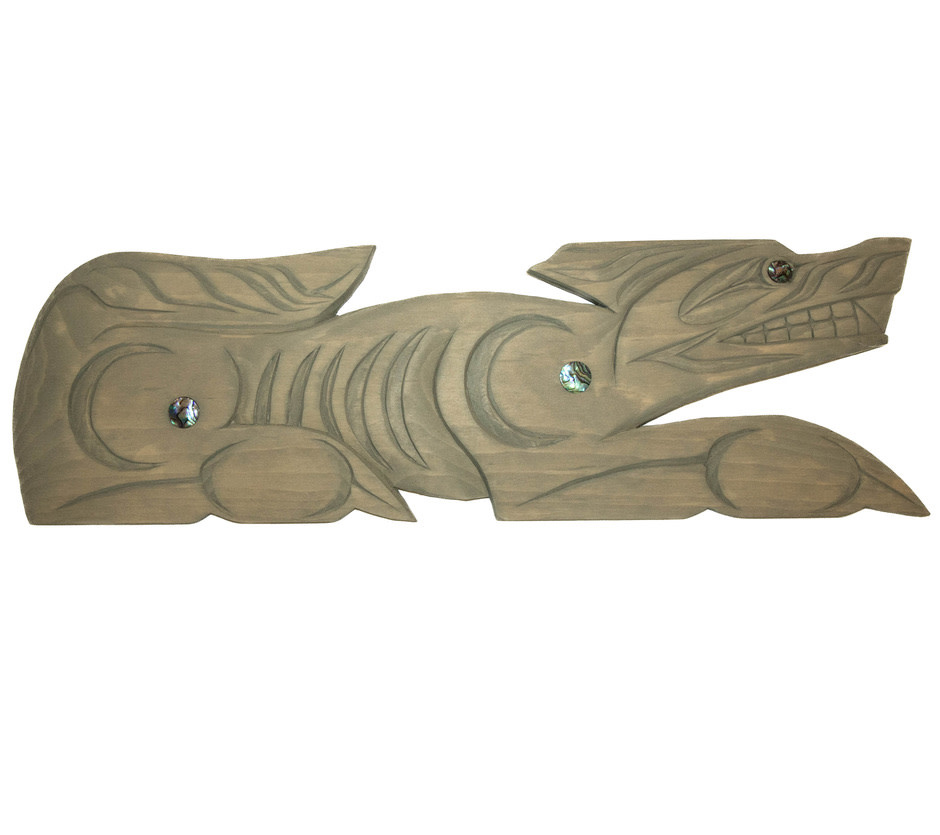
24" Coast Salish Wolf Carving by Brian Bob, hand carved with abalone inlay.
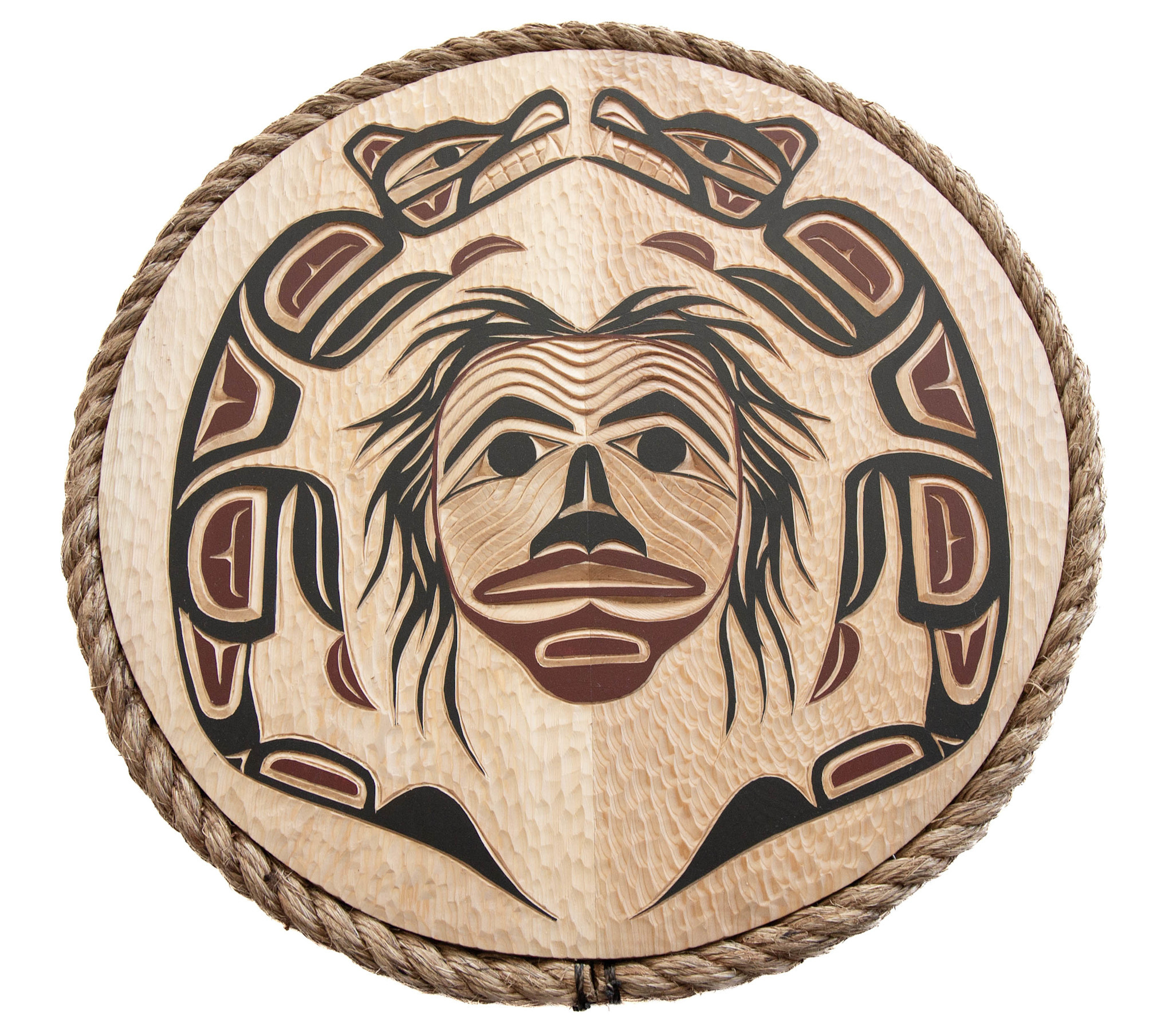
20" Haisla Grandfather and the Two Wolves Panel by Brad Star, round, in yellow cedar.
Style changes how big a panel feels
Two panels of the same dimensions can feel very different on a wall. A formline panel with a heavy primary line carries across a room and can look larger than its measurements. A Coast Salish composition leaves open space inside the design and tends to need more wall around it. Our guide to Coast Salish design vs formline explains the difference, and it is worth reading before you choose a size.
How to hang a heavy cedar panel
A carved panel is not a picture frame, so use proper hardware. The Kansas City Art Institute's guide to hanging artwork recommends screws with anchors, studs or a French cleat for pieces of 25 pounds (about 11 kg) or more.
- Ask for the weight. The listing gives the size. If the weight is missing, contact us and we will tell you.
- Find the studs. A stud finder takes a minute and gives the strongest anchor point.
- Use a French cleat for large panels. It spreads the weight along the wall and keeps the panel level.
- Level it before you tighten. A small level or a phone app is enough.
Placement also protects the wood. Keep a cedar panel out of strong direct sun and away from heat sources and damp. Our guide to preserving your Northwest Indigenous carvings covers light, humidity and care in detail.
Test the size before you buy
Cut a sheet of paper or cardboard to the width and height listed for the panel, tape it to the wall at your centre mark, and live with it for a day. If it feels too small, move up to the next size. Once the size works, the figure decides what the panel says in your home. Our guide to reading family and clan crests on wall panels explains what Eagle, Raven and Killer Whale mean.
Frequently asked questions
How big should art be above a couch?
About two-thirds to three-quarters the width of the couch. For an 84 inch (213 cm) sofa, that means a panel between 56 and 63 inches (142 to 160 cm) wide, or a grouped set of the same overall width.
How high should I hang a wall panel?
Hang it so the centre sits 57 to 60 inches (145 to 152 cm) from the floor. Above furniture, leave roughly 4 to 10 inches (10 to 25 cm) between the furniture and the bottom of the panel, and follow the furniture if the two rules disagree.
How do I hang a heavy carved panel safely?
Mount it into a stud or use a French cleat, especially if it weighs 25 pounds (11 kg) or more. Do not rely on a single picture hook or adhesive strips.
Can I hang several small carvings together?
Yes. Treat the group as one piece, centre the whole arrangement at 57 to 60 inches (145 to 152 cm), and keep the gaps between carvings even.
Find a panel that fits your wall
Once you know your measurements, browse our hand-carved Northwest Coast wall panels and plaques by artist and size. If you are between sizes, send us your wall measurements and we will help you choose.
- Reading Family and Clan Crests on Northwest Coast Wall Panels: Eagle, Raven and Killer Whale
- How to Choose the Right Size Wall Panel for Your Space: A Room-by-Room Placement Guide
- Coast Salish Design vs Formline: The Two Carving Traditions Behind Northwest Coast Wall Panels
- Caring for Your Northwest Coast Silver Bracelet: Cleaning, Storage and Tarnish Prevention
- Men's vs Women's Northwest Coast Bracelets: Design Differences and How to Choose
- Northwest Coast Bracelet Sizing Guide: How to Measure Your Wrist for the Perfect Cuff Fit
- Understanding "Old Pawn" Navajo Jewelry: What It Means and Why Collectors Seek It
- Navajo Jewellery Symbols Explained: Squash Blossoms, Naja Pendants, and Sandcast Rings
- Cowichan Sweater Gift Guide: Choosing the Right Design and Size for Someone Else
- Custom vs Ready-to-Buy Indigenous Masks: What Collectors Should Know
Share this on:


Comments
Be the first to comment...