Reading Family and Clan Crests on Northwest Coast Wall Panels: Eagle, Raven and Killer Whale
- Posted on
- 0
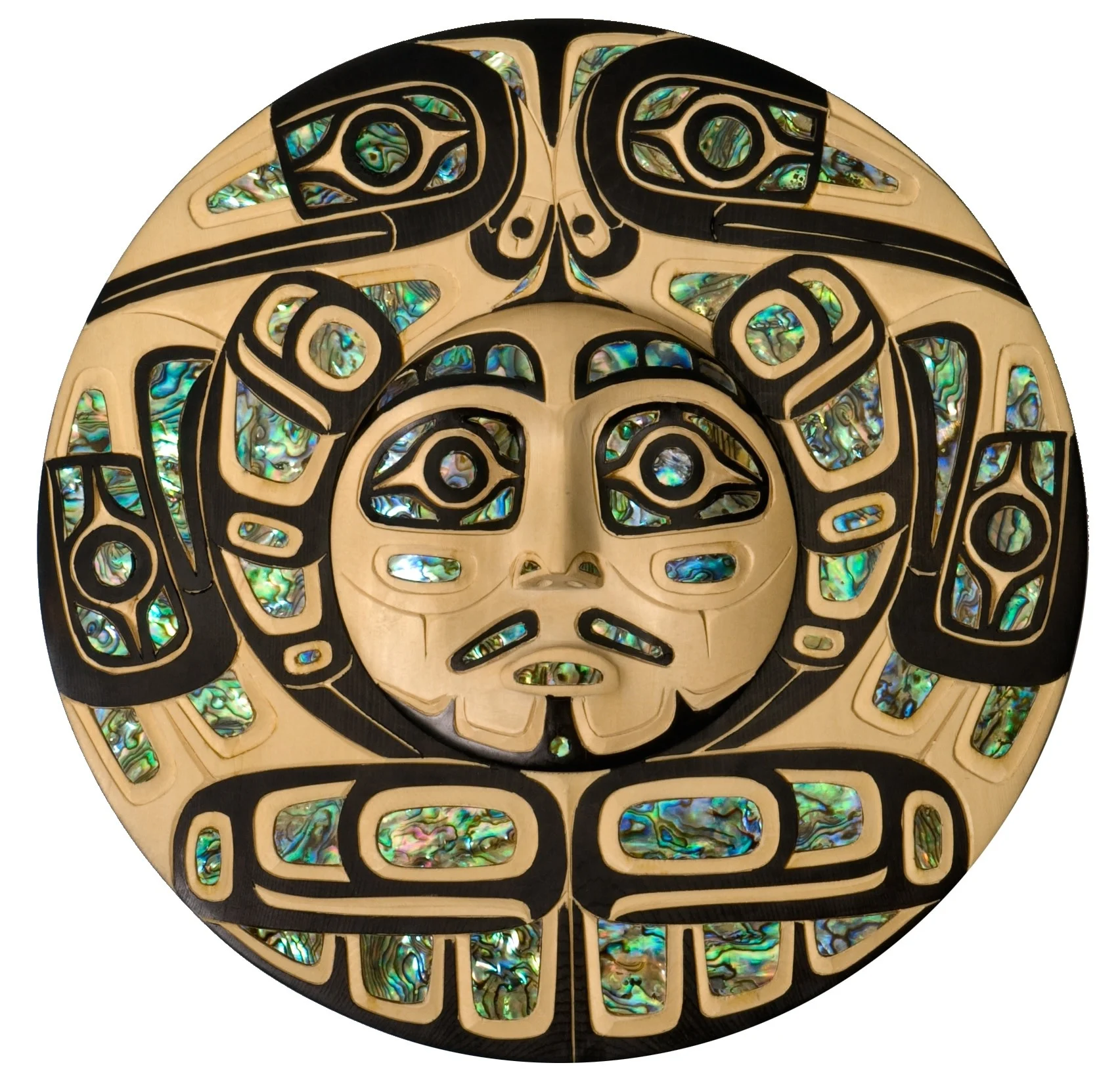
Learn to read Eagle, Raven and Killer Whale clan crests on Northwest Coast wall panels, how crest systems differ by nation, and what to ask before you buy.
To read a clan crest on a Northwest Coast wall panel, start with the nation behind it, because the clan system changes from nation to nation. Then identify the figure by its features: Eagle has a beak that curves down, Raven a long straight beak, and Killer Whale a tall dorsal fin. Together, those clues tell you which family line a design belongs to.
That is the short answer. The rest of this guide shows you how crests work in the main northern nations, how to recognize Eagle, Raven and Killer Whale on a carving, and what to ask before you buy, so you can browse our Northwest Coast wall panels and plaques with confidence.
What a crest is and who holds it
A crest is an emblem that belongs to a family line, not a free-floating decoration. On the northern coast, society is matrilineal, so a person belongs to the family and clan of their mother. Among the Gitxsan, each House belongs to one of four clans, and the crests shown on poles record the House's oral history and signify its authority over a particular territory.
That is why crest art carries more weight than a picture of an animal. Many panels show these animals simply as art, and some show a specific family's crest. The difference matters when you buy, and we come back to it below.
How crest systems differ by nation
There is no single crest system for the whole coast. Eagle, Raven and Killer Whale mean different things depending on whose tradition you are reading.
| Nation | How society is organized | Main crest groups |
| Haida | Two sides, called moieties, each with many family lineages | Raven and Eagle |
| Tlingit | Two moieties | Raven, and Eagle (Wolf in some places) |
| Tsimshian | Four clans | Raven, Eagle, Wolf and Killer Whale |
| Gitxsan | Four clans, each made up of Houses | Wolf (Lax Gibuu), Frog (Lax Seel), Fireweed (Gisgaast) and Eagle (Lax Skiik) |
Two points follow from the table. First, Killer Whale is a clan in some nations and a crest used within a clan in others. Among the Haida, crests identify the moiety and often the lineage of the owner, and all Raven lineages use a form of the Killer Whale. Second, Eagle and Raven can appear together on one piece without any contradiction, because one family can hold several crests. Coast Salish artists work from a different tradition, which we cover in our guide to Coast Salish design vs formline.
How to recognize Eagle on a panel
Look at the beak first. An Eagle's beak is short and strongly curved, turning down at the tip. The head is shown in profile, and the wings are often folded or spread with layered feather shapes. On Haida work, an Eagle crest usually points to the Eagle moiety.
See the Hand Carved Gitxsan Eagle Panel, a 2 foot yellow cedar panel by Gitxsan artist Trevor Angus, and the Gitxsan Eagle Panel with Blue Accents. Our Haida art collection shows the same crest across other media.
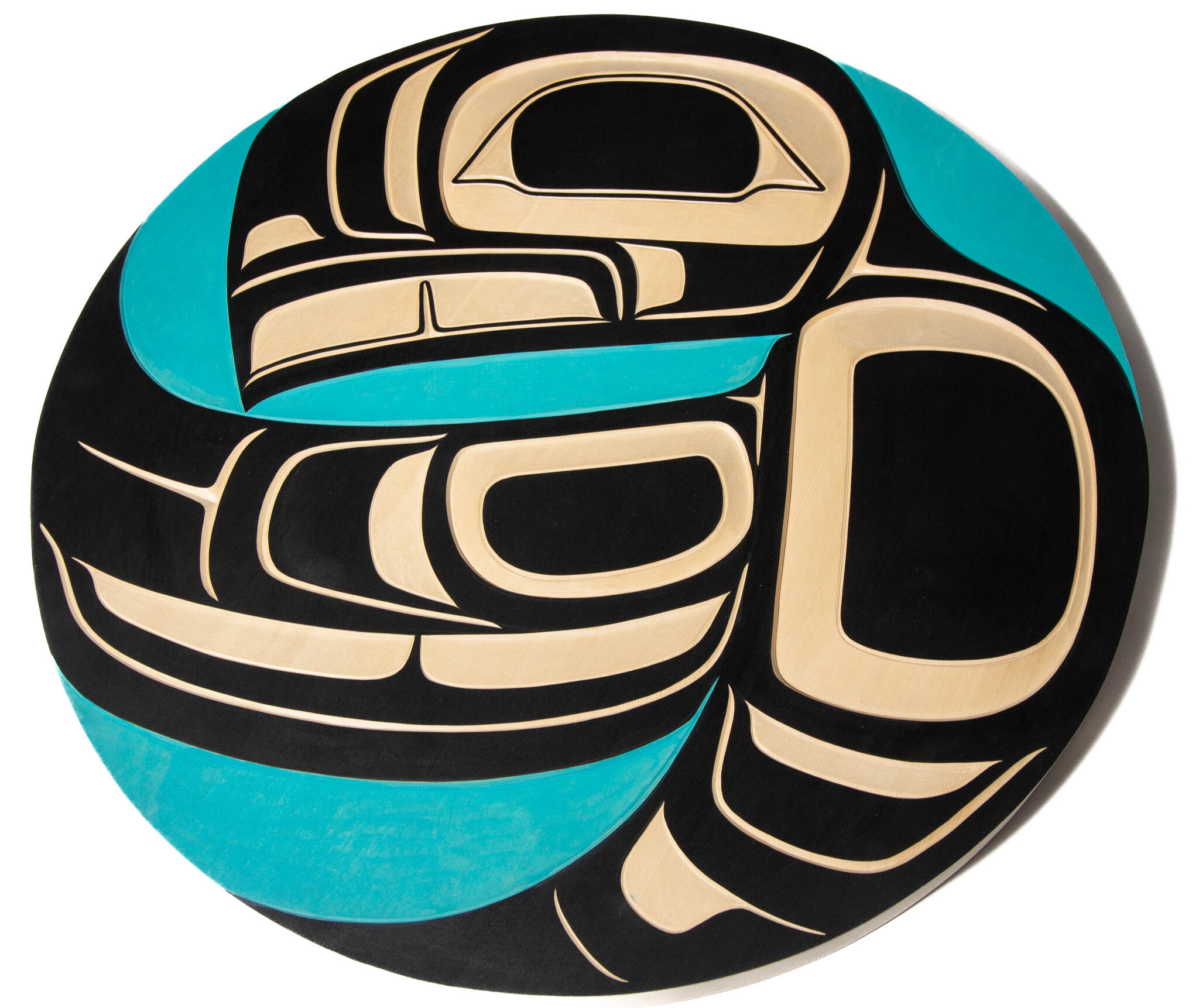
Hand Carved Gitxsan Eagle Panel by Trevor Angus, 2 feet, yellow cedar.
How to recognize Raven on a panel
Raven's beak is long, straight and heavy, with no downward hook. That straight line is the quickest way to tell Raven from Eagle. One nuance is worth knowing: among the Haida, the Raven moiety does not use Raven as a crest, while the Eagle moiety does, so a Raven on a Haida piece does not automatically mean the owner is Raven.
The Raven and Bear Panel and the Haisla Black Raven Carving show the straight beak clearly, and Trevor Angus carved the Raven on our Gitxsan Raven Bentwood Box. For the stories behind Raven, our guide to the meanings of Northwest Coast crest designs retells them.
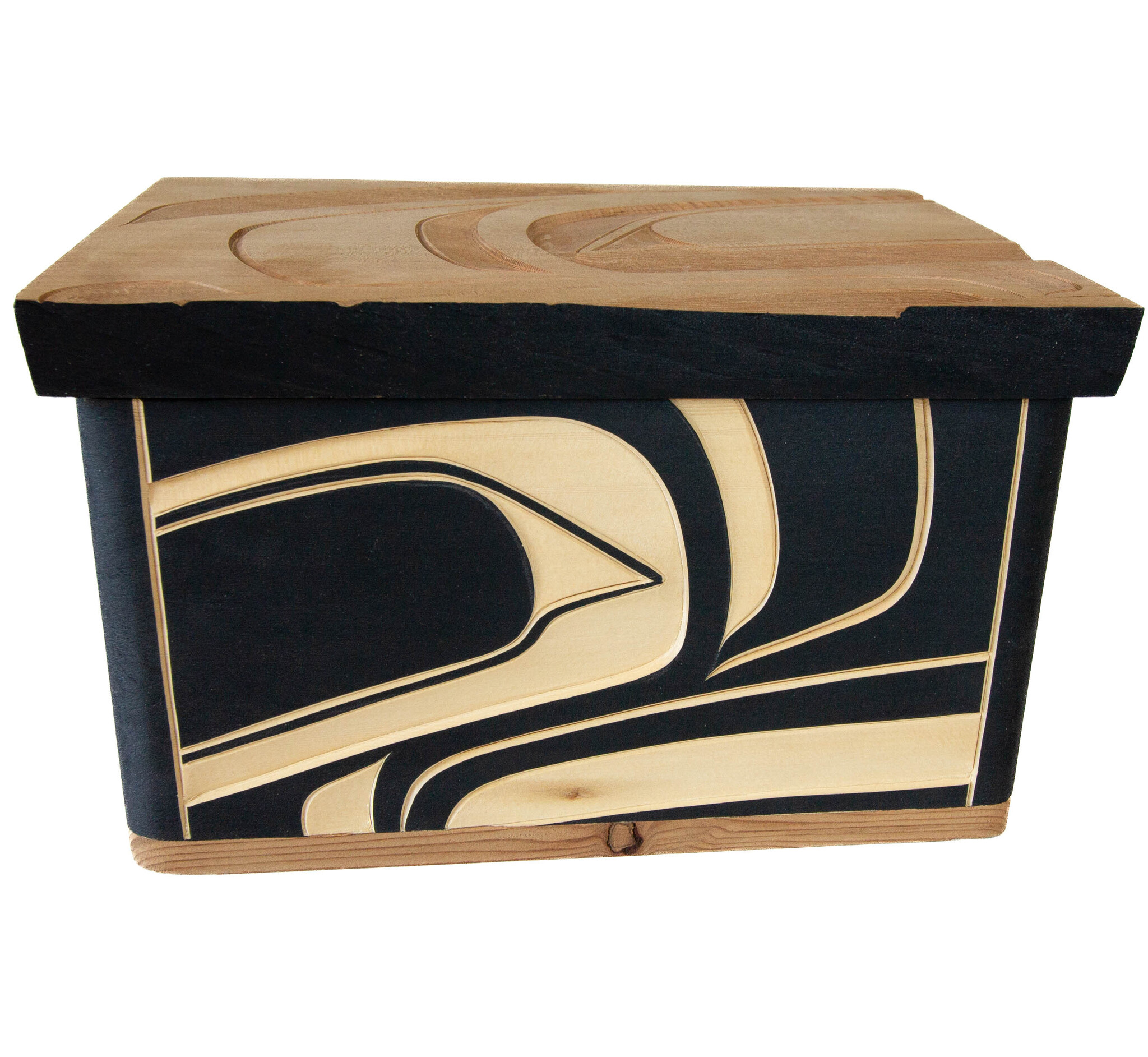
Gitxsan Raven Bentwood Box by Trevor Angus, yellow cedar with a red cedar base and top.
How to recognize Killer Whale on a panel
A Killer Whale is the easiest figure to spot. Look for a tall dorsal fin, a blowhole on top of the head, a wide mouth with teeth and fins at the sides. Among the Haida, the fin carries a clue: the dorsal fin on a Raven lineage's Killer Whale is always black, while an Eagle lineage's has a diagonal white stripe.
Killer Whale is personal to us. Cheryl, our founder, is Gitxsan of the Killer Whale Clan, so this is a crest we know from the inside. See the Split Orca Panel and the Orca Mother and Child Panel by Kwak'waka'wakw artist Lawrence Scow.
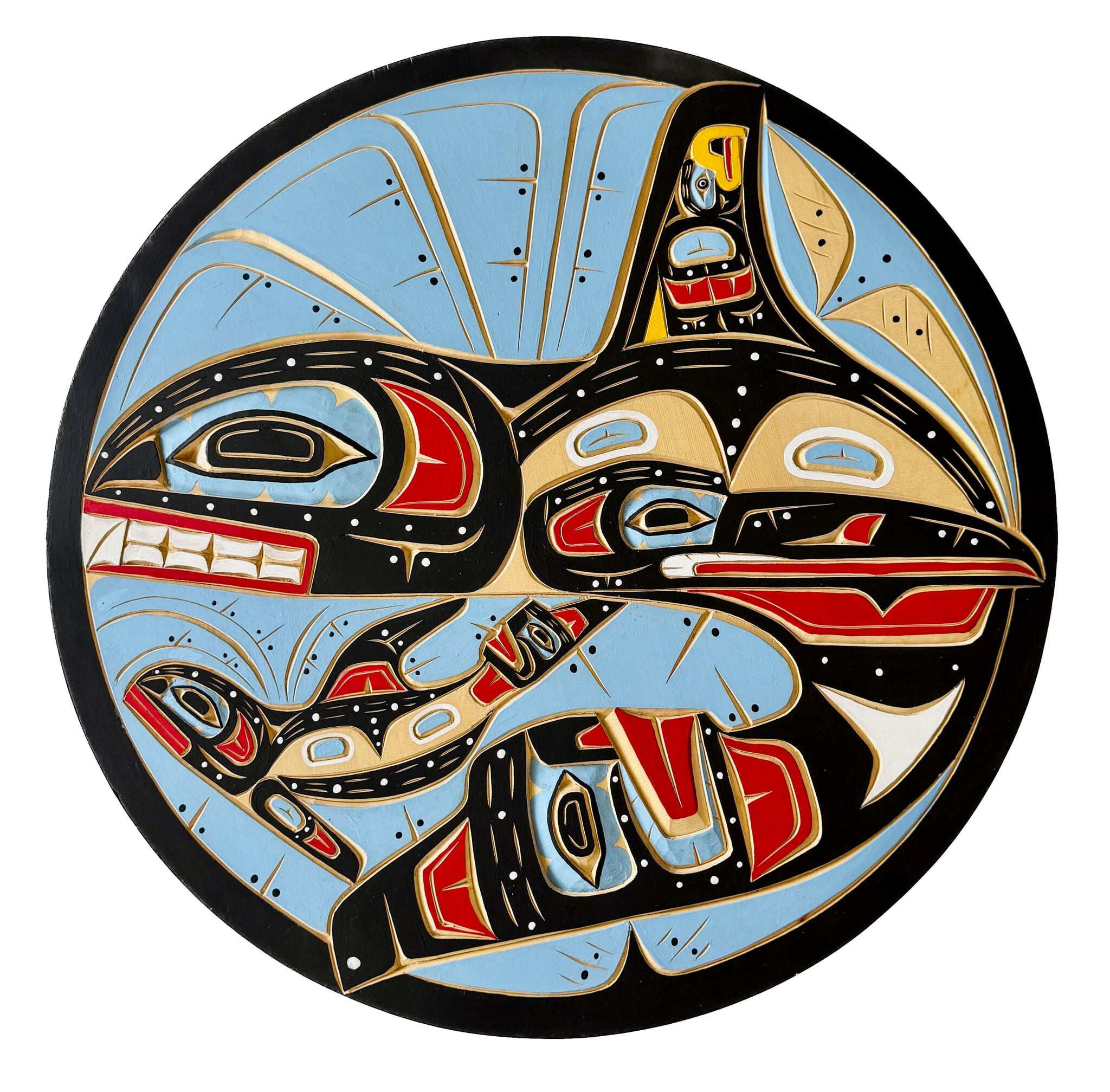
Orca Mother and Child Panel by Lawrence Scow.
Questions to ask before you buy a crest panel
Four questions help you buy with respect and confidence.
- Who made it, and from which nation? The artist's name and nation tell you which crest system applies.
- Is it a family crest or an artwork of the animal? A panel can show an animal as art, or show a specific family's crest. Ask us if the listing does not say.
- Which figures appear together? A panel with several figures may combine crests, so read the whole composition, not one animal.
- What story does the design tell? Where the artist shares it, the story is part of the piece and worth keeping with it.
Once you know the crest, check size and style
Knowing the figure is half the decision. Our room-by-room guide to choosing the right size wall panel covers scale and placement. Crests also appear stacked on totem poles, which our guide to totem poles explained covers.
Frequently asked questions
What is a clan crest?
A clan crest is an emblem, often an animal, that identifies a family line and its history. On the northern Northwest Coast, crests pass through the mother's line and are held by Houses and lineages.
How do I tell an Eagle from a Raven on a carving?
Check the beak. Eagle's beak is short and curves down at the tip. Raven's is long and straight.
What does a Killer Whale crest mean?
It identifies a lineage, and its meaning depends on the nation. Among the Haida, the colour of the dorsal fin points to the Raven or Eagle moiety. For the stories, see our guide to crest meanings.
Can I display a crest panel if the crest is not mine?
Yes. Collectors own and display art that shows crests. The right to claim a crest as your own family's belongs to the family that holds it.
Find a panel that tells your story
Once you know which crest speaks to you, browse our hand-carved Northwest Coast wall panels and plaques, or explore the full Northwest Indigenous Carvings collection. If you have a question about a specific crest or artist, get in touch and we will help you choose.
- Reading Family and Clan Crests on Northwest Coast Wall Panels: Eagle, Raven and Killer Whale
- How to Choose the Right Size Wall Panel for Your Space: A Room-by-Room Placement Guide
- Coast Salish Design vs Formline: The Two Carving Traditions Behind Northwest Coast Wall Panels
- Caring for Your Northwest Coast Silver Bracelet: Cleaning, Storage and Tarnish Prevention
- Men's vs Women's Northwest Coast Bracelets: Design Differences and How to Choose
- Northwest Coast Bracelet Sizing Guide: How to Measure Your Wrist for the Perfect Cuff Fit
- Understanding "Old Pawn" Navajo Jewelry: What It Means and Why Collectors Seek It
- Navajo Jewellery Symbols Explained: Squash Blossoms, Naja Pendants, and Sandcast Rings
- Cowichan Sweater Gift Guide: Choosing the Right Design and Size for Someone Else
- Custom vs Ready-to-Buy Indigenous Masks: What Collectors Should Know
Share this on:


Comments
Be the first to comment...