Caring for Your Northwest Coast Silver Bracelet: Cleaning, Storage and Tarnish Prevention
- Posted on
- 0
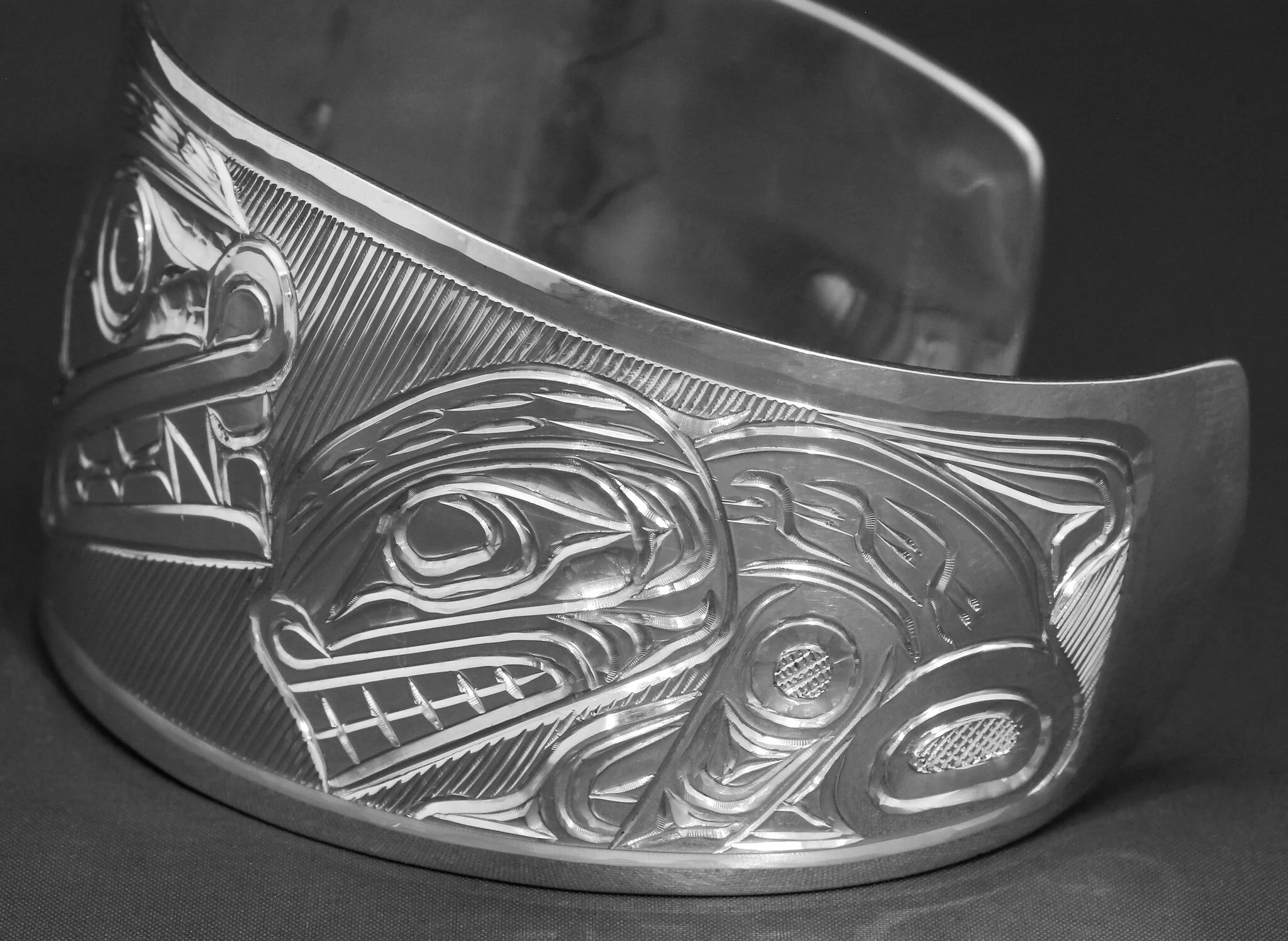
How to clean, store and protect a Northwest Coast silver cuff without damaging engraving or gold onlay, plus the methods to avoid.
The best way to care for a Northwest Coast silver bracelet is gentle and regular: wipe it with a soft cloth after wearing, wash it occasionally in warm water with a drop of mild dish soap, polish lightly with a silver polishing cloth only when it dulls, and store it sealed away from air and moisture. Just as important is what you avoid. Silver dips, the baking soda and foil trick, and toothpaste can strip the dark detail in an engraved design and wear down fine lines.
A hand-engraved cuff from our Northwest Coast bracelets collection is made to be worn for a lifetime and passed on. A few simple habits keep it looking the way the artist intended.
Why Northwest Coast silver needs a gentler touch
Most silver cleaning advice online is written for plain chains and mass-produced bangles. A Northwest Coast cuff is different in four ways.
Hand engraving. Artists cut the formline design into the silver by hand with gravers. Crisp, sharp lines are part of what makes a piece valuable, and abrasive cleaners slowly round them off.
Recessed detail. Engraved designs use crosshatching and recessed cuts so the raised lines stand out. Take Mathew Baker's silver and gold Bear bracelet, where crosshatching fills the negative spaces to contrast with the polished silver. If the recesses on your bracelet look dark, check with us before assuming it is tarnish: it may be part of the design.
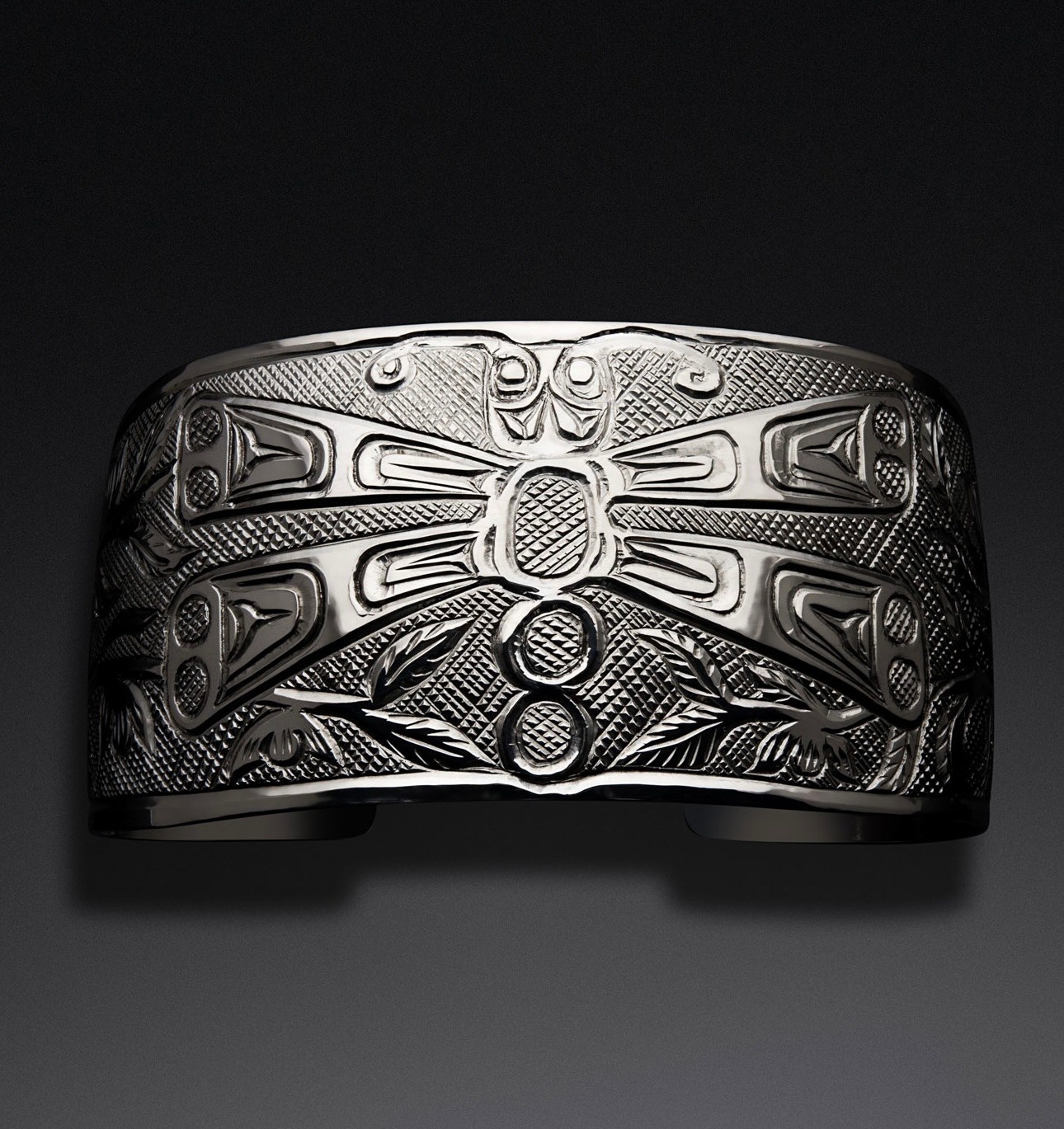
Hand carved sterling silver, like Mathew Baker's 1 1/4 inch Dragonfly bracelet, keeps its best detail with gentle cleaning.
Gold onlay. Two-tone cuffs combine silver with 14 kt or 18 kt gold. The two metals respond differently to cleaners, which our guide to gold overlay on silver jewellery explains in detail.
Raised relief. Repoussé cuffs are hammered from behind so the crest figure rises from the band. The high points take the most wear and the deep hollows collect the most grime. Our post on the art of repoussé shows how these pieces are made.
What causes tarnish
Tarnish is a thin dark layer that forms when silver reacts with sulphur compounds in the air. On sterling silver, which is 92.5% silver alloyed mostly with copper, that layer also contains copper sulphide. It starts as a faint yellow or golden tone, deepens to brown, and eventually turns black.
Humidity speeds it up. If you live on the BC coast, in the Pacific Northwest or anywhere with damp winters, you will notice silver left out on a dresser tarnishing faster than it would in a drier climate.
The Canadian Conservation Institute's guide to silver care makes a point every collector should know: each time you polish or chemically remove tarnish, you take away a little of the silver underneath. Preventing tarnish is always better than removing it.
Everyday care
Most of the work happens in small habits.
• Take it off first. Remove your cuff before swimming in a chlorinated pool or hot tub, cleaning with household chemicals, gardening or working out.
• Put it on last. Lotions, sunscreen, hairspray and perfume leave a film that dulls silver. Let them dry before you put your bracelet on.
• Wipe it after wearing. A quick pass with a soft, clean cotton or microfibre cloth removes skin oils and salts before they can mark the silver.
• Take it off the right way. Roll the cuff off through the narrow side of your wrist rather than pulling the ends apart. Our Northwest Coast bracelet sizing guide shows how, and why repeated bending weakens the band.
How to clean a silver bracelet at home
Wash your cuff whenever it looks grimy or feels filmy, or before polishing. This gentle method is suitable for sterling silver and gold onlay.
1) Fill a small bowl with warm water and add one or two drops of mild, fragrance-free dish soap.
2) Soak the bracelet for a few minutes to loosen skin oils and lotion residue.
3) Brush gently with a very soft toothbrush, working along the lines of the design rather than across them. Pay attention to the inside of the band, where most grime collects.
4) Rinse well in clean warm water. Soap left in engraved lines dries to a dull film.
5) Dry completely with a soft cloth, then let it air dry for an hour before storing it. Moisture trapped in deep carving encourages new tarnish.
If your bracelet has set stones, skip the soak. Wipe it instead with a damp cloth and a tiny amount of soap, then dry it right away.
How to remove light tarnish
For a cuff that has lost its shine, a silver polishing cloth is the gentlest option. The Canadian Conservation Institute describes these cloths as impregnated with a mild abrasive, so use one sparingly: only when tarnish is visible, and never as part of a daily routine.
1) Polish only the raised, flat surfaces of the design.
2) Use light pressure and short strokes that follow the direction of the engraving.
3) Keep the cloth away from dark recessed areas that look like part of the design.
4) On two-tone pieces, use a separate clean section of the cloth for the gold, with the lightest touch.
5) Rinse and dry the piece afterward if the cloth leaves a residue.
Once a section of cloth turns black, move to a clean section so you are not rubbing tarnish back onto the silver.
What not to use on a Northwest Coast cuff
These are the methods most often recommended online, and the reasons they do not suit hand-engraved Indigenous silver.
| Method | Why to avoid it |
|---|---|
| Baking soda and aluminum foil | Reverses tarnish everywhere at once, including in recessed detail, and the Canadian Conservation Institute notes that objects cleaned this way can tarnish more quickly afterward |
| Silver dips | Dissolve tarnish from every crevice, so engraved designs can be over-cleaned and lose their contrast; the longer silver is exposed to a dip, the greater the risk of pitting |
| Toothpaste or baking soda paste | Abrasive enough to scratch polished surfaces and soften crisp engraved lines over time |
If a piece has already lost dark detail that was part of its design, do not try to restore it yourself. Contact us and we can talk through your options.
How to store your bracelet
Good storage does more to prevent tarnish than any cleaning method.
• Seal it away from air. A zip-top polyethylene bag with the air pressed out slows tarnish dramatically.
• Add protection inside the bag. An anti-tarnish strip or a small piece of silver-treated cloth absorbs sulphur before it reaches your bracelet. A small silica gel packet helps control humidity.
• Wrap it in acid-free tissue or keep it in its own soft pouch so it cannot scratch against other jewellery.
• Store it flat or upright on its edge, never with heavy pieces stacked on top, which can slowly bend the band out of shape.
• Keep it out of the bathroom. Steam and humidity from showers speed up tarnish.
When travelling, carry your cuff in its own pouch inside a sealed bag rather than loose in a toiletry kit.
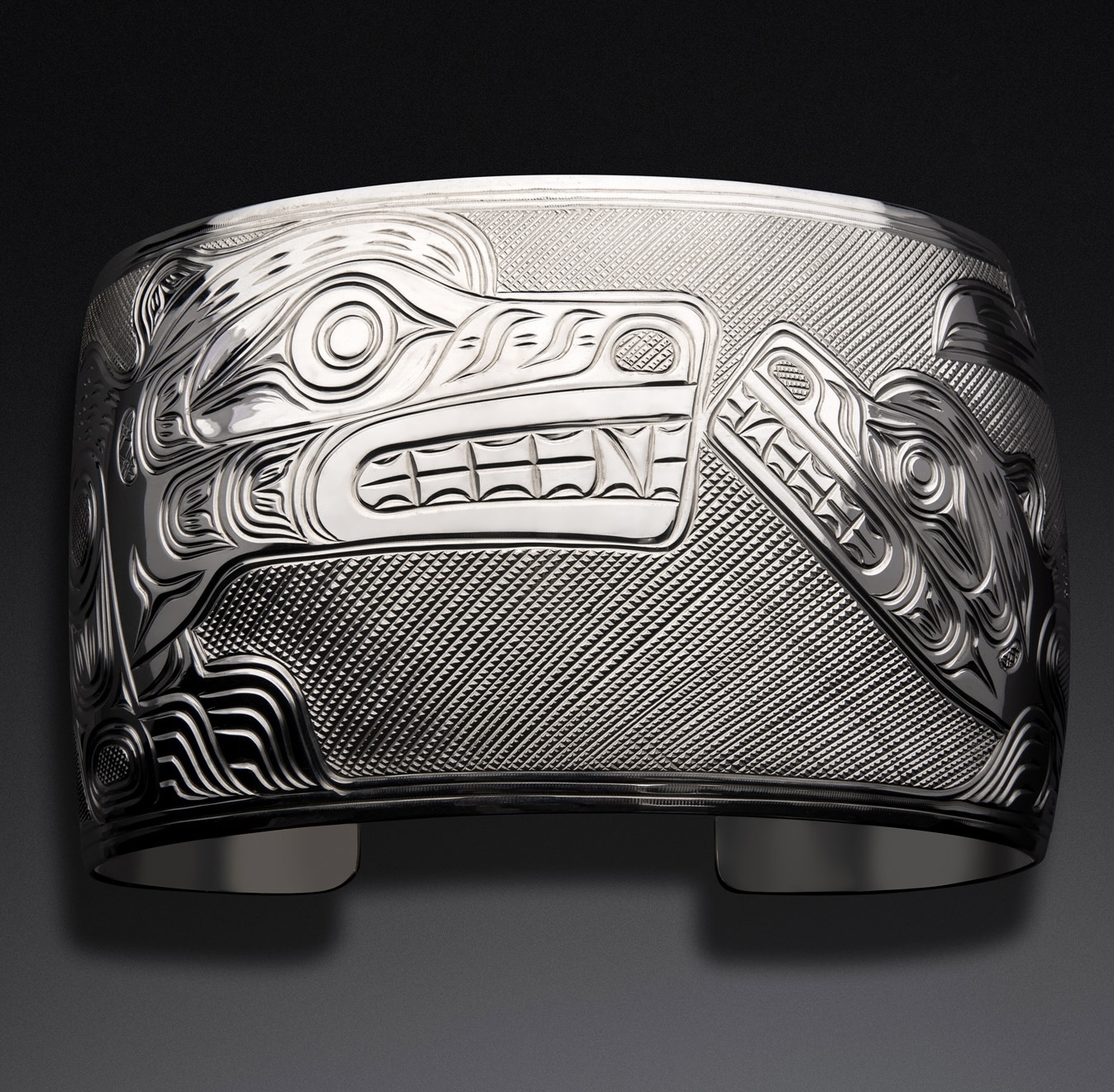
Wide silver cuffs like Liam Baker's Mother and Cub Bear bracelet, 1 7/8 inches wide, are best stored flat in their own pouch.
Caring for gold, copper and stones
Gold onlay does not tarnish, but it scratches. Wash it with the soap and water method above and buff very lightly. Avoid dips completely.
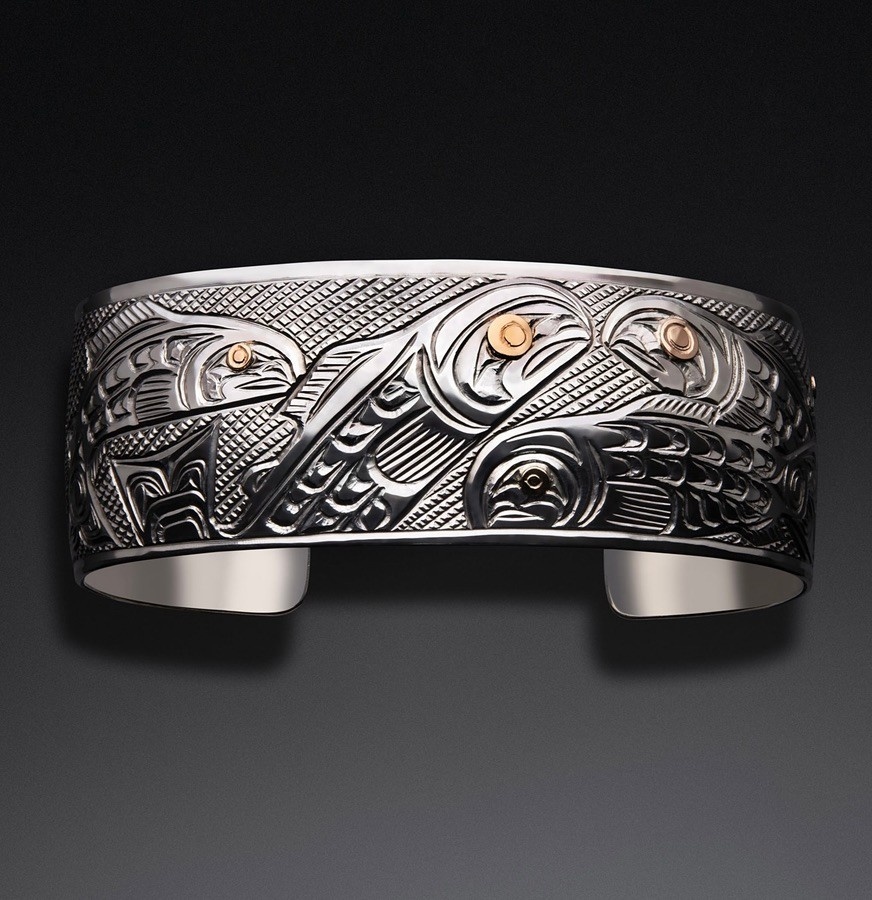
Mathew Baker's 1 inch Salmon bracelet with gold accents combines sterling silver with 14 kt gold, so each metal needs a light touch.
Copper cuffs darken to a warm brown over time, and many wearers value that deeper tone. Clean them with the same soap and water method. If a copper cuff leaves a green mark on your skin, that is a normal reaction between copper and skin moisture, not a sign of poor quality, and it washes off easily.
Set stones should never be soaked or exposed to chemicals. Wipe them with a damp cloth only.
Patina and living with your piece
Not every collector wants a bright mirror finish. As our guide to Haida silver and gold bracelets notes, silver may develop a patina over time, and many people love it.
We think of the people who buy from us as stewards of the work rather than owners of a product. Caring for a cuff gently is part of honouring the artist who made it and the family crest it carries. If a bracelet is bent, dented, deeply tarnished or has a loose stone, get in touch with us before attempting a repair.
Frequently asked questions
Does sterling silver tarnish?
Yes. All sterling silver tarnishes over time as it reacts with sulphur in the air, and it happens faster in humid climates. Tarnish is a surface layer, not damage, and it can be removed gently with a polishing cloth or prevented with sealed storage.
Can you shower with a sterling silver bracelet?
An occasional splash of water will not hurt sterling silver, but regular showering is not a good idea. Soap and shampoo leave a film that dulls the design, and hard or sulphur-rich water can speed up tarnish. Take your cuff off, and always remove it before a hot tub or pool.
My silver bracelet has turned black. How can I fix it?
Start by washing it in warm soapy water, then polish the raised surfaces lightly with a silver polishing cloth. Heavy black tarnish may take several sessions. Avoid dips and the foil method on engraved pieces, and contact us if the tarnish will not lift.
What should you not use to clean silver?
Avoid toothpaste, baking soda pastes, silver dips, the aluminum foil method and bleach. On engraved Northwest Coast silver, these either scratch the surface or remove dark detail in the design.
How often should I polish my bracelet?
Only when it needs it. Wiping after wear and storing it sealed means most cuffs need a light polish only a few times a year. Every polish removes a tiny amount of silver, so less is better.
Keep your cuff for generations
A Northwest Coast bracelet cared for this way will outlast its first owner. Browse our hand-carved Northwest Coast bracelets to find your piece, or read our guide to men's vs women's Northwest Coast bracelets to choose the right width and length for the wearer.
- Caring for Your Northwest Coast Silver Bracelet: Cleaning, Storage and Tarnish Prevention
- Men's vs Women's Northwest Coast Bracelets: Design Differences and How to Choose
- Northwest Coast Bracelet Sizing Guide: How to Measure Your Wrist for the Perfect Cuff Fit
- Understanding "Old Pawn" Navajo Jewelry: What It Means and Why Collectors Seek It
- Navajo Jewellery Symbols Explained: Squash Blossoms, Naja Pendants, and Sandcast Rings
- Cowichan Sweater Gift Guide: Choosing the Right Design and Size for Someone Else
- Custom vs Ready-to-Buy Indigenous Masks: What Collectors Should Know
- Types of Indigenous Masks: Transformation, Portrait and Ceremonial
- The Roles of Singing and Music in Traditional West Coast Indigenous Cultures
- How to Choose an Authentic Totem Pole Carving: A Buyer's Guide
Share this on:


Comments
Be the first to comment...