Custom vs Ready-to-Buy Indigenous Masks: What Collectors Should Know
- Posted on
- By Cheryl's Trading Post
- 0
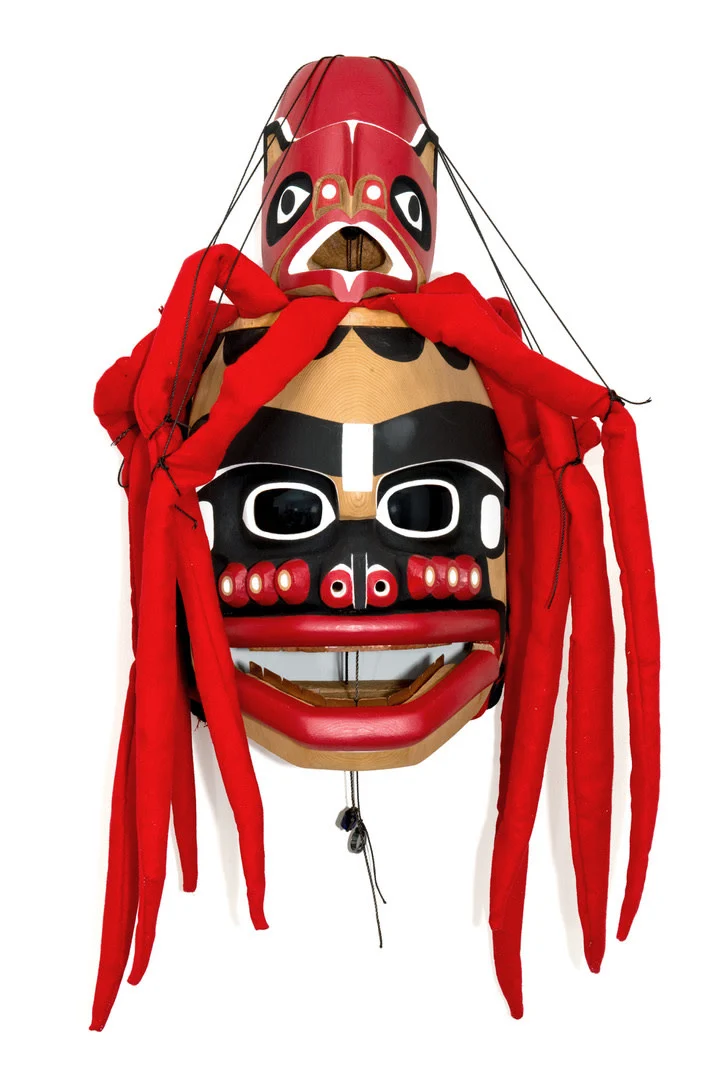
Custom or ready-to-buy? Compare timelines, cost, and authenticity for Indigenous masks, and learn what to ask before you commission or purchase one.
Choosing between a custom Indigenous mask and a ready-to-buy piece comes down to three things: how much time you have, how involved you want to be in the design, and whether you need an existing crest or story represented exactly as it already exists. Neither option is more authentic than the other. Both are hand-carved by the same artists, using the same materials and techniques.
The difference is entirely in process, timeline, and how much input you get.
This guide is for collectors who already know they want a genuine Northwest Coast mask and are deciding how to get there.
Ready-to-buy: what you are actually choosing from
A ready-to-buy mask is a completed piece already sitting in a gallery's inventory. What you see is what you get: the crest, the carving style, the finish, and the price are fixed. Our own collection includes pieces like the Corey Bulpitt Haida Mask "Gagiid Coming Back", the Reg Davidson Haida Raven Mask, and smaller works such as the hand carved Gitxsan Owl Mask, alongside headdresses like the Gitxsan Eagle Headdress. Each is a finished, one-of-a-kind object.
The advantage is immediacy and certainty. You can examine the actual piece, in photos or in person, before buying. There is no waiting on a carving schedule, and no risk that the finished piece looks different from what you pictured. The tradeoff is choice: you are selecting from what already exists, not specifying what you want made.

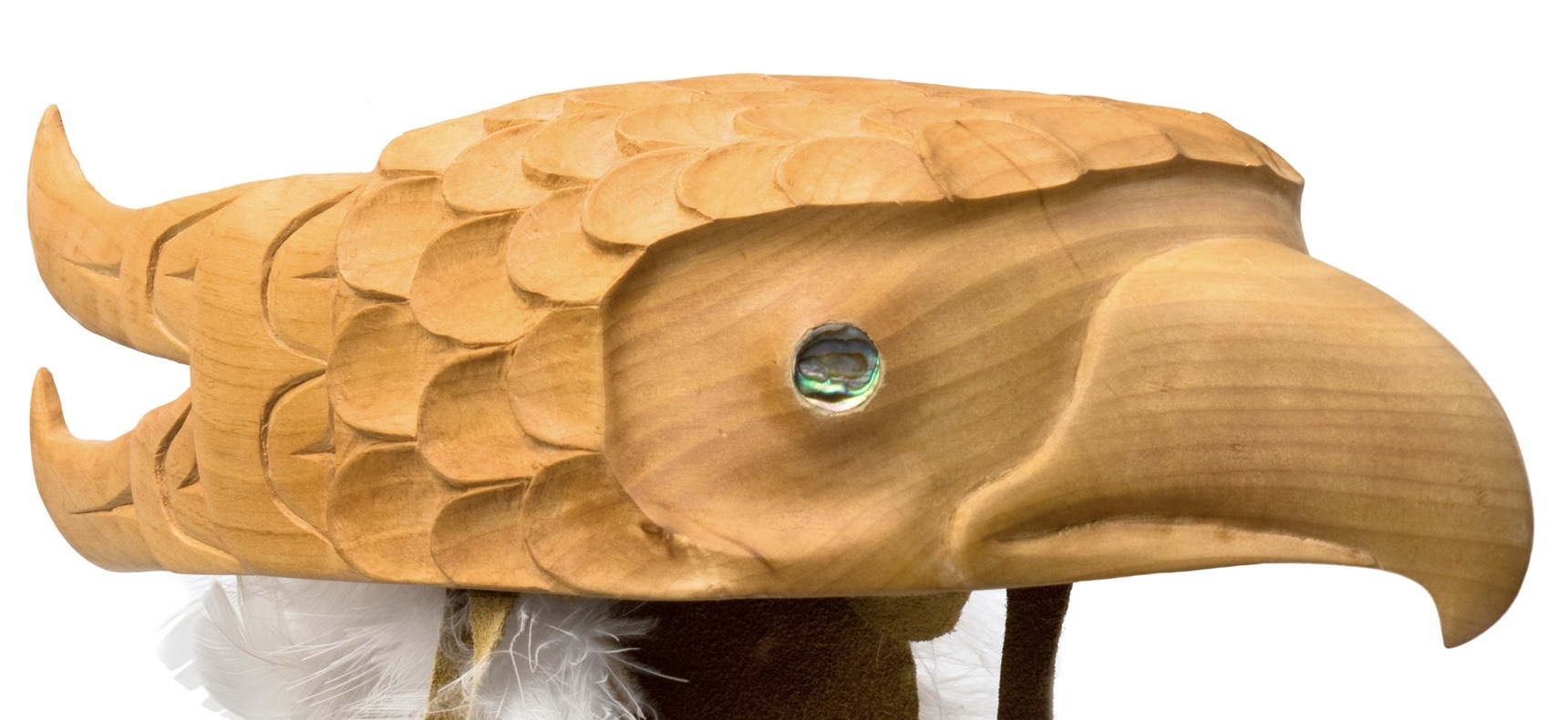
Custom orders: what you are actually agreeing to
A custom order means commissioning an artist to carve a new mask to a set of specifications you help define, usually the crest or figure (Raven, Eagle, Bear, a transformation piece), the size, and sometimes the wood species or finish. You are not designing the piece from scratch. Northwest Coast carving works within formline conventions and crest traditions specific to each nation, so a commission still has to respect the visual grammar and cultural rights tied to that crest. What you are really choosing is which artist carves it, which crest or story it represents, and roughly how large it will be.
Our gallery currently lists several pieces as custom order, including an Eagle Moon Mask and a Kwak'waka'wakw Kumukwa Mask. A past example gives a sense of what the process produces: a 70-inch Sisiutl mask, the two-headed sea serpent that guards the entrance of the houses of supernaturals, carved by Kwak'waka'wakw artist Jimmy Joseph. That piece sold, but Jimmy Joseph is available for new commissions and always willing to take on a new project, so it shows what a completed custom order looks like end to end.
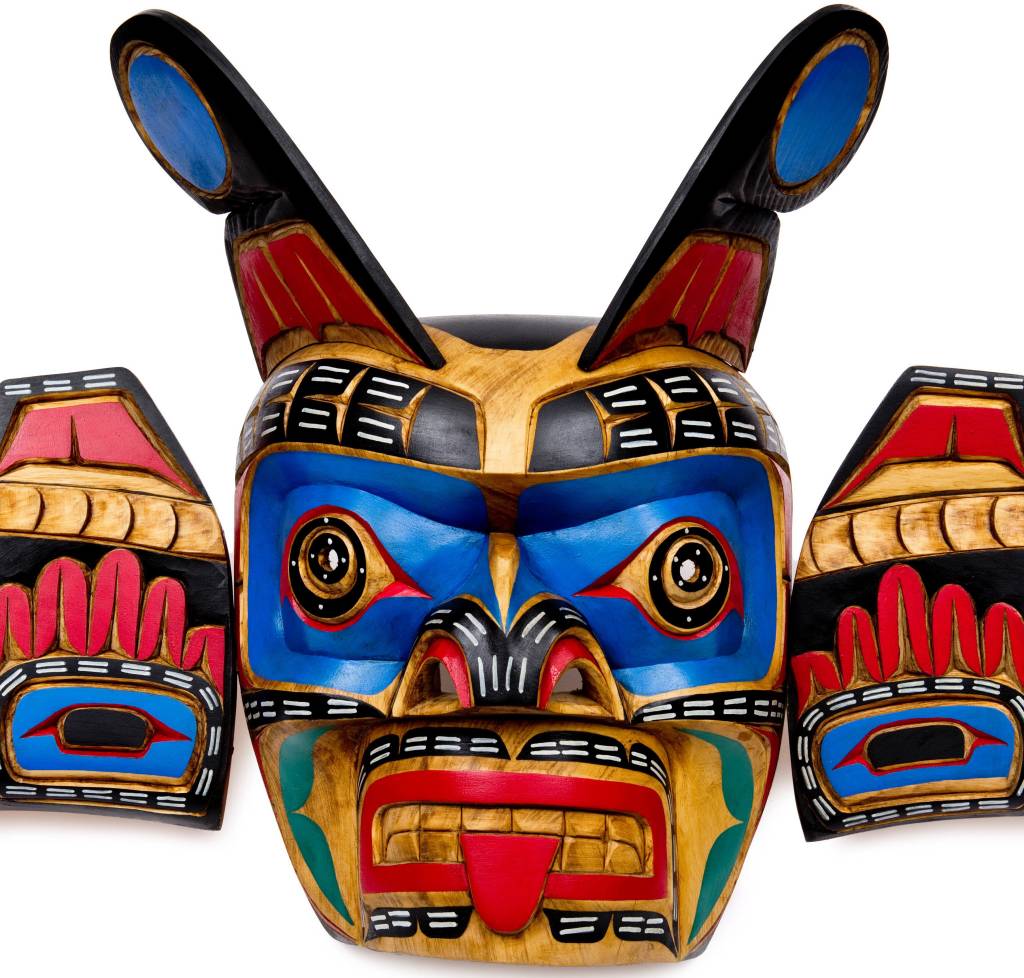
Timelines for custom masks run longer than ready-to-buy purchases, generally weeks to a few months depending on the artist's schedule and the complexity of the piece. Larger commissioned works, such as custom Haida totem poles, can take a year or more, which gives a sense of how much timeline varies with scale and detail even within one gallery's custom program.
Comparing the two paths
| Feature | Ready-to-buy | Custom order |
|---|---|---|
| Timeline | Ships once purchased | Weeks to months, depending on artist and complexity |
| Choice | Select from existing finished pieces | Choose crest, size, and artist within cultural conventions |
| Price certainty | Fixed price, known upfront | Quoted per piece, can shift with size or detail |
| Best for | Buyers who want to see the exact piece before committing | Buyers with a specific crest, story, or occasion in mind |
| Risk | None beyond standard shipping and condition checks | Requires trust in the artist and gallery before the piece exists |
Authenticity matters the same way in both cases
Whether you buy off the shelf or commission a new piece, the same standard applies: the artist should be named, their nation identified, and the work genuinely carved by that artist rather than mass-produced. The Indian Arts and Crafts Act makes it illegal in the United States to market goods as Indian-produced when they are not, which is exactly the kind of misrepresentation a custom order protects you from since you are working directly with a named artist from the start. Our guide to authenticating Northwest Coast wood carvings covers what to check on a finished piece, and the same markers, tool marks, formline quality, and artist documentation apply once a commissioned mask arrives.
If you are still deciding which crest or mask style fits what you are looking for, our guide to types of Indigenous masks breaks down transformation, portrait, and ceremonial masks, which is worth reading before you commit to either path.
Which one should you choose?
Choose ready-to-buy if you want to see the finished piece before paying, you are working with a firm timeline, such as a gift date, or you are drawn to a specific piece already in a gallery's collection. Choose a custom order if you have a specific crest, family story, or occasion you want represented, you have flexibility on timeline, or you want to work directly with a particular artist whose style you already admire.
Frequently asked questions
Is a custom mask more authentic than a ready-to-buy one?
No. Authenticity depends on the artist and their nation, not on whether the piece was commissioned or already finished. Both paths can be equally authentic when the artist is named and the work is genuinely theirs.
How long does a custom Indigenous mask take to complete?
It varies by artist and complexity, generally weeks to a few months for a mask. Larger commissioned carvings, like totem poles, can take a year or more.
Can I request a specific crest or animal for a custom mask?
Yes, within the cultural conventions of the artist's nation. Crests like Raven, Eagle, or Bear belong to specific families and clans, so a reputable artist will guide you on what can be carved and how it should be represented.
Do custom orders cost more than ready-to-buy masks?
Not necessarily. As a general range, custom masks run from roughly $1,000 to $10,000 US and up, depending on size, wood, and detail, similar to what you'll see on ready-to-buy pieces in the same collection. Ask for a quote based on your specifications before committing.
What should I ask before commissioning a mask?
Ask who the artist is and their nation, what crest or figure they will carve, the expected timeline, and whether a deposit is required. The same questions that confirm authenticity on a finished piece apply here.
Ready to start either path
Whether you buy a finished piece today or begin a commission with one of our artists, every mask that leaves our gallery comes with the artist's name and nation attached. Browse our Masks and Headdresses collection to see what's ready now and what's available to commission.
- Understanding "Old Pawn" Navajo Jewelry: What It Means and Why Collectors Seek It
- Navajo Jewellery Symbols Explained: Squash Blossoms, Naja Pendants, and Sandcast Rings
- Cowichan Sweater Gift Guide: Choosing the Right Design and Size for Someone Else
- Custom vs Ready-to-Buy Indigenous Masks: What Collectors Should Know
- Types of Indigenous Masks: Transformation, Portrait and Ceremonial
- The Roles of Singing and Music in Traditional West Coast Indigenous Cultures
- How to Choose an Authentic Totem Pole Carving: A Buyer's Guide
- Totem Poles Explained: Meanings, Types and Cultural Significance
- How to Authenticate Northwest Coast Wood Carvings: Tool Marks, Materials, and Artist Signatures
- The Role of Formline Design in Northwest Coast Carving: Understanding the Visual Language
Share this on:


Comments
Be the first to comment...