Types of Indigenous Masks: Transformation, Portrait and Ceremonial
- Posted on
- By Cheryl's Trading Post
- 0
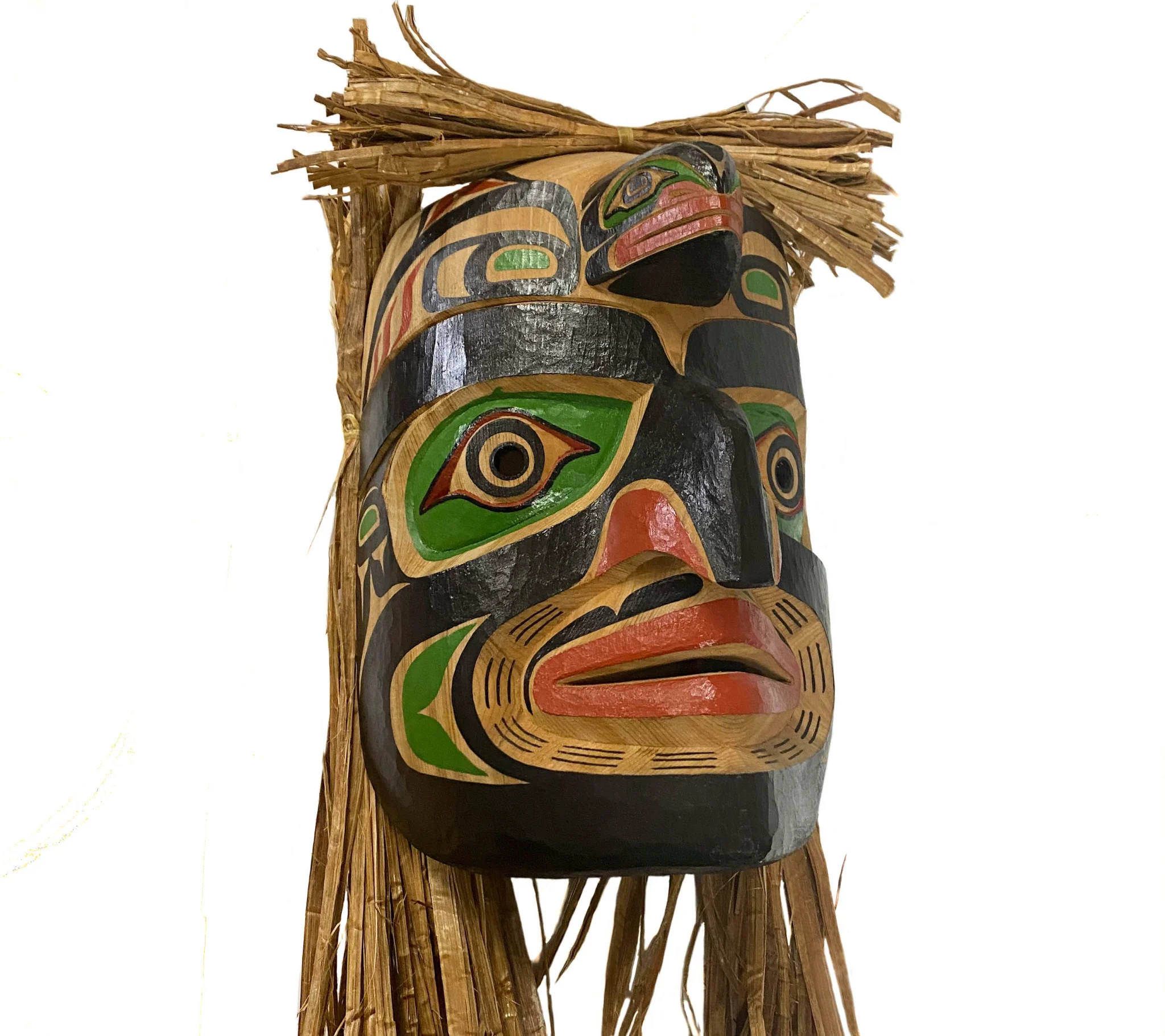
Discover the three main types of Indigenous masks, transformation, portrait, and ceremonial, and what each one reveals about Northwest Coast culture.
Indigenous masks of the Northwest Coast generally fall into three categories: transformation masks, portrait masks, and ceremonial masks worn in dance and ritual. Each type serves a different purpose, from revealing a hidden spirit within a carved face to representing a specific ancestor or clan crest.
Knowing the difference helps a collector understand what they are actually looking at, and why it matters, before price or aesthetics ever enter the conversation.
We are Cheryl's Trading Post, an Indigenous-owned gallery representing named Northwest Coast carvers. Every mask we sell comes with the artist's name, their nation, and the story behind the piece. That context is not decoration. It is the difference between a collectible and a curiosity.
Transformation masks: the mask within the mask
A transformation mask opens. Carved with hinges, cords, or pull-strings built into the wood, the outer face splits apart during a dance to reveal a second face inside, often an animal shifting into a human ancestor, or a human revealing the spirit form beneath. The Kwakwaka'wakw are especially known for this tradition, and sun and moon transformation masks remain among the most technically demanding pieces a carver can produce. Some hold three or more layered faces, each opening in sequence during the performance.
The mechanism is not a gimmick. It stages the belief, held across many Northwest Coast nations, that human and animal identity are not fixed states but connected forms that can shift under the right conditions, in the right ceremony. A carver building a transformation mask has to solve the artistic problem and the engineering problem at once: the hinges need to move smoothly for decades, and the inner face needs to hold its own as a complete work when fully open.
Portrait masks: carved likeness and lineage
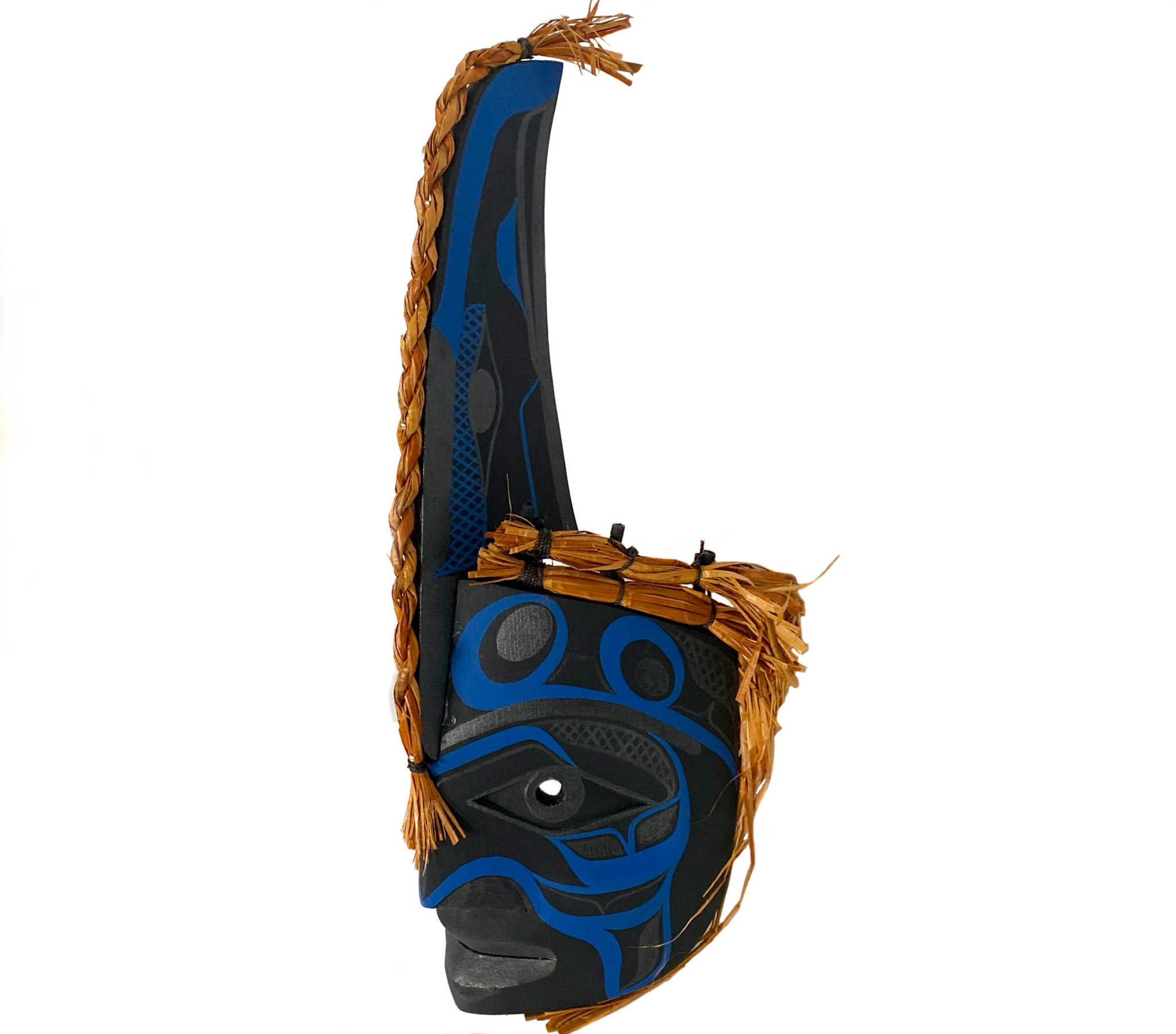
A portrait mask represents a specific person, usually an ancestor, a chief, or another named individual within a family's history, rather than an animal or supernatural being. The features are more naturalistic than a crest mask's stylized animal forms: recognizable human proportions, individual expression, sometimes worn hair or added materials to complete the likeness.
These masks matter most inside potlatch and naming ceremonies, where wearing a portrait mask can assert a specific hereditary name or lineage right. The mask is not just an image of an ancestor. In the right ceremonial context, it can function as a claim, tying the wearer to a specific person and the rights that came with that person's name.
Ceremonial masks: crest beings and winter dances
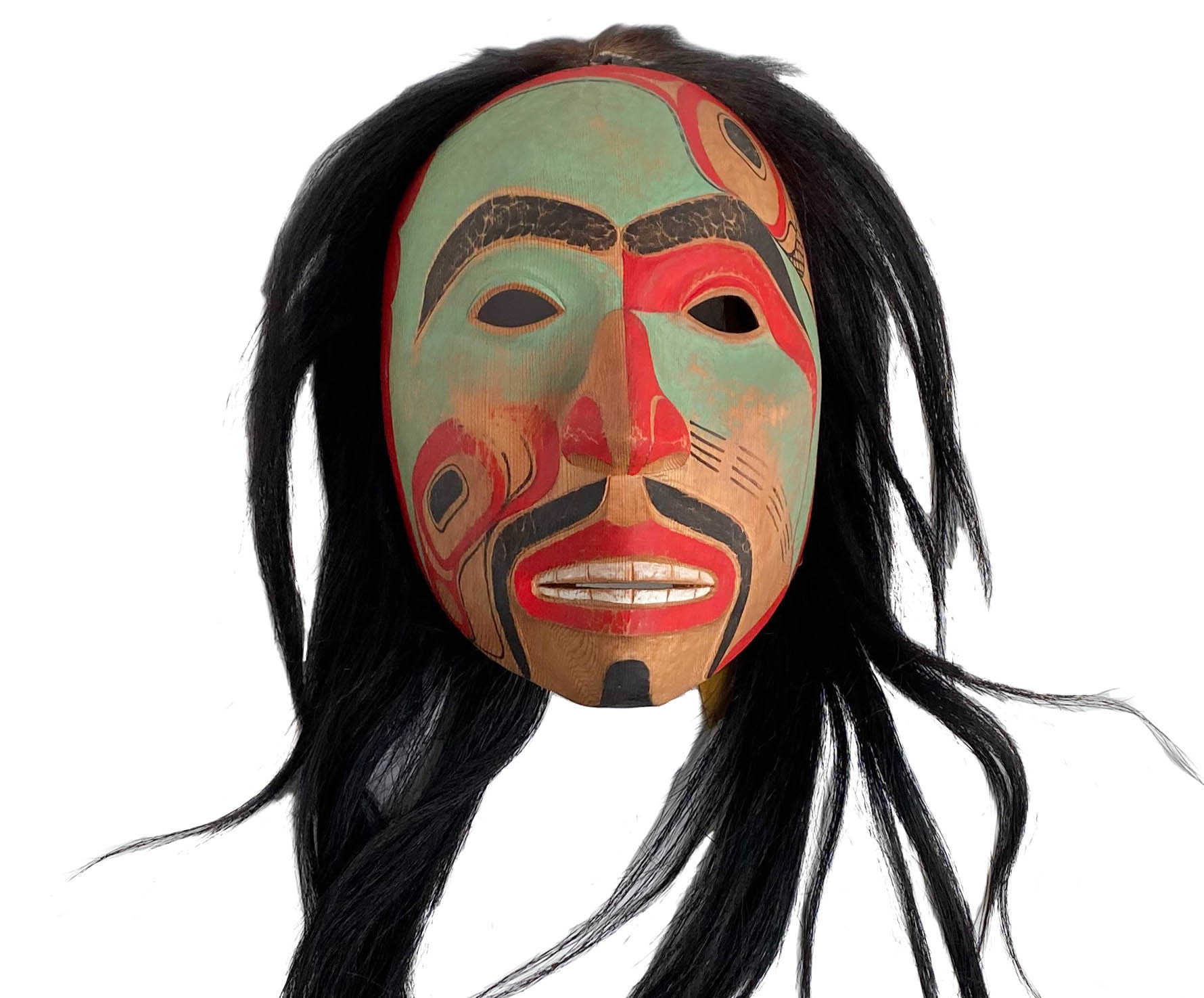
Ceremonial masks cover the broader category worn during winter dance ceremonies, portraying crest beings such as Raven, Eagle, Bear, Thunderbird, and Killer Whale. These are not generic animal images. Each crest belongs to a specific family or clan, carved and danced according to that family's inherited right to use it. Northwest Coast nations use masks like these in curing ceremonies and in dramatized retellings of clan history during midwinter performances, passed down through carvers who are held in high regard within their communities. Materials are almost always red or yellow cedar, carved by hand and painted in a limited palette, historically dominated by black, red, and blue-green.
The formline design system that organizes ovoids and U-forms across Northwest Coast carving applies to masks the same way it applies to a totem pole or a bracelet: the same visual grammar, working at a different scale.
Why the type matters when you are collecting
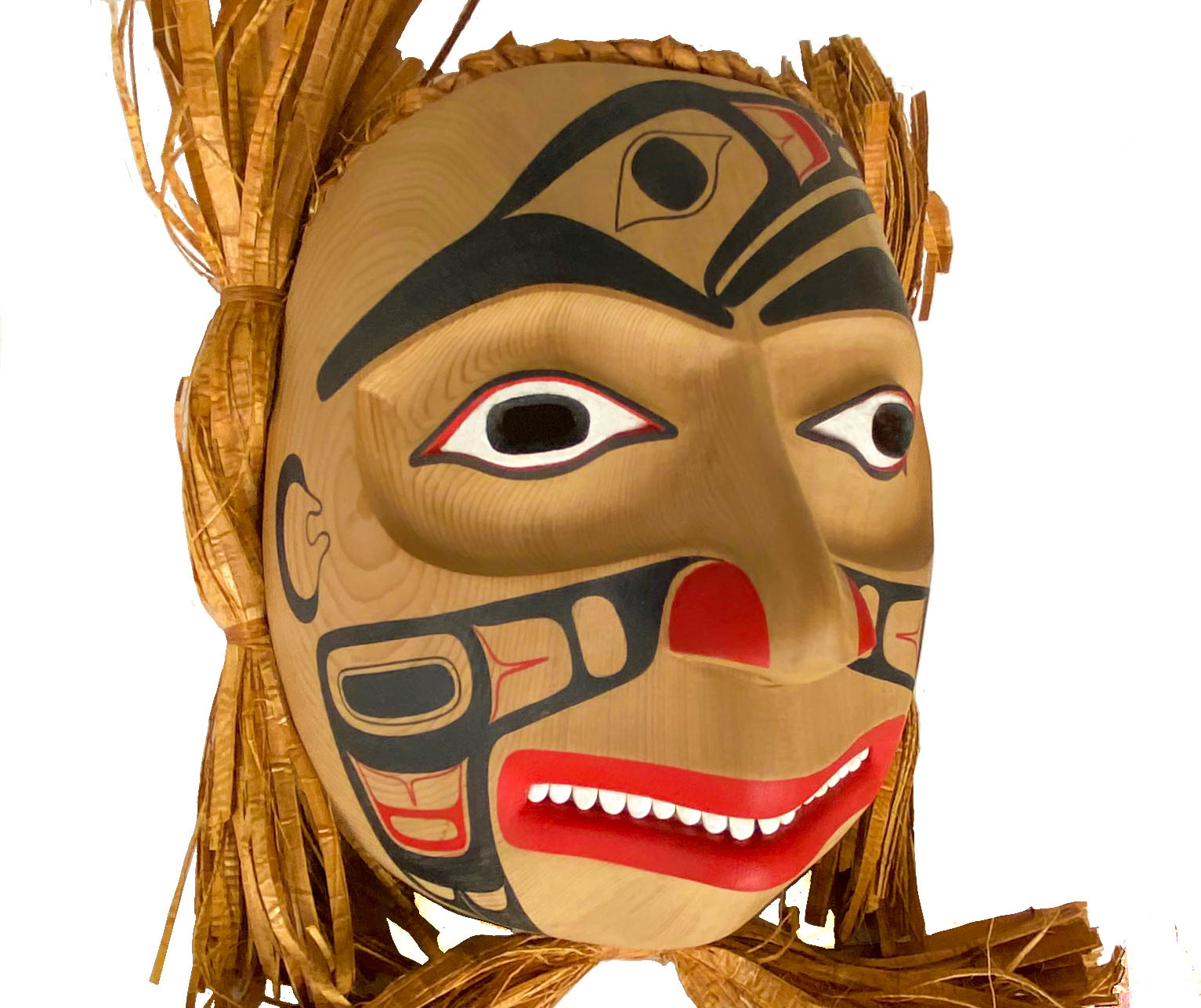
Knowing whether a mask is a transformation piece, a portrait, or a ceremonial crest mask changes what you should be asking before you buy. A transformation mask needs its mechanism inspected, since a hinge that binds or a cord that has stretched affects both function and value. A portrait mask should come with some account of who it represents and why, even in a contemporary gallery piece made for collectors rather than ceremony. A ceremonial crest mask should name the specific animal, the family or nation it belongs to, and the artist who carved it.
This is also where authenticity becomes a real concern. The market for Northwest Coast carving includes mass-produced replicas with no connection to any nation, sold using vague language like "Native-inspired" instead of a real artist's name. Our guide to authenticating Northwest Coast wood carvings covers the tool marks, materials, and documentation that separate a genuine hand-carved piece from an imitation, and it applies directly to masks. If you want to understand the deeper meaning behind the animals and figures carved into masks and other Northwest Coast pieces, our guide to crest design meanings breaks down what each crest represents and which nations carry it.
Frequently asked questions
What are the main types of Indigenous masks?
On the Northwest Coast, masks generally fall into three categories: transformation masks that open to reveal a second face, portrait masks depicting a specific ancestor or individual, and ceremonial masks portraying crest beings danced during winter ceremonies.
What is a transformation mask?
A transformation mask is built with hinges or cords so the outer face can open during a dance to reveal a second, inner face, usually showing an animal shifting into a human ancestor or spirit form.
What is the difference between a portrait mask and a ceremonial mask?
A portrait mask represents one specific named individual with naturalistic features, while a ceremonial mask portrays a crest being, such as Raven or Eagle, belonging to a family's inherited lineage rather than an individual likeness.
Are all Indigenous masks meant to be sold or displayed?
No. Some masks are made specifically for ceremonial use and are considered sacred by the nations that carve them. Reputable galleries sell contemporary pieces created for collectors, always with the artist named, rather than objects made for ceremonial use.
Which Northwest Coast nations are best known for mask carving?
The Haida, Kwakwaka'wakw, Tlingit, Tsimshian, Gitxsan, and Coast Salish all carry strong mask-carving traditions, each with its own crest system, carving style, and ceremonial use.
Bringing one home
Whether you are drawn to the engineering of a transformation mask, the personal weight of a portrait piece, or the crest story behind a ceremonial carving, the artist and the nation behind the mask matter as much as the mask itself. Browse our Masks and Headdresses collection for named-artist pieces from across the Northwest Coast.
- Understanding "Old Pawn" Navajo Jewelry: What It Means and Why Collectors Seek It
- Navajo Jewellery Symbols Explained: Squash Blossoms, Naja Pendants, and Sandcast Rings
- Cowichan Sweater Gift Guide: Choosing the Right Design and Size for Someone Else
- Custom vs Ready-to-Buy Indigenous Masks: What Collectors Should Know
- Types of Indigenous Masks: Transformation, Portrait and Ceremonial
- The Roles of Singing and Music in Traditional West Coast Indigenous Cultures
- How to Choose an Authentic Totem Pole Carving: A Buyer's Guide
- Totem Poles Explained: Meanings, Types and Cultural Significance
- How to Authenticate Northwest Coast Wood Carvings: Tool Marks, Materials, and Artist Signatures
- The Role of Formline Design in Northwest Coast Carving: Understanding the Visual Language
Share this on:


Comments
Be the first to comment...